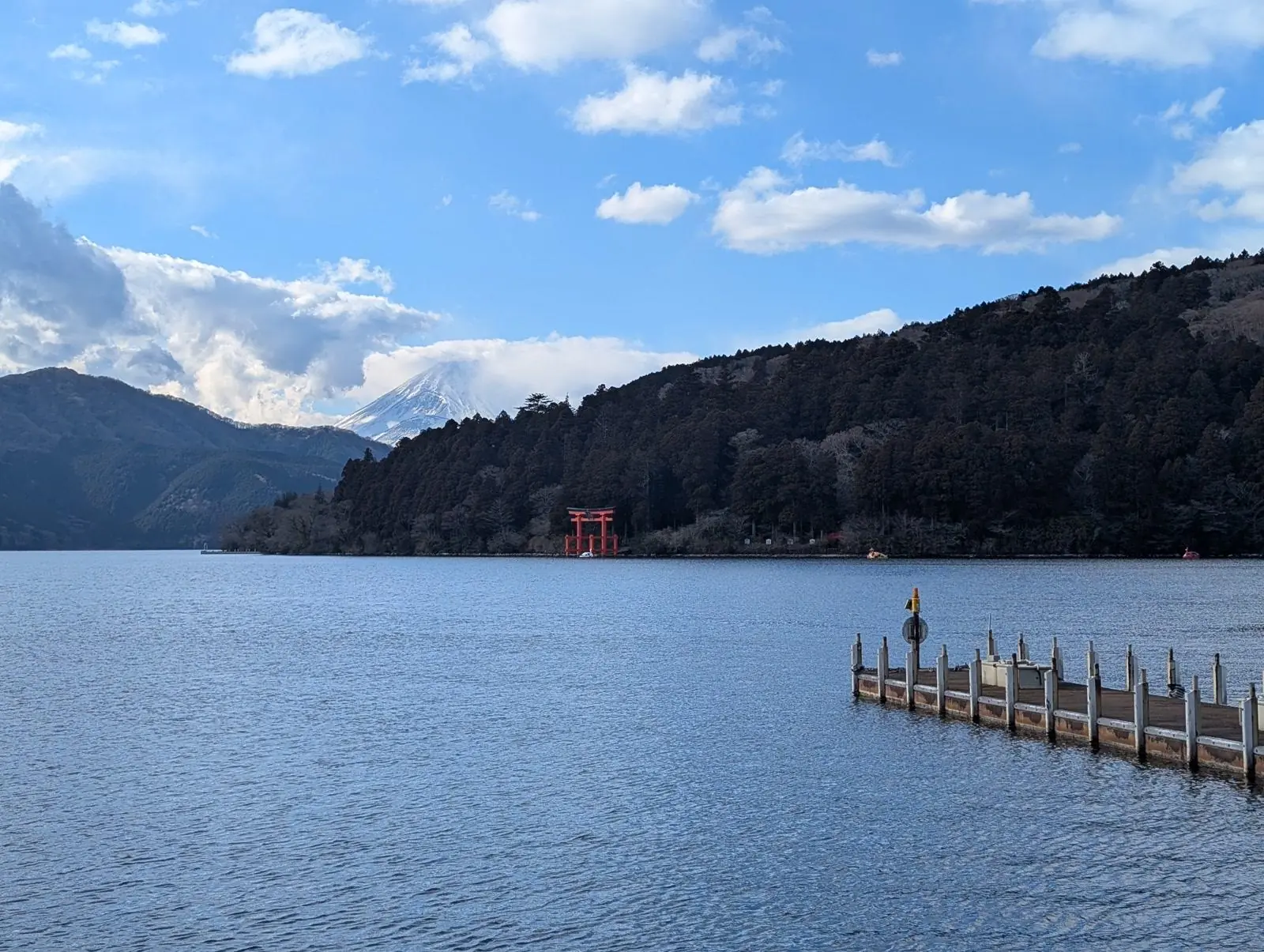
Hakone is the most popular day trip from Tokyo, and for good reason: volcanic hot springs, Lake Ashi with Mt. Fuji views, five different transportation types in a single loop, and some of the best onsen in the Kanto region. The Hakone Free Pass makes it seem easy to do solo.
But the timing is tighter than it looks, the route has bottlenecks, and weather can change everything. Having guided this trip dozens of times, I'm going to give you an honest comparison of going solo versus going with a guide so you can decide what's right for your trip.
For a comparison with other day trip options, check out my Kamakura vs. Hakone vs. Nikko comparison.
The Hakone Loop Explained
The "Hakone Loop" is the classic route that takes you in a circle using five different types of transportation. Here's the sequence:
- Romancecar (or regular Odakyu train) from Shinjuku to Hakone-Yumoto (about 85 minutes by Romancecar, 2 hours by regular express)
- Hakone Tozan Railway from Hakone-Yumoto to Gora (about 40 minutes). A mountain switchback train that climbs through gorges and forests.
- Hakone Tozan Cable Car from Gora to Sounzan (about 10 minutes). Steep funicular up the mountain.
- Hakone Ropeway from Sounzan to Togendai (about 30 minutes) via Owakudani volcanic valley. This is the highlight with Mt. Fuji views.
- Hakone Sightseeing Cruise (Pirate Ship) across Lake Ashi from Togendai to Moto-Hakone or Hakone-machi (about 30 minutes).
From Moto-Hakone or Hakone-machi, you take the Hakone Tozan Bus back to Hakone-Yumoto, then the train back to Tokyo.
The entire loop takes about 7-8 hours including transit from Tokyo, which means timing every connection matters if you want to complete it in a single day.
Going Solo: What Works and What Doesn't
What Works
- The Hakone Free Pass is excellent value. It covers round-trip train from Shinjuku (regular express, not Romancecar) plus unlimited use of all five transport types in the loop. Currently priced at ¥7,100 for 2 days. The Romancecar supplement is ¥1,200 each way if you want the reserved-seat express.
- Google Maps works for most connections. The major stations and stops are well-signposted in English, and timing information is reliable.
- The route is a loop. You're not going to get truly lost. The sequence is linear, and each transport type deposits you at the starting point of the next.
Where Solo Gets Tricky
- Timing is tighter than it looks. Each connection runs on a schedule, and frequencies vary (some run every 10 minutes, others every 30). Missing one connection can cascade into missing the last pirate ship or the last bus back.
- Owakudani closures are unpredictable. The volcanic valley segment of the ropeway closes periodically due to volcanic gas levels. When this happens, you need to take a replacement bus, which changes the route and timing. Closures are announced the same day and there's no way to know in advance.
- The return Romancecar sells out. If you want the comfortable reserved-seat Romancecar back to Shinjuku (instead of standing on a crowded regular train for 2 hours), you need to book in advance. Popular departure times sell out days ahead during peak season.
- Mt. Fuji visibility varies. The famous Lake Ashi with Mt. Fuji view depends entirely on weather. If it's cloudy, you might spend a full day on the loop and never see Fuji. A guide knows the signs (morning clarity, cloud patterns) and can adjust the route to maximize your chances.
- Onsen navigation is complex. Choosing a good onsen involves questions that are hard to research in English: tattoo policies, public vs. private baths, mixed-gender options, quality of the water. Most onsen websites are Japanese-only.
What a Guide Adds
- Real-time route adjustments. If the ropeway closes, I know the best alternative immediately. If Fuji is visible from a different angle, I reroute. If crowds are heavy at one stop, I rearrange the order to hit it when it clears.
- Onsen recommendations you can trust. I know which onsen welcome tattooed visitors, which have private baths for families or couples, and which have the best quality water. I can call ahead in Japanese to check availability and policies.
- Food timing. There are only a few windows for a sit-down meal along the loop. A guide knows where to eat, when to eat, and how to avoid the lunch rush at the popular spots.
- Cultural and historical context. Hakone has been a checkpoint town on the old Tokaido road since the Edo period. The Hakone Checkpoint reconstruction, the cedar-lined avenue, and the shrine on the lake all connect to a 400-year-old story that brings the landscape to life.
- Stress-free logistics. I handle all the tickets, timing, and connections. You just enjoy the scenery.
When You Don't Need a Guide
- You've done the loop before and want to revisit at your own pace, perhaps focusing on a specific onsen or museum
- You're comfortable with Japanese transit and can read timetables, handle delays, and navigate changes
- You want to spend most of the day at an onsen rather than doing the full loop. In that case, take the train to Hakone-Yumoto, walk to a nearby onsen, relax, and come back. No guide needed.
- Budget is the primary concern. The guide fee (¥80,000 for a full-day Hakone day trip) is a significant addition to the day's cost. If budget is tight, the Hakone Free Pass and careful planning can get you through the loop solo.
When a Guide Changes Everything
- First time doing the Hakone Loop with limited time to figure things out
- Traveling with elderly parents or young kids where timing pressure and complex transfers create real stress
- You want to combine Hakone with something else (a specific onsen, a museum, a detour to an artisan workshop)
- Weather is uncertain and you want someone who can adapt the plan in real time
- Groups of 3+ where the ¥80,000 guide fee divided among the group makes it very reasonable per person
Planning a Hakone Day Trip?
Whether you're leaning toward going solo or with a guide, I'm happy to answer questions about the route, timing, and what to prioritize. Check out my Hakone Day Trip tour for details, or reach out with your specific situation.
Ask About Your Hakone Trip