Quick Answer
Yes, Tsukiji Outer Market is open in 2026 with 460+ shops and food stalls. Only the inner wholesale auction moved to Toyosu in 2018. Hours: most shops open around 5:00 AM and close by 2:00 PM. Closed Sundays and select Wednesdays.
But here's what most guides don't tell you: half the best stalls close by 11 AM, and the vendors worth visiting aren't on the main street. A local guide's hour-by-hour strategy below.
Visiting Tokyo soon? See how I walk this market with guests →
Jump to a section
"Isn't Tsukiji closed?" I hear this question at least once a week from visitors planning their Tokyo itinerary. And I understand the confusion. The headlines from 2018 were everywhere: Tsukiji Market closes, the tuna auctions move to Toyosu, an era ends. But here's what those headlines got wrong, or at least left out. Only the inner wholesale market moved. The outer market, the part that matters most to visitors, never closed. It's still here, still thriving, and still one of the best food experiences in Tokyo.
I'm Manabu — a nationally licensed guide who walks through Tsukiji's outer market several times a week with guests from all over. This is everything I wish visitors knew before showing up: what actually happened in 2018, what's still here, what to eat, and how to time it so you don't end up at shuttered stalls.
No hype, no "must-eat" listicles. Just the same walkthrough I give my own clients.
Is "Tsuki Market" the Same as Tsukiji Market?
Yes — "Tsuki Market" and "Tsuki Fish Market" are common typos for Tsukiji Market (築地市場). The full name is Tsukiji (pronounced "tsoo-kee-jee"), and that's the spelling you'll see on station signs, Google Maps, and every local source. If you searched for "Tsuki Market" you've landed on the right page — this guide covers Tsukiji Outer Market in full.
Tsukiji Market Opening Hours (2026): The Complete Guide
Quick orientation before the table: the original Tsukiji inner wholesale market closed in 2018 and relocated to Toyosu, so any "Tsukiji fish market opening hours" you read for the wholesale auction floor are out of date. The Tsukiji Outer Market (場外市場) — with its 460+ retail shops, restaurants, and food stalls — is what's still open and what visitors actually walk through. Every set of hours below refers to the outer market.
The official Tsukiji Outer Market site divides the day into three windows: 6:00–9:00 AM for professional buyers (chefs, wholesalers), 9:00 AM–2:00 PM for the general public, and flexible hours after 2:00 PM. In practice, individual shops open as early as 4:00 AM and most start closing by 1:00 PM, so the table below shows the real visitor-facing rhythm rather than a single posted time.
| Day | Most shops | Notes |
|---|---|---|
| Monday | 5:00 AM – 2:00 PM | Open |
| Tuesday | 5:00 AM – 2:00 PM | Open (best day) |
| Wednesday | 5:00 AM – 2:00 PM | Open most weeks; closed on select dates (see calendar) |
| Thursday | 5:00 AM – 2:00 PM | Open (best day) |
| Friday | 5:00 AM – 2:00 PM | Open (best day) |
| Saturday | 5:00 AM – 2:00 PM | Open but very crowded after 9 AM |
| Sunday | Closed | Most shops closed; a few cafes open |
The hour-by-hour reality:
- 5:00–7:00 AM — vendors setting up; only a handful of grilled-food stalls open
- 7:00–11:00 AM — the sweet spot. Everything is open, fully stocked, and not yet packed
- 11:00 AM–1:00 PM — lunch crowds peak; ~30% of stalls start packing up
- 1:00–2:00 PM — most food stalls closing; sit-down restaurants still open
- After 2:00 PM — the market is effectively shut down. Don't bother arriving this late.
Hours of major Tsukiji shops: Each shop sets its own opening hours, and they vary widely. Here are verified hours for some of the market's most popular stalls — sourced directly from each shop's listing on the Tsukiji Outer Market official site.
| Shop | Specialty | Hours | Closed |
|---|---|---|---|
| Tsukiji Yamachou | Tamagoyaki | 6:00 AM – 3:30 PM | Open 365 days |
| Tsukiji Shouro | Tamagoyaki | 4:00 AM – 3:00 PM | Sun, holidays, some Wed |
| Marutake | Tamagoyaki | 4:00 AM – 2:30 PM | Some Sundays (Jan/Aug), holidays, some Wed |
| Kitsuneya | Gyu-don / horumon-don | 6:30 AM – 1:30 PM | Sun, holidays, some Wed |
| Tamahachi | Tamagoyaki | 5:00 AM – 2:30 PM | Market closure days |
Hours sourced from each shop's official listing on tsukiji.or.jp (verified May 2026). Hours can change for renovations, holidays, or seasonal patterns — always confirm via the shop's listing or the official market calendar before planning your visit.
When Tsukiji Market is closed: Sundays (every week) and a handful of Wednesdays each year that follow the Tokyo Central Wholesale Market holiday calendar. The market also closes for the New Year period — typically December 30 through January 4. Late December (December 28–30) is the busiest stretch of the entire year as locals stock up on traditional New Year ingredients (osechi, fresh seafood, tamagoyaki); the market authority itself asks tourists to consider visiting outside those days.
What time does Tsukiji Market close? Most food stalls and tamagoyaki shops finish around 1:00–2:00 PM. A handful of sit-down restaurants stay open later, but by 3:00 PM the outer market is effectively done for the day. If you want to actually eat your way through the stalls, plan to arrive no later than 11:00 AM. Always cross-check with the official market calendar before your trip — closure dates around Japanese national holidays vary year to year.
What Happened to Tsukiji (The Quick Version)
Tsukiji Market opened in 1935, built after the Great Kanto Earthquake destroyed the previous fish market at Nihonbashi. For over 80 years, it served as the world's largest wholesale fish market, a cavernous, chaotic space where thousands of tons of seafood were auctioned and sold before dawn every single day. The inner market was where the famous tuna auctions happened, where licensed wholesalers in rubber boots raced around on motorized carts called turret trucks, and where the sheer scale of Japan's seafood industry was on full display.
By the 2000s, the inner market's facilities were aging badly. The buildings were decades past their intended lifespan, sanitation standards were difficult to maintain, and the narrow lanes made modern refrigerated logistics nearly impossible. After years of political debate and delays, the inner wholesale market officially relocated to Toyosu, a modern facility on a man-made island in Tokyo Bay, in October 2018.
But here's the crucial distinction that gets lost in the retelling: the inner market and the outer market were always two separate entities. The inner market was the wholesale floor, professionals only, with limited tourist access. The outer market was (and remains) a dense network of retail shops, restaurants, and food stalls that grew up around the wholesale operation over decades. When the inner market moved, the outer market stayed put. The roughly 460 shops and restaurants that line Tsukiji's narrow streets had no reason to leave. Their customers were locals, chefs, and food-loving visitors, not wholesale buyers.
So if someone tells you "Tsukiji is closed," they're repeating a half-truth. The wholesale floor is gone. The soul of the market, the part you can actually taste, touch, and experience as a visitor, is very much alive. And in some ways, it's better than before. With the wholesale operation gone, the outer market has leaned even further into its identity as a food destination. New shops have opened, existing ones have expanded, and the overall experience is more visitor-friendly than it was a decade ago. Any good tsukiji guide will tell you the same thing: the outer market is the real draw.
What's Still There: The Outer Market
The outer market occupies a compact grid of narrow lanes just south of the former inner market site. It's walkable in 20 minutes if you're in a hurry, but I've never met anyone who could get through it that fast. There's too much to see, smell, and taste. Roughly 460 shops and restaurants are packed into these few blocks, and the density is part of the charm. You'll turn a corner and find yourself face-to-face with a vendor slicing a tuna head the size of a small dog, or a grandmother grilling tamagoyaki on a rectangular pan that's older than you are.
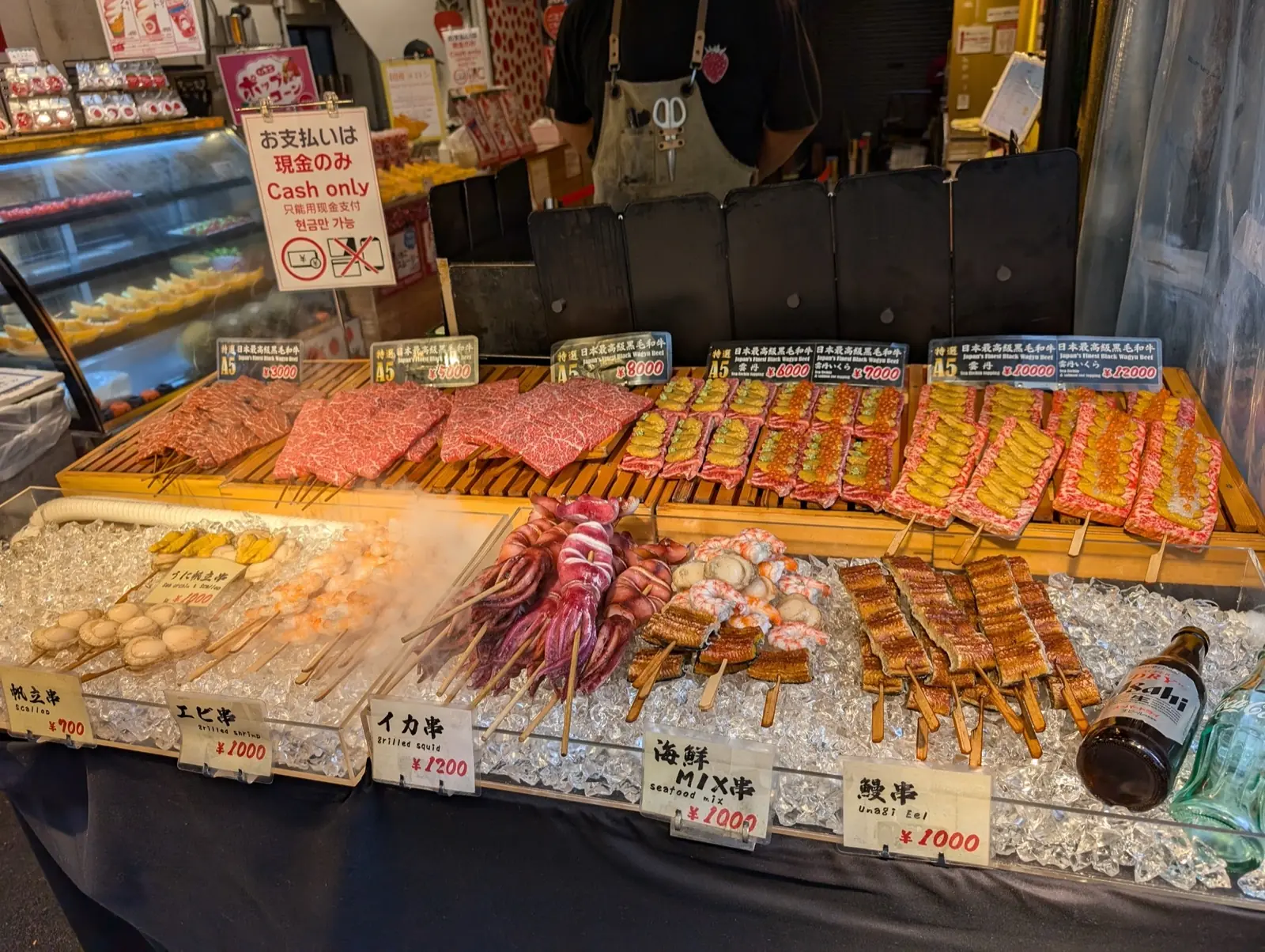
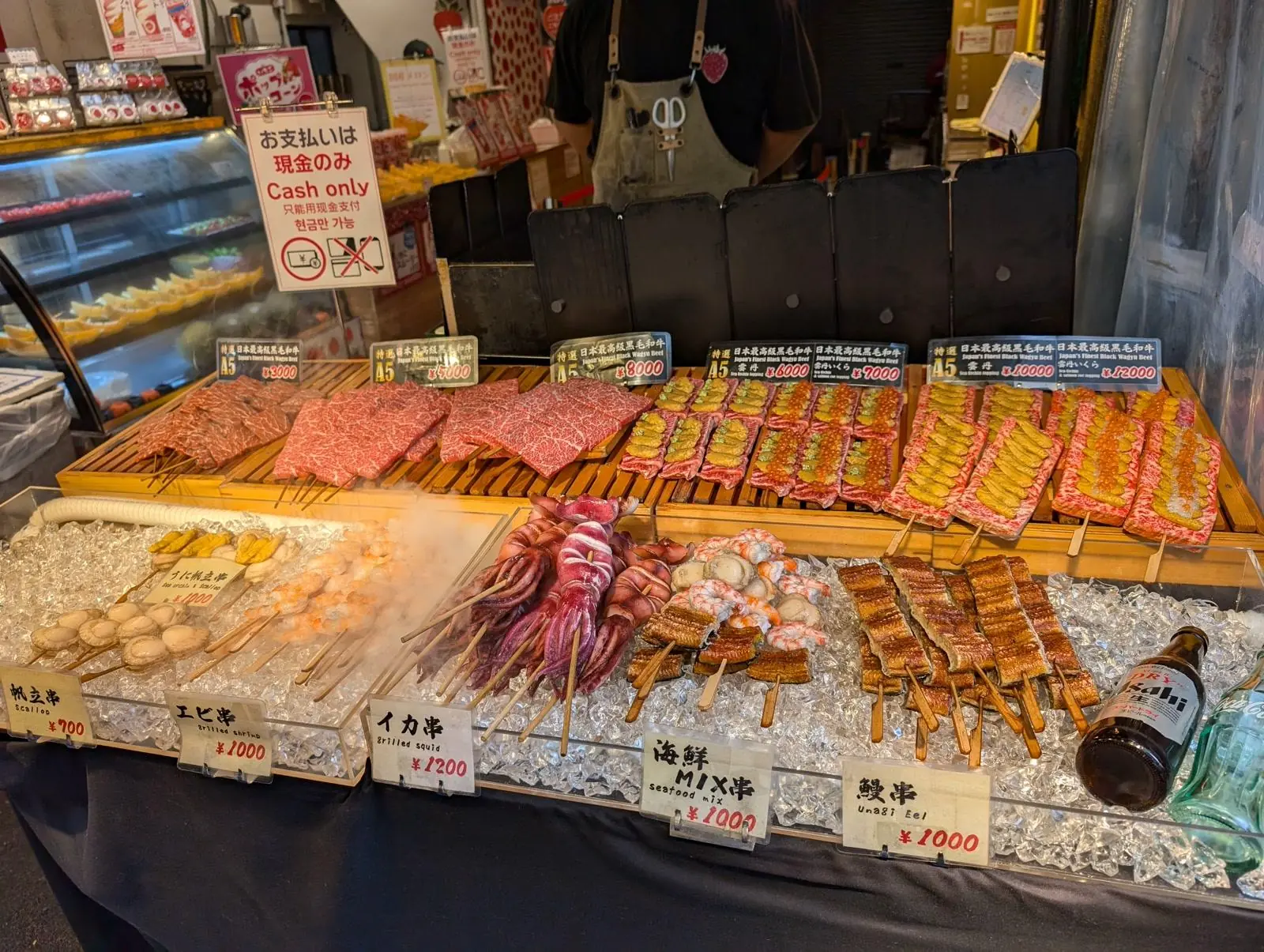
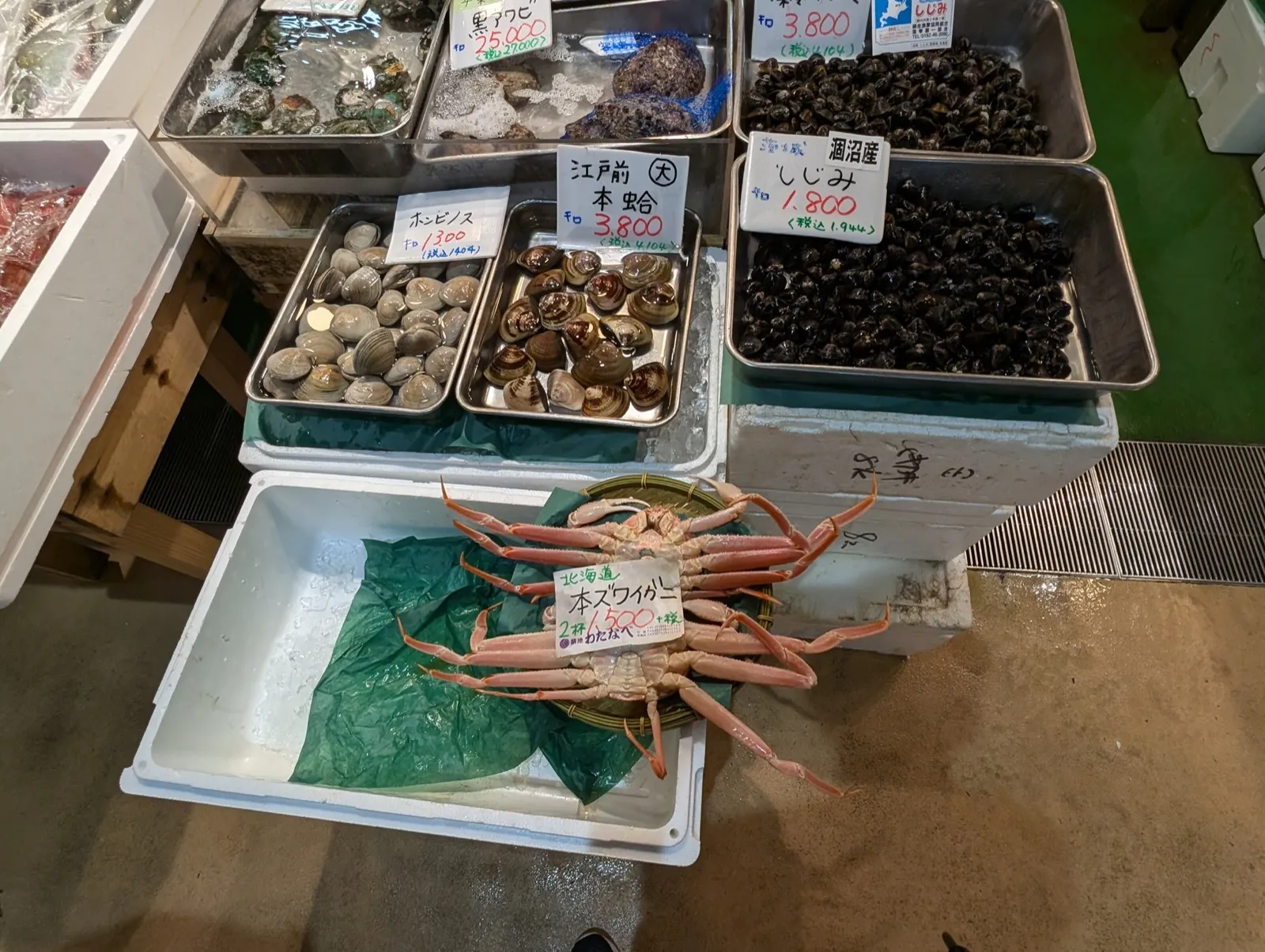
The types of businesses here fall into a few categories. Fresh seafood shops sell everything from whole fish to prepared sashimi, uni boxes, and dried goods like katsuobushi (bonito flakes) and kombu (kelp). Kitchen supply stores carry Japanese knives, ceramics, lacquerware, and cooking tools. Many of these shops have been supplying professional chefs for generations. Food stalls and street vendors grill scallops, squid, and wagyu skewers to order, fill paper cups with fresh uni and ikura, and hand you sticks of golden tamagoyaki still warm from the pan. And then there are the sit-down restaurants, ranging from tiny sushi counters with six seats to proper seafood restaurants serving elaborate kaisendon (seafood rice bowls) and set meals.
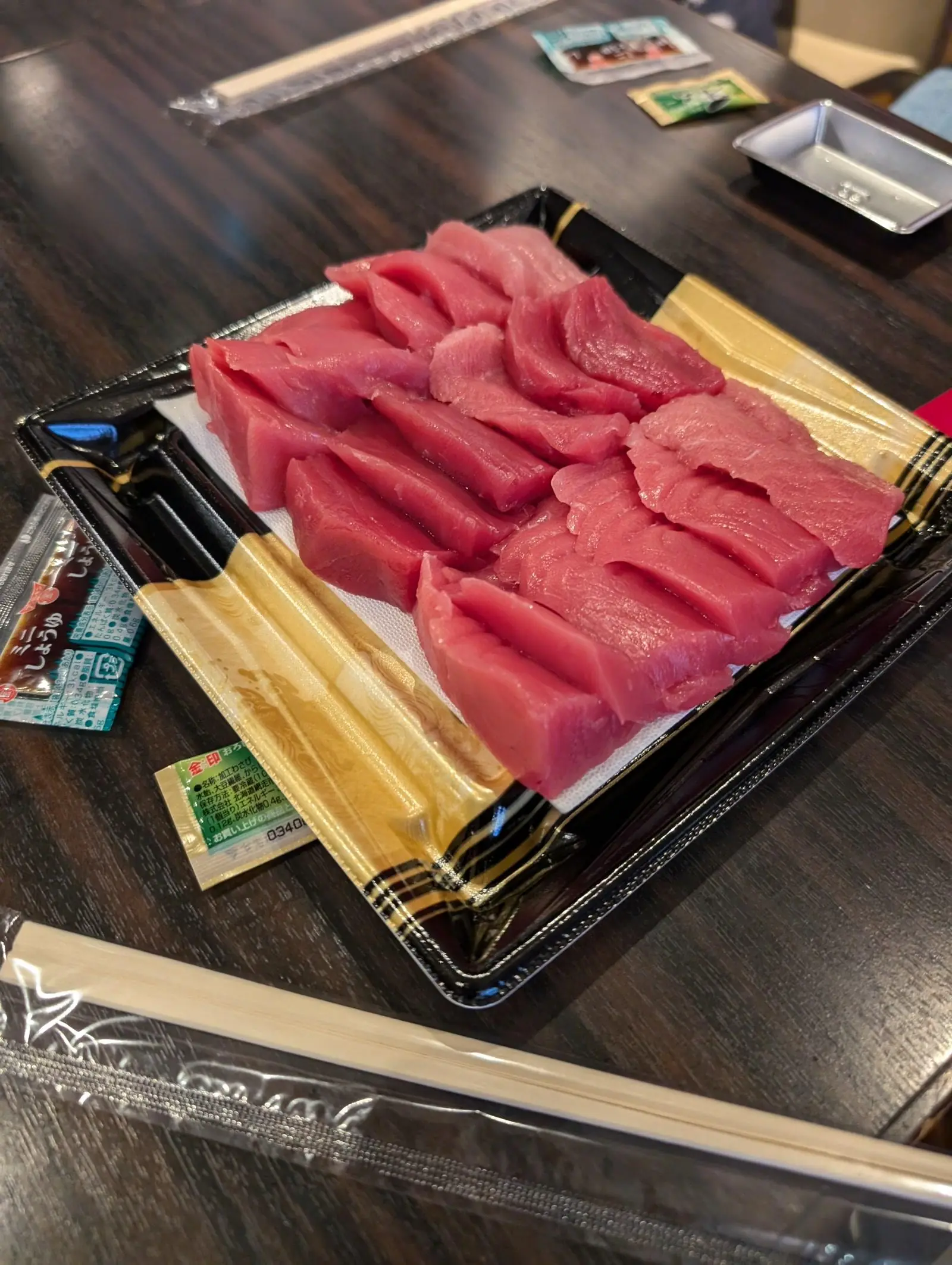
What strikes me every time I walk through is how alive it all is. This isn't a museum or a tourist recreation. It's a working market where local chefs still come to source ingredients, where neighborhood residents buy their groceries, and where the vendors know their products with an expertise that borders on obsessive. The fishmonger who sells you a piece of otoro (fatty tuna belly) can tell you which ocean it came from, when it was caught, and how many days it's been aging. That level of knowledge and pride is what makes Tsukiji special, and no relocation can take that away.
What to Eat and Where (My Personal Picks)
This is the part of my tsukiji guide where I get to share what I actually eat when I'm here, not as a guide performing for clients, but as someone who genuinely loves this market and has strong opinions about its food. Come hungry. Seriously. Skip breakfast at the hotel. You'll want the stomach space.
Tamagoyaki: The Icon
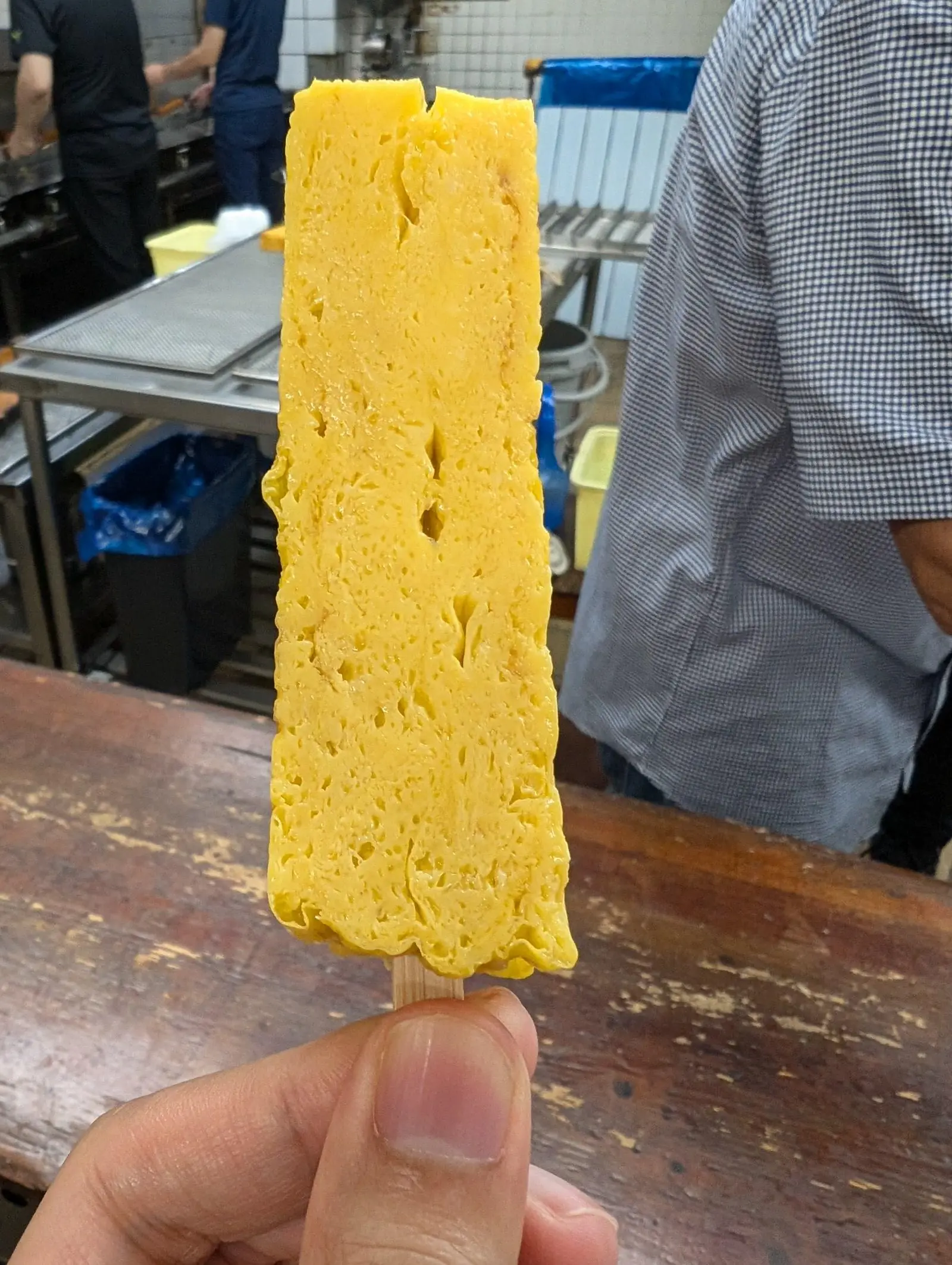
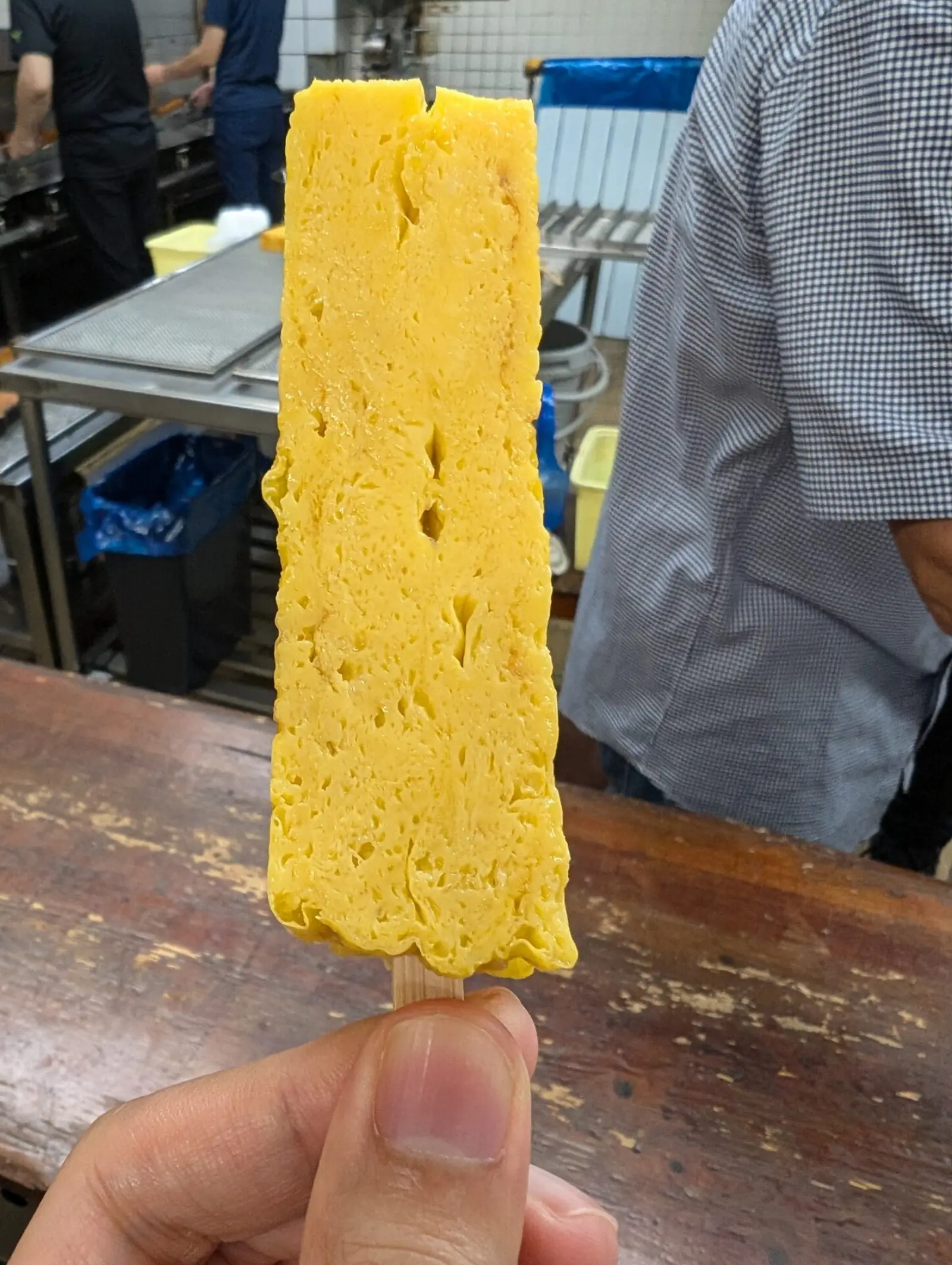
If Tsukiji has a signature food, it's tamagoyaki, the thick, layered Japanese egg omelette cooked in a rectangular pan. Two shops dominate the tamagoyaki scene: Yamachou and Shouro. Yamachou's version is sweeter, almost dessert-like, with a caramelized exterior that cracks slightly when you bite into it. Shouro's is more savory, with a prominent dashi flavor that appeals to people who find the sweet version too much. A stick is typically around 200 yen, and watching the cook build it layer by layer (pouring batter, rolling, pouring again) is half the experience. I eat tamagoyaki almost every time I'm at the market. It never gets old. Try Yamachou's tamagoyaki on the Tsukiji + Ginza tour →
Fresh Sushi: Standing Up, As It Should Be
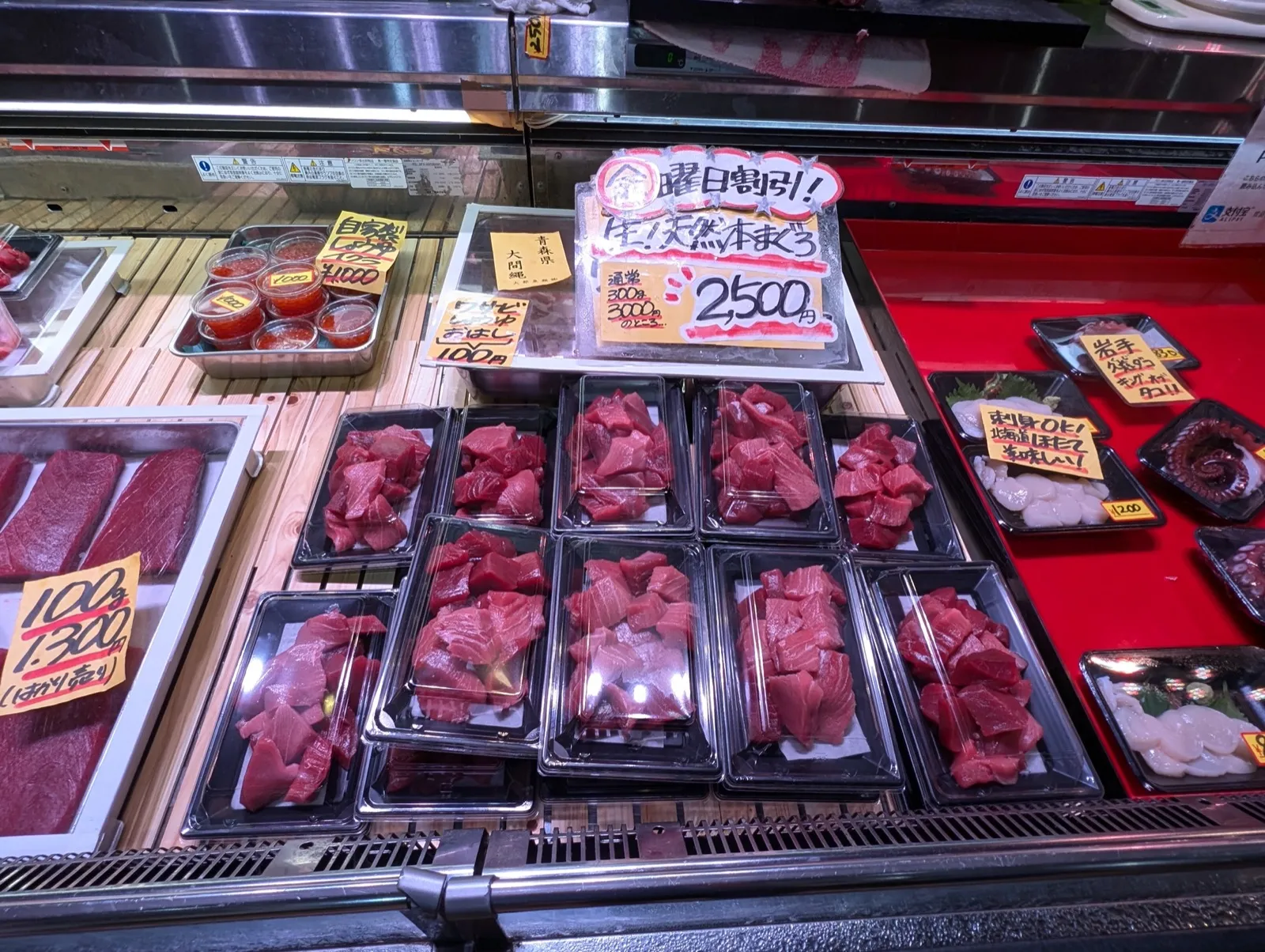
Tsukiji's standing sushi counters (tachigui-zushi) are where I send every visitor who asks me about sushi in Tokyo. The fish is sourced directly from wholesalers, in some cases from the same families who used to work the inner market floor, and the quality is extraordinary for the price. A set of 8 to 10 pieces runs about 1,500 to 3,000 yen depending on the cuts, and you're eating elbow-to-elbow with salarymen and local chefs on their day off. The famous sit-down spots that built Tsukiji's sushi reputation — Sushi Dai and Daiwa Sushi — actually relocated to Toyosu with the inner market in 2018, so any "Tsukiji Sushi Dai" listings you find online are out of date. The standing counters that remain in the outer market serve fish that's just as fresh, with no hours-long queue. If you want deeper recommendations on sushi across the city, I've written a separate sushi guide for Tokyo that goes into much more detail.
Seafood Rice Bowls (Kaisendon)
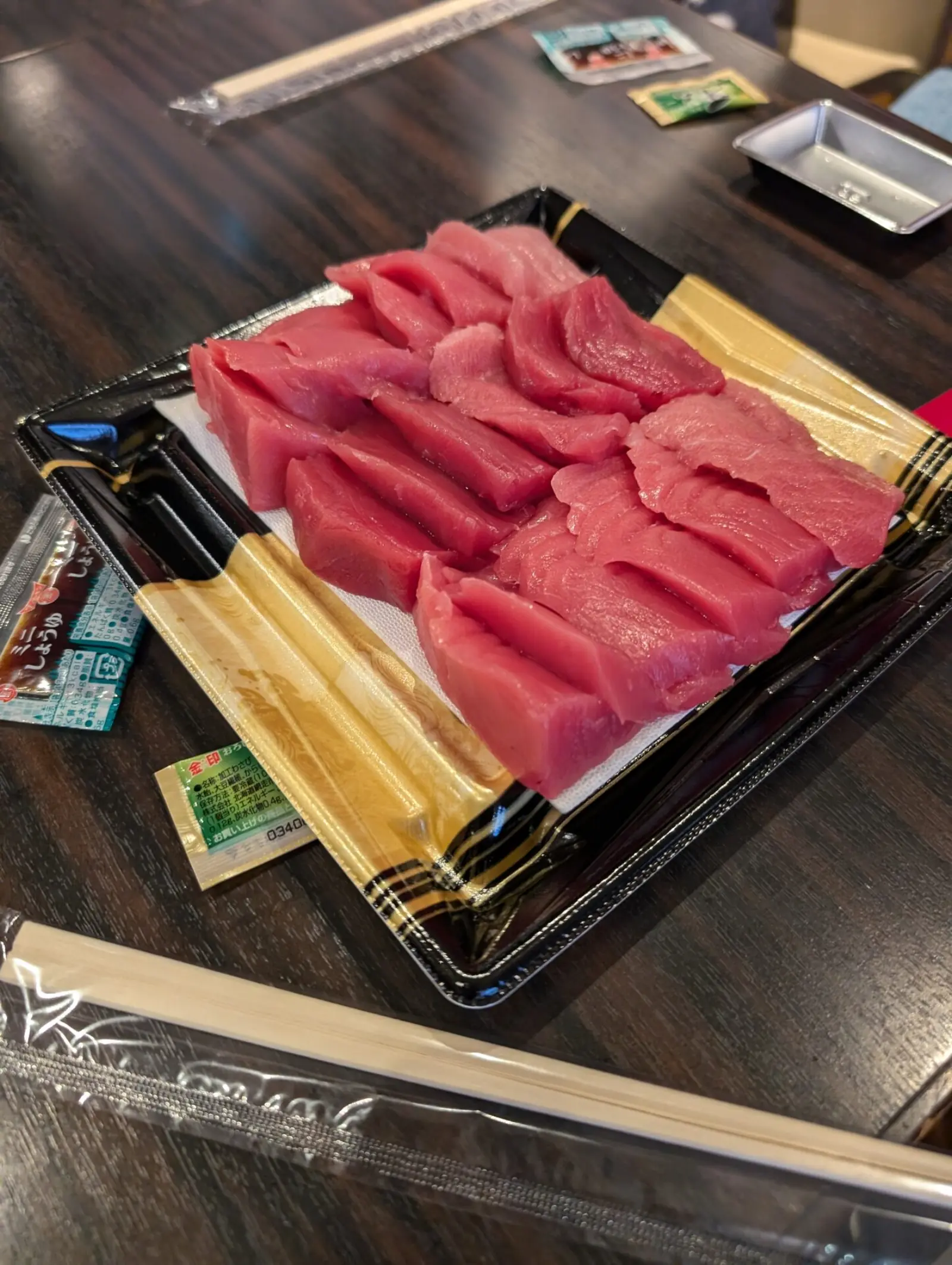
If you want a proper sit-down meal rather than grazing on street food, a kaisendon (a bowl of warm sushi rice topped with an assortment of raw seafood) is the way to go. The best versions feature glistening slices of maguro (tuna), salmon, hamachi (yellowtail), ikura (salmon roe), and sometimes uni, all arranged over perfectly seasoned rice. Expect to pay 1,500 to 3,000 yen depending on the toppings. My advice: go to the shops set back from the main tourist lanes. The restaurants at the market's edges charge premium prices for the same fish you can get for less deeper inside. Quality is consistent across the market. Location is the markup.
Pickles and Dried Goods: The Souvenirs Worth Buying
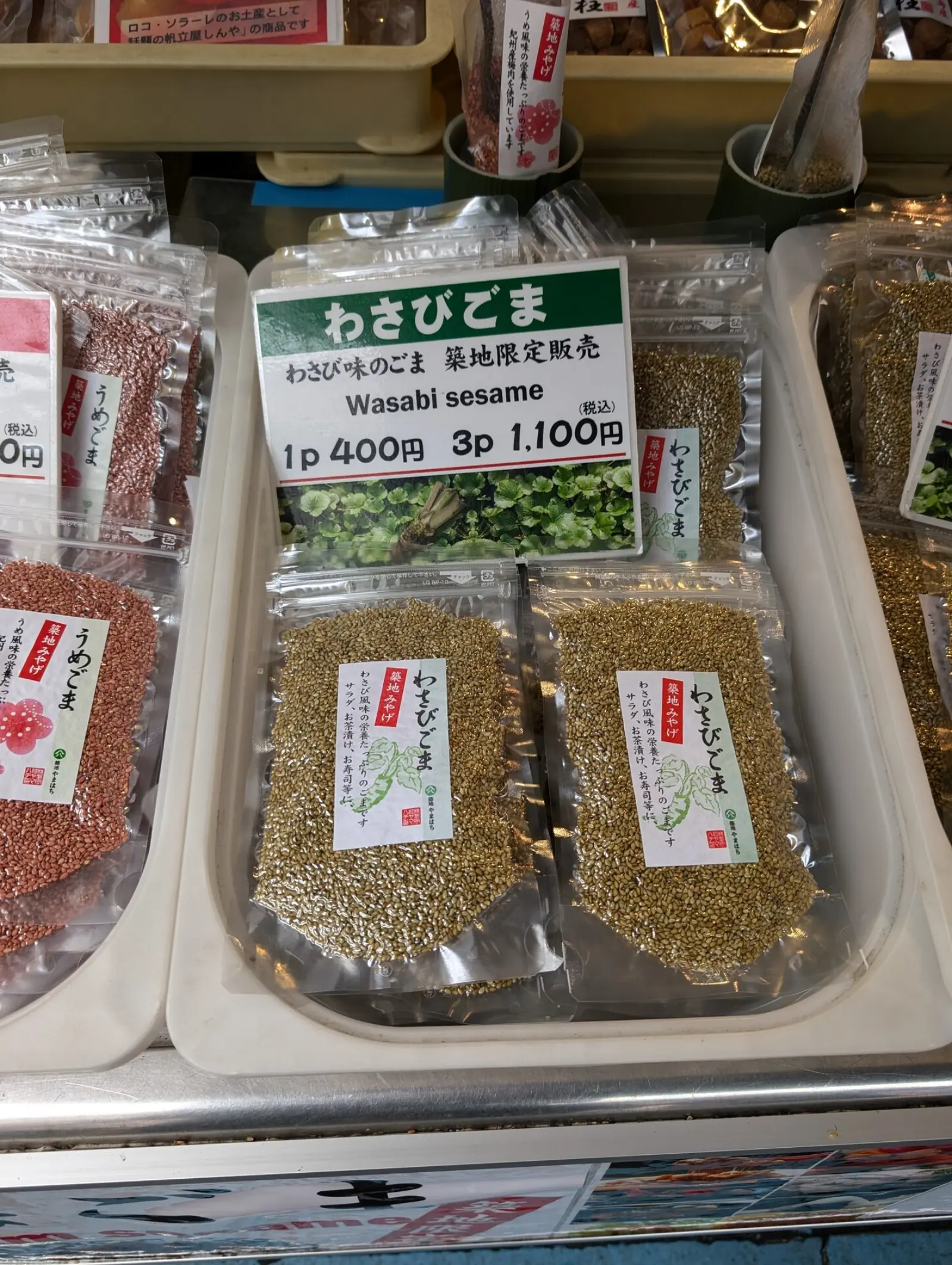
Not everything at Tsukiji needs to be eaten on the spot. The pickle shops (tsukemono-ya) sell an astonishing variety of Japanese pickled vegetables, from classic cucumber and daikon to more unusual items like pickled plums, wasabi-marinated lotus root, and sake-lees pickled turnips. Most shops offer free samples, and the vendors are patient with curious visitors. Dried goods shops carry katsuobushi, kombu, nori, and dried shrimp, the building blocks of Japanese cooking. If you want to take the flavors of Japan home with you, these are the souvenirs that actually matter. They're lightweight, packaged for travel, and will transform your home cooking in ways that a keychain from the airport never could.
📝 Guide's Insider Note
The market is noticeably busier this spring compared to last year — cherry blossom season is overlapping with spring break travel. If you're visiting in late March or April, arrive by 7:30 AM instead of the usual 8:00 AM.
Two stalls I'm currently recommending to clients: the grilled mochi shop in the second alley (just reopened after renovation) and the new craft sake tasting counter near the east entrance — they offer 3-pour flights for ¥500.
Updated based on Manabu's actual tours. Last visit: March 28, 2026.
How to Get There and When to Arrive
Timing is everything at Tsukiji, and this is where a proper tsukiji guide earns its value. The market operates on a rhythm shaped by decades of tradition. Arrive at the right time and you'll have an extraordinary experience. Arrive too late and you'll find shuttered stalls and picked-over displays.
Arrive by 8:00 AM. This is the sweet spot. The stalls are fully set up and stocked, the grills are fired up, the fish is at peak freshness, and the crowds haven't yet built to their midday density. By 8 AM, you'll have room to browse, ask questions, take photos, and eat without feeling rushed. Between 9 and 10 AM is still good but noticeably busier. After 11 AM, you're competing with lunch crowds. By 1 to 2 PM, many stalls begin closing, and by 3 PM the market is largely shut down for the day.
Getting there: The easiest route is the Tokyo Metro Hibiya Line to Tsukiji Station (Exit 1). You'll be at the market's edge in a two-to-three-minute walk. Alternatively, the Oedo Line stops at Tsukiji-shijo Station, which is slightly closer to the former inner market site. From most central Tokyo hotels, the journey takes 15 to 25 minutes by subway. Staying in Ginza? You can also walk from Ginza to Tsukiji in about 15 minutes along Harumi-dori — flat, scenic, and past Kabukiza Theatre.
Best days to visit: Weekday mornings are ideal. Tuesday, Thursday, and Friday give you the best combination of full stock and manageable crowds. Saturdays are doable but significantly more crowded, especially after 9 AM. Avoid Sundays and select Wednesdays. Most stalls are closed on Sundays and on certain Wednesdays that follow the Tokyo Central Wholesale Market calendar (not every Wednesday). Always check the market's official calendar before your visit, as additional closure days occur around holidays. If you only have one morning in Tokyo for food, make it a Tuesday, Thursday, or Friday at Tsukiji.
Plan to spend 90 minutes to two hours for a thorough visit. That gives you enough time to walk the full market, eat three or four things, browse the knife shops and pickle vendors, and leave satisfied rather than overwhelmed. If you're interested in pairing your market visit with ramen later in the day, my Tokyo ramen guide has neighborhood-specific recommendations that work well as a Tsukiji follow-up.
Tsukiji vs. Toyosu: Should You Visit Both?
This is the question I get asked more than any other in my tsukiji guide conversations with visitors, so let me give you an honest comparison. Both markets have value, but they offer fundamentally different experiences, and most visitors only need one.
Tsukiji Outer Market is about food, atmosphere, and sensory immersion. You walk through narrow lanes, eat from stalls, interact with vendors, and experience the market on a human scale. It's tactile, immediate, and deeply satisfying. No reservation is needed. You show up, you eat, you explore. The experience is organic and personal. Every visit is slightly different depending on what's in season, what catches your eye, and which vendor decides to offer you a free sample of their best uni.
Toyosu Market is about spectacle and scale. The main attraction is the tuna auction, which takes place at dawn and is genuinely impressive. Watching auctioneers sell multi-million-yen bluefin tuna in a matter of seconds is unlike anything else in the world. But the experience is observed from behind glass on elevated walkways. You're watching, not participating. The auction requires winning a monthly lottery (applied online, with winners chosen at random — not first-come-first-served). About 120 visitors are admitted per day to the premium observation deck — three groups of 40, rotating every 10 minutes between roughly 5:45 and 6:15 AM — and applications open roughly one month in advance. The market itself is a modern, sterile facility that lacks the atmospheric charm of Tsukiji's weathered lanes.
My honest recommendation: if you only have time for one, choose Tsukiji. The food is better for visitors, the atmosphere is richer, and the experience requires zero advance planning. If you're a serious seafood enthusiast and can secure a Toyosu auction reservation, do both: Toyosu at dawn for the auction, then Tsukiji by 8 AM for breakfast. It makes for an unforgettable morning, though an exhausting one.
One thing I tell all my guests: Tsukiji's outer market is not a consolation prize for the inner market's departure. It's the main event. Always has been, even when the wholesale floor was still operating next door. The inner market was fascinating for industry insiders, but the outer market is where the food is, and food is what brings people to Tsukiji in the first place.
If you're still weighing the two, I wrote a dedicated side-by-side breakdown: Tsukiji vs Toyosu: Which Tokyo Fish Market Should You Visit? — with a comparison table covering hours, access, food options, and the Toyosu tuna-auction lottery. For the cleaner 2026-specific framing (Outer Market vs Toyosu only, ignoring the closed Inner Market), see Toyosu vs Tsukiji Outer Market. For the full Outer-vs-Inner explainer, see Tsukiji Outer vs Inner Market.
Want to experience Tsukiji with a local who knows every stall?
On our walking tours, I take you through the market the way I experience it myself: no tourist traps, no overpriced bowls at the entrance, just the best food and the stories behind the vendors who make it. I'll help you navigate the lanes, order with confidence, and eat things you'd never find on your own. Tsukiji is best experienced with someone who knows it by heart.
Frequently Asked Questions
Is Tsukiji Market still open in 2026?
Yes. The inner wholesale market moved to Toyosu in 2018, but the outer market, with roughly 460 shops, restaurants, and food stalls, remains open and thriving. It's one of the best food destinations in Tokyo and well worth a morning visit.
What time does Tsukiji Outer Market open and close?
Most shops at Tsukiji Outer Market open around 5:00 AM and close by 2:00 PM, though each shop sets its own hours. The peak window for visitors is 7:00–11:00 AM, when everything is open and stocked. After 2:00 PM the market is effectively shut down for the day.
Is Tsukiji Outer Market open on Sundays?
No. Tsukiji Outer Market is closed every Sunday — most shops, food stalls, and restaurants are shut. A handful of cafes near the market may open, but it's not worth a visit. Plan for Tuesday, Thursday, or Friday morning instead.
What time should I arrive at Tsukiji?
Aim for 8:00 AM. The stalls are fully stocked, the grills are hot, and the crowds are still manageable. Between 9 and 10 AM is acceptable but busier. Most stalls begin closing by 1 to 2 PM, so this is strictly a morning destination.
Is Tsukiji open on weekends?
Saturday mornings are open but very crowded with both tourists and local shoppers. Most stalls are closed on Sundays and on select Wednesdays (following the wholesale market calendar — not every Wednesday). Weekday mornings (Tuesday, Thursday, and Friday) offer the best experience: full selection, fewer crowds, and a more relaxed atmosphere. Check the official market calendar before your visit.
Should I visit Tsukiji or Toyosu?
For most visitors, Tsukiji is the better choice. The food variety is greater, the atmosphere is more immersive, and no reservation is needed. Toyosu is worth visiting only if you specifically want to see the tuna auction, which requires winning a monthly lottery (not a simple reservation). If you have time, you can do both in one morning: Toyosu at dawn, Tsukiji by 8 AM.
How do I get to Tsukiji Market?
Take the Tokyo Metro Hibiya Line to Tsukiji Station (Exit 1). The outer market is a two-to-three-minute walk from the station. Alternatively, the Toei Oedo Line stops at Tsukiji-shijo Station (Exit A1, about 1 minute on foot). From most central Tokyo hotels, the journey takes 15 to 25 minutes by subway.
Why do some sites call it "Tsuki Market" or "Tsuki Fish Market"?
Those are typos. The correct name is Tsukiji (築地, "tsoo-kee-jee"), not Tsuki. You'll see "Tsuki Market" or "Tsuki Fish Market" in old travel forums and auto-corrected search results, but no signage, station name, or local source uses that spelling. If you're navigating to the "Tsuki market," you're heading to the same place described above.
What are the official Tsukiji Market opening hours?
Per the official Tsukiji Outer Market site, the market operates in three windows: 6:00–9:00 AM for professional buyers (chefs, wholesalers), 9:00 AM–2:00 PM for the general public, and flexible hours after 2:00 PM. In practice, individual shops open as early as 4:00 AM and most begin closing by 1:00 PM. The visitor sweet spot is 7:00–11:00 AM, when everything is open and stocked.
What time does Tsukiji Fish Market close?
Most stalls at Tsukiji Outer Market close between 1:00 PM and 2:00 PM, and by 3:00 PM the market is effectively shut down. The original Tsukiji fish market — meaning the wholesale auction floor — moved to Toyosu in 2018, so today's "Tsukiji fish market opening hours" actually refer to the outer market, which is built for visitors rather than professional auctions.
Is Tsukiji Market open during the New Year holiday?
No. The Tsukiji Outer Market closes for the New Year holiday, typically from December 30 through January 4. The week leading up to that closure (December 28–30) is the single busiest period of the year. If your Tokyo trip falls in early January, plan to visit from January 5 onward, and check the official calendar for that year's exact reopening date.