Quick decision
For most visitors, go to Tsukiji.
It has better food variety, more atmosphere, and no reservation needed. Toyosu is worth it only if you specifically want to see the tuna auction, which requires winning a monthly lottery.
But the reality is more nuanced than that. As a guide who takes clients to both markets regularly, I'll explain when Toyosu actually makes more sense — and how to combine both in one morning.
"Should I go to Tsukiji or Toyosu?" This is one of the most common questions I get from visitors planning their Tokyo itinerary, and I completely understand the confusion. The internet is full of contradictory advice. Some sites say Tsukiji is closed. Others say Toyosu replaced it. A few claim you need reservations for both. Almost none of them get the full picture right.
I'm Manabu, a nationally licensed tour guide, and I take clients to both markets regularly. I've walked through Tsukiji's narrow lanes hundreds of times and I've watched the Toyosu tuna auction more times than I can count. The short answer is that these are two fundamentally different experiences, and which one you should visit depends entirely on what kind of traveler you are.
Let me give you the honest, detailed comparison that I give my tour clients — no hype, no outdated information, just a guide's perspective on two of Tokyo's most famous food destinations.
Manabu's take
The honest answer is simple, but the reason matters.
If you only have one morning, I would start with Tsukiji. Toyosu is fascinating for the auction, but Tsukiji gives most travelers more food, more atmosphere, and fewer logistics.
What Actually Moved in 2018?
To understand the Tsukiji vs Toyosu debate, you need to understand what happened in October 2018, because this is where all the confusion started. Tsukiji was never one single market. It was actually two distinct operations sharing the same neighborhood: the inner wholesale market and the outer retail market.
The inner wholesale market was the massive, professional-only floor where licensed wholesalers auctioned and sold seafood in bulk every morning before dawn. This was where the famous tuna auctions happened, where turret trucks raced through narrow aisles, and where thousands of tons of fish changed hands before most of Tokyo woke up. The facilities were aging, sanitation was difficult to maintain, and after years of delays and political debates, the entire inner wholesale operation relocated to Toyosu, a modern facility built on a man-made island in Tokyo Bay.
The outer market was (and still is) a dense network of over 460 retail shops, restaurants, and street food stalls that grew up around the wholesale operation over decades. These businesses served a different clientele: local chefs sourcing ingredients, neighborhood residents buying groceries, and food-loving visitors looking for the freshest sushi and seafood in the city. When the inner market moved, the outer market had no reason to follow. Their customers were right here. So they stayed.
Here's the crucial point that most travel articles miss: the part of Tsukiji that tourists actually visited and enjoyed — the food stalls, the sushi counters, the knife shops, the tamagoyaki vendors — never moved. It's still exactly where it's always been, still thriving, and in many ways better than before the inner market's departure. New shops have opened in the spaces left behind, and the area has become even more visitor-friendly.
So when someone tells you "Tsukiji is closed," they're repeating a half-truth that has confused millions of travelers. The wholesale floor is gone. The soul of the market — the part you can taste, touch, and experience — is very much alive.
The part of Tsukiji that most tourists actually enjoyed never moved. The wholesale floor is gone. The food neighborhood is still alive.
Side-by-Side Comparison
| Feature | Tsukiji Outer Market | Toyosu Fish Market |
|---|---|---|
| Status (2026) | Fully open | Fully open |
| Best for | Street food & shopping | Tuna auction viewing |
| Number of vendors | 460+ shops & stalls | ~40 restaurants in visitor area |
| Hours | ~5 AM - 2 PM (varies by shop) | Auction viewing: 5:30 AM (lottery required) |
| Closed days | Sundays + select Wednesdays | Sundays + holidays |
| Reservation needed | No | Yes (auction lottery) |
| Food variety | Sushi, sashimi, tamagoyaki, grilled seafood, wagashi, knives, kitchenware | Sushi restaurants (visitor deck) |
| Atmosphere | Bustling, old-school, narrow alleys | Modern, clean, spacious |
| Getting there | Tsukiji Station (Hibiya Line) 2 min walk | Shijo-mae Station (Yurikamome Line) |
| Cost | Free entry, food from ~100 | Free entry, restaurant meals ~2,000+ |
| Time needed | 1.5 - 3 hours | 1 - 2 hours |
| Guide's rating | 5 out of 5 | 3 out of 5 |
Best for most travelers
Choose Tsukiji if…
- You want street food, breakfast, and old-school market atmosphere.
- You do not want to deal with reservations or lottery timing.
- You like browsing knives, ceramics, tea, pickles, and kitchen goods.
For auction-focused
Choose Toyosu if…
- You specifically want to see the tuna auction.
- You prefer a clean, spacious, modern facility.
- You already secured an auction viewing slot and can arrive early.
Tsukiji Outer Market: What to Expect
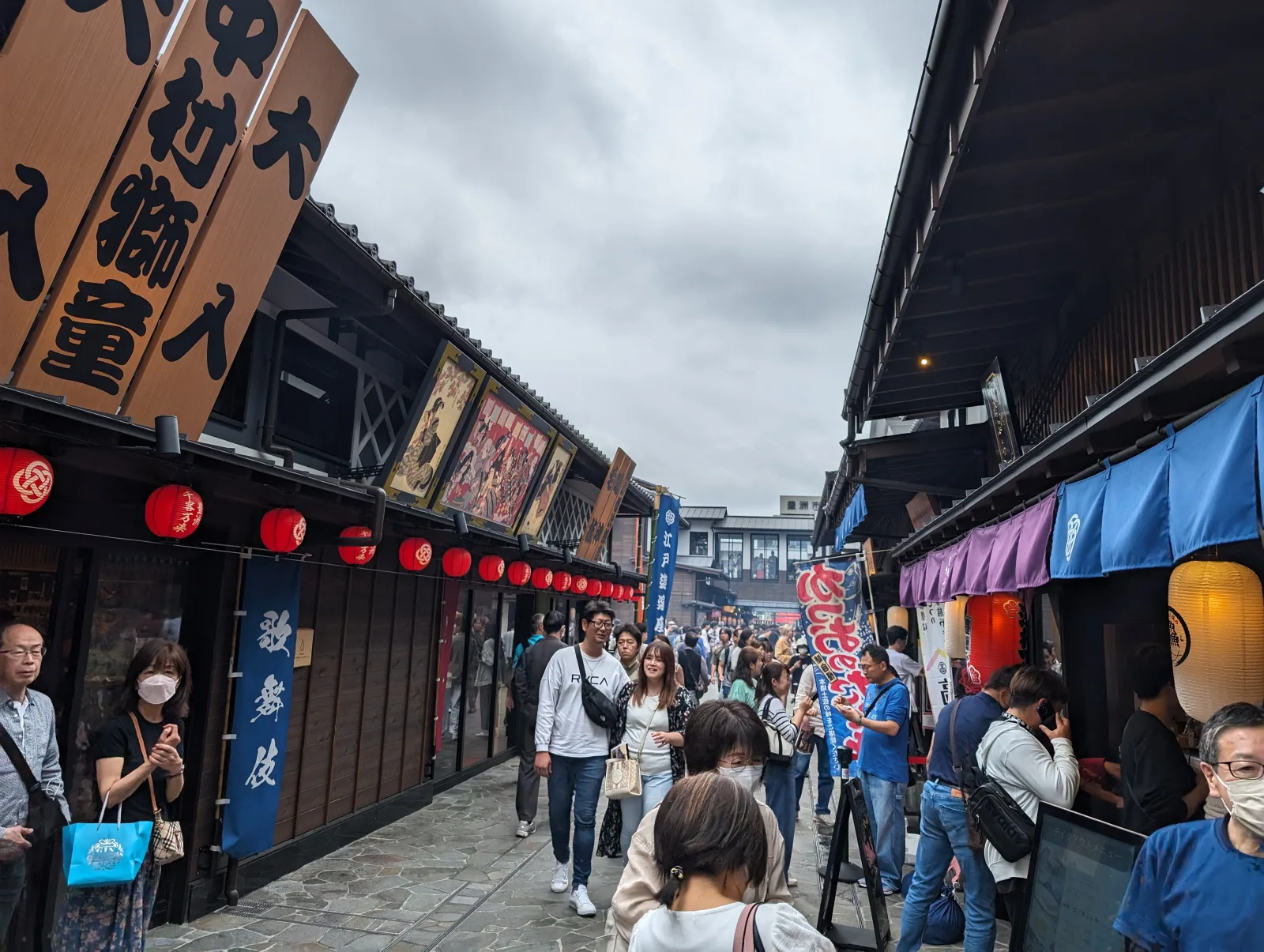
Walking into Tsukiji's outer market is an assault on the senses in the best possible way. The first thing that hits you is the smell — charcoal grills firing up, the clean brine of fresh seafood, dashi broth simmering in enormous pots, and the sweet caramel scent of tamagoyaki cooking on hot rectangular pans. Then the sounds: vendors calling out their morning specials, the rhythmic thwack of a knife breaking down a tuna loin, the sizzle of scallops hitting a grill. And finally the sight of it all — over 460 shops and stalls packed into a tight grid of narrow lanes, each one overflowing with color and activity.
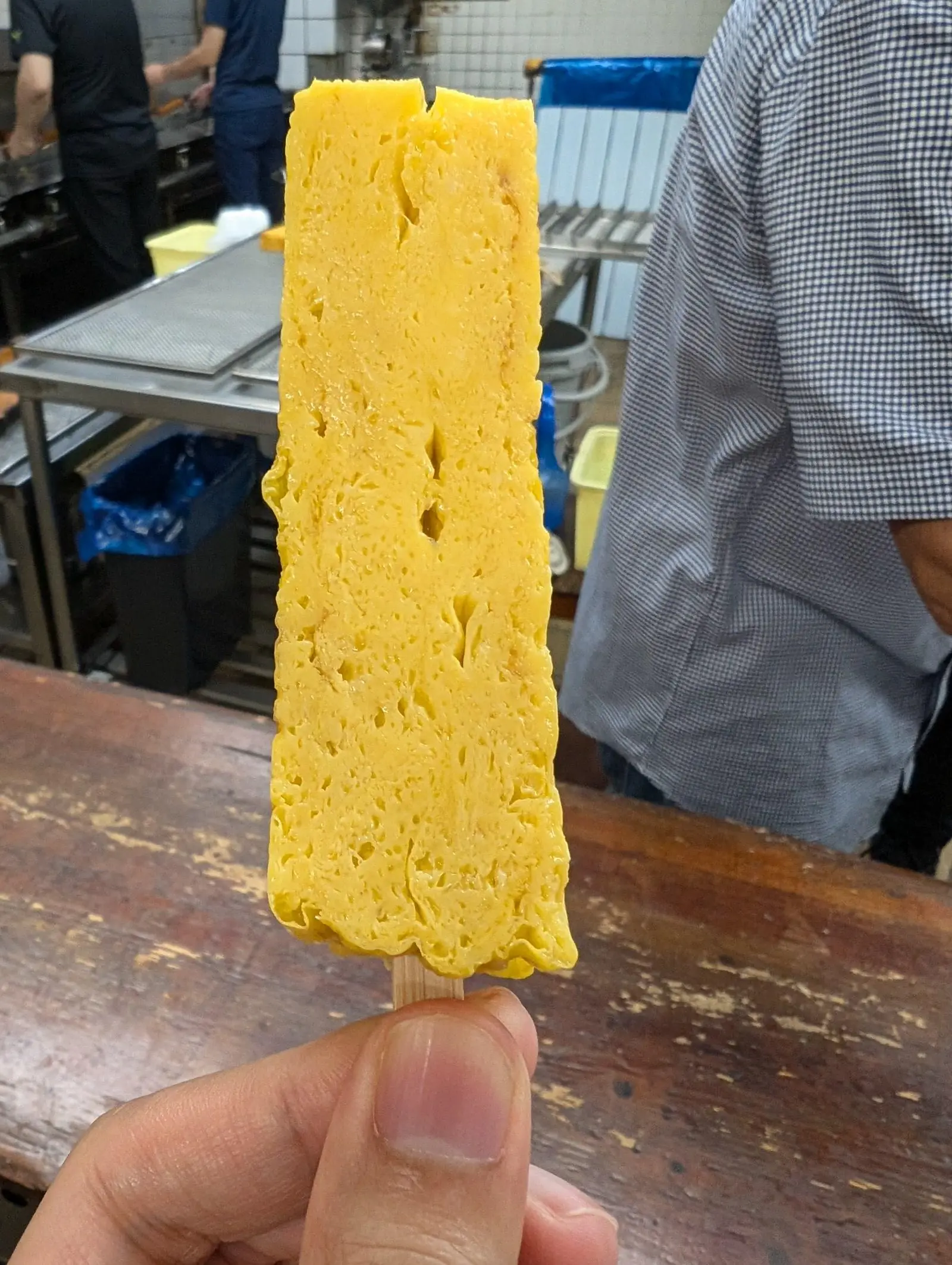
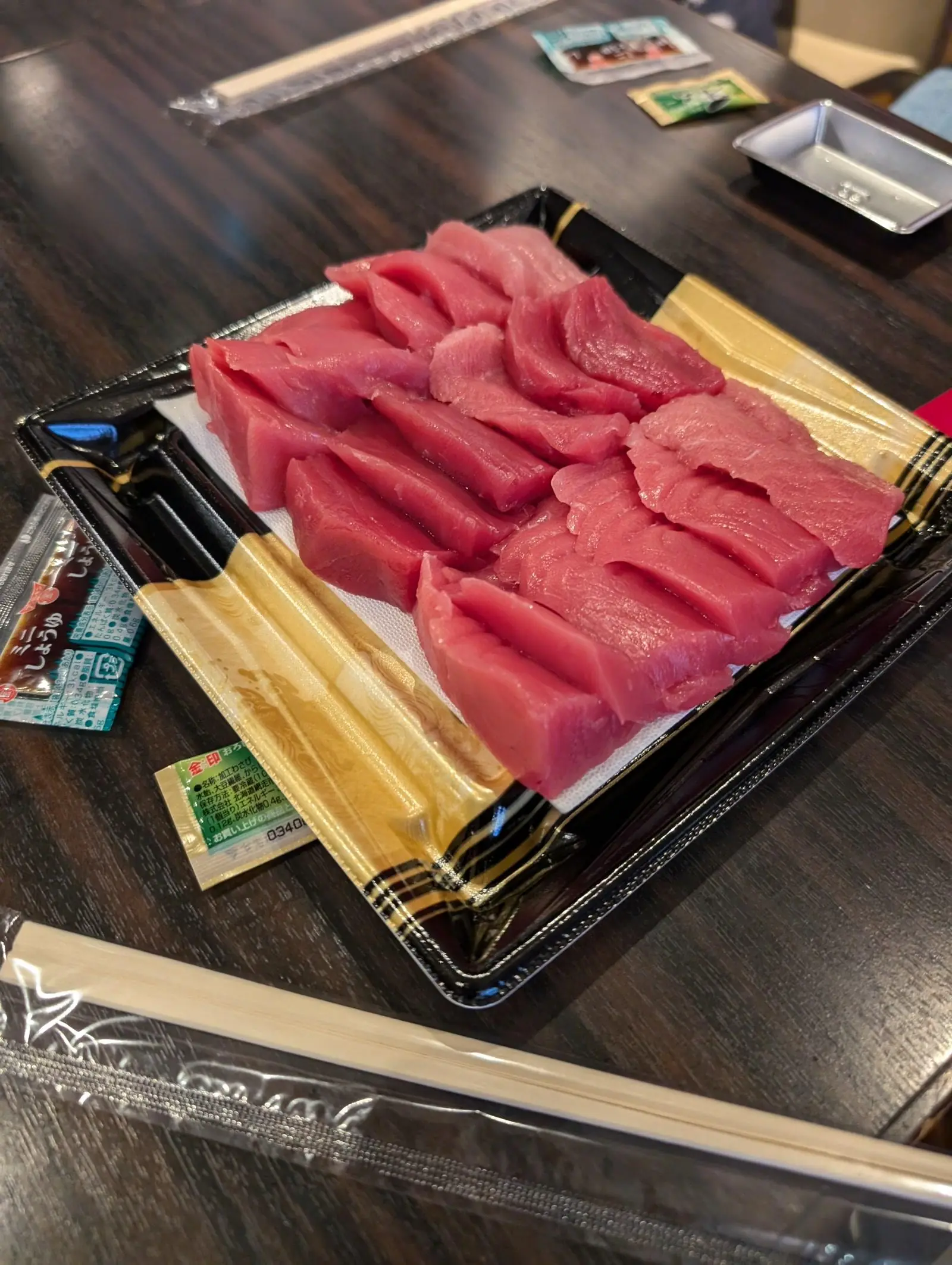
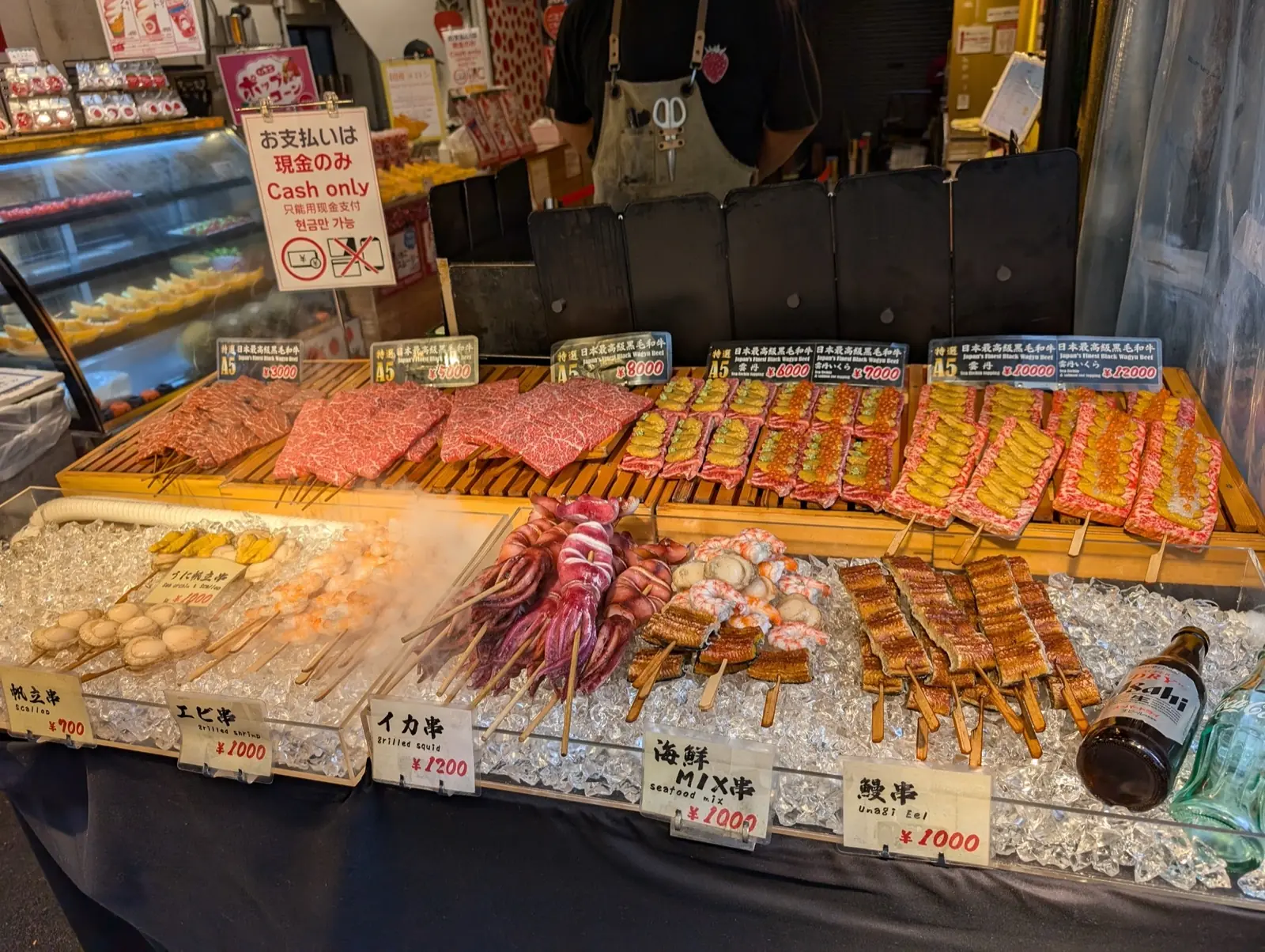
The variety of food here is staggering. You can start your morning with a stick of golden tamagoyaki from one of the legendary egg vendors (Yamachou for the sweet version, Shouro for the savory dashi-forward style), then move on to a paper cup overflowing with fresh uni (sea urchin), followed by grilled hotate (scallops) basted in soy butter, a skewer of wagyu beef, and a cup of matcha from one of the traditional tea shops. And that's before you've even sat down for sushi. The standing sushi counters here serve fish sourced directly from wholesalers at prices that would be unthinkable at a sit-down restaurant in Ginza, just a 15-minute walk away.
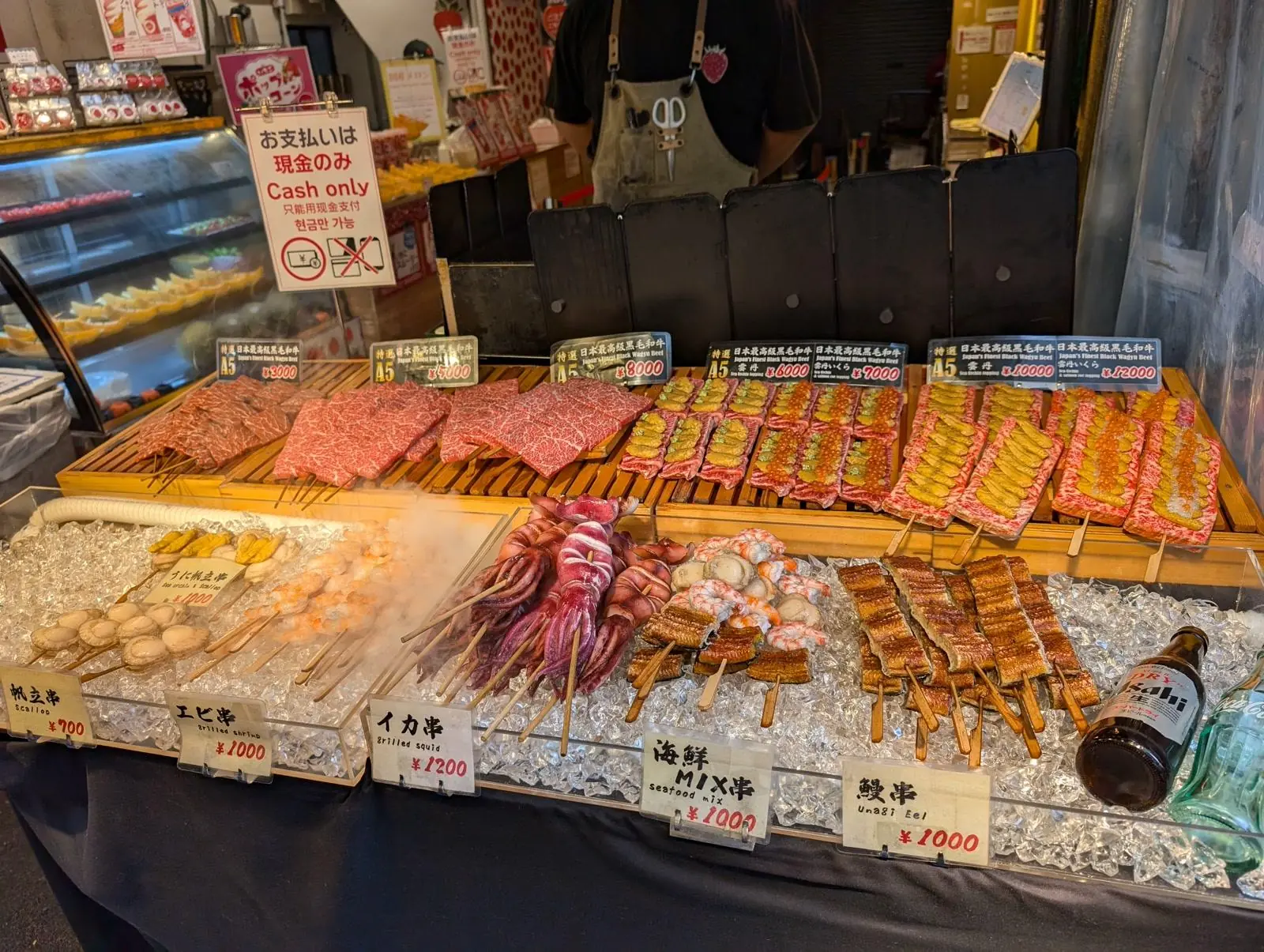
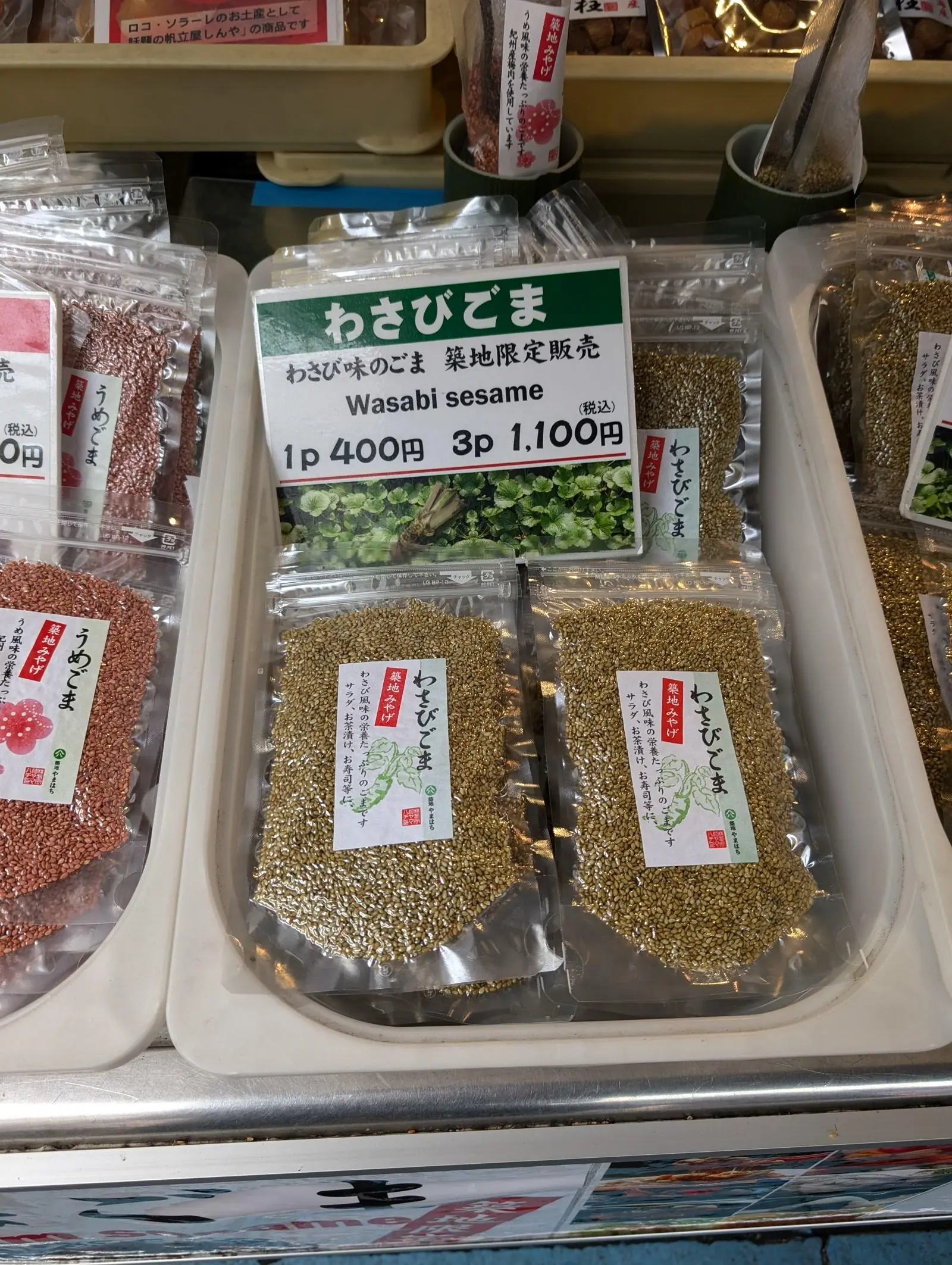
Beyond the food, Tsukiji is a treasure trove for anyone interested in Japanese culinary culture. The knife shops here supply professional chefs across Tokyo and are famous worldwide for their hand-forged Japanese steel blades. If you're looking for a kitchen souvenir that will last a lifetime, a Tsukiji knife is it. You'll also find shops selling ceramics, lacquerware, dried goods like katsuobushi (bonito flakes) and kombu (kelp), and an astonishing variety of Japanese pickles.
Timing matters. The sweet spot is 8:00 AM. Stalls are fully set up, grills are fired, and crowds haven't peaked yet. Between 9 and 10 AM is still good but noticeably busier. After 11 AM, you're competing with lunch crowds, and by 1 to 2 PM many stalls start closing. Weekday mornings (especially Tuesday, Thursday, and Friday) give you the best experience. Saturday mornings are open but crowded. Most stalls are closed on Sundays and select Wednesdays.
What I love about Tsukiji, and what keeps me coming back week after week with my tour guests, is that it feels alive. This isn't a tourist attraction pretending to be a market. It's a working market that happens to welcome visitors. The vendors know their products with an expertise that borders on obsessive, and that passion is contagious. When a fishmonger explains which ocean your otoro came from and how many days it's been aging, you're getting a glimpse into a food culture that runs centuries deep.
For a complete guide to everything you can eat and do at Tsukiji, read my detailed Tsukiji Market Guide. And if you want to experience the market with a guide who knows every stall, check out our Tsukiji & Ginza walking tour.
Toyosu Fish Market: What to Expect
Toyosu Market opened in October 2018 as the replacement for Tsukiji's inner wholesale market. It sits on a man-made island in Tokyo Bay, and the contrast with Tsukiji could not be more stark. Where Tsukiji is weathered, chaotic, and organic, Toyosu is gleaming, orderly, and institutional. The facility is massive — three large buildings connected by pedestrian bridges, housing the tuna auction hall, the intermediate wholesalers, and a row of restaurants and shops for visitors.
The main attraction for visitors is the tuna auction, and I won't deny that it's genuinely impressive. Watching rows of frozen bluefin tuna laid out on the auction floor, each one potentially worth tens of thousands of dollars, being sold in rapid-fire bidding that lasts just seconds per fish, is unlike anything else in the world. The sheer scale of the operation — Japan's entire seafood supply chain in action — gives you a visceral appreciation for how seriously this country takes its fish.
But here's what you need to know: the visitor experience at Toyosu is fundamentally observational, not participatory. You watch the auction from behind glass on an elevated viewing deck. You walk along enclosed corridors above the wholesale floor, looking down through windows at the action below. The design prioritizes hygiene and efficiency (which is exactly what a wholesale fish market should do), but it means you're always separated from the actual market by a barrier. You're watching, not touching, not tasting, not interacting.
The auction viewing requires winning a monthly lottery. This is not a simple reservation — you apply online roughly one month in advance, and winners are selected at random. Only about 100 visitors are admitted per auction day, and the viewing takes place around 5:30 AM. If you don't win the lottery, there's still a visitor deck where you can observe the intermediate wholesale area during market hours, but you won't see the main tuna auction.
There is a restaurant floor with about 40 establishments, including several that relocated from the old Tsukiji inner market. The sushi here is excellent — some of these restaurants have decades-long reputations — but expect to pay premium prices (most meals start around 2,000 yen and popular spots can exceed 5,000 yen) and deal with long queues at the famous names. The restaurant floor is also the only area where you can eat; there's no street food scene here, no grazing from stall to stall the way you do at Tsukiji.
I want to be honest with my assessment: Toyosu is an impressive logistics operation and the tuna auction is a genuine spectacle, but as a visitor experience, it's more sterile than satisfying. Most of my clients who visit Toyosu come away saying "that was interesting" rather than "that was amazing." The glass barriers, the institutional architecture, and the lack of sensory immersion make it feel more like visiting a museum about fish than visiting a fish market. If you're a serious seafood industry enthusiast or a food professional, Toyosu is fascinating. For the average food-loving traveler, Tsukiji delivers a far richer experience.
Can You Visit Both in One Day?
Yes, and it actually makes for an incredible morning if you're willing to start early. The two markets are about 20 minutes apart by train, and their schedules complement each other nicely. Here's the itinerary I recommend to my clients who want the full Tokyo fish market experience:
Toyosu tuna auction viewing. If you won the lottery, arrive at Toyosu Market by 5:15 AM. The auction viewing takes about 45 minutes to an hour. Watch the auctioneers work their magic, take photos through the glass, and appreciate the scale of Japan's seafood industry. Even without the auction lottery, the intermediate wholesale area is active and worth observing from the visitor corridors.
Grab breakfast at Toyosu (optional). If you're hungry, have a quick sushi breakfast at one of the restaurants. But honestly, I'd recommend saving your appetite for Tsukiji.
Head to Tsukiji. The fastest route is a taxi direct from the market to Tsukiji Outer Market — about 10–15 minutes and ¥1,500–2,000. By subway: Yurikamome from Shijo-mae to Toyosu (1 stop, ~3 min) → Tokyo Metro Yurakucho Line to Shintomicho (2 stops, ~5 min) → 7-min walk to Tsukiji. Total subway time around 20–25 minutes.
Tsukiji food crawl. This is where the real eating happens. Graze through the outer market at your own pace — tamagoyaki, fresh uni, grilled scallops, standing sushi, Japanese pickles, matcha. Take your time, talk to vendors, and eat until you can't eat anymore.
Walk to Ginza for lunch or shopping. Tsukiji is a 15-minute walk from Ginza, Tokyo's upscale shopping district. It's a natural next stop and makes for a satisfying transition from the market's old-school energy to Ginza's polished elegance. (For the reverse trip — walking to Tsukiji from a Ginza hotel — see my Ginza to Tsukiji walking guide.)
This combined itinerary gives you the best of both worlds: the spectacle of Toyosu's wholesale operation and the sensory immersion of Tsukiji's food scene. The only catch is the early wake-up — you'll need to leave your hotel by 5:00 AM at the latest, which means going to bed early the night before. Most of my clients tell me the early start was absolutely worth it, but it does take a toll if you're already running on jet lag.
If you only have time for one market (and for most visitors, that's the case), I always recommend Tsukiji. The food variety alone makes it the better choice for anyone who wants to eat well and experience the atmosphere of a real Japanese market.
My Honest Recommendation
After guiding hundreds of visitors to both markets, here's my straightforward advice:
- If you love food and want the best market experience: Go to Tsukiji. No contest. The food variety is incomparably greater, the atmosphere is electric, and you don't need any reservations or lottery luck. Just show up hungry on a weekday morning and let your senses guide you. This is the Tokyo fish market experience that lives up to the hype.
- If you're a serious seafood or food industry enthusiast: Do both. Start with the Toyosu auction at dawn, then head to Tsukiji for breakfast. You'll see the full lifecycle of Japan's seafood industry, from wholesale auction to retail consumption, in a single morning.
- If you specifically want to see the tuna auction: Plan ahead for Toyosu. Apply for the lottery at least a month before your trip. But have Tsukiji as your backup plan — and honestly, you might end up enjoying it more than the auction itself.
- If you have limited time in Tokyo: Tsukiji, without hesitation. You can combine it with a walk to Ginza afterward for a half-day that covers two of Tokyo's most iconic neighborhoods. Our Tsukiji & Ginza walking tour does exactly this.
One thing I always tell my guests: Tsukiji's outer market is not a consolation prize for the inner market's departure. It's the main event. It always has been, even when the wholesale floor was still next door. The inner market was fascinating for industry insiders, but the outer market is where the food is — and food is what brings people to a fish market in the first place.
Want to experience Tokyo's fish markets with a local guide?
On our Tsukiji & Ginza tour, I take you through the market the way I experience it myself — no tourist traps, no overpriced stalls at the entrance, just the best food and the stories behind the vendors who make it. I'll help you navigate the lanes, order with confidence, and eat things you'd never find on your own.
Frequently Asked Questions
Did Tsukiji Market close?
Only partially. The inner wholesale market (tuna auctions, wholesale vendors) moved to Toyosu in October 2018. But the outer market — with over 460 shops, restaurants, and food stalls — never closed. It remains one of Tokyo's best food destinations and is fully open in 2026. For the full breakdown of what moved versus what stayed, see my Tsukiji Outer vs Inner Market guide. For a 2026-specific decision focused only on what's open today, see Toyosu vs Tsukiji Outer Market.
Is the tuna auction at Tsukiji or Toyosu?
The tuna auction is at Toyosu Fish Market. It moved there from Tsukiji in 2018. To watch the auction, you need to win a monthly lottery — apply online about one month in advance. Only around 100 visitors are admitted per auction day, and viewing takes place from behind glass on an elevated deck starting around 5:30 AM.
Which market has better sushi?
Both markets serve excellent sushi, but the experiences are very different. Tsukiji offers more variety and value — standing sushi counters serve outstanding fish at reasonable prices (8-10 pieces for around 2,000 to 3,000 yen), plus you can graze on other seafood from stalls. Toyosu has about 40 sit-down restaurants with higher prices (meals typically 2,000 to 5,000+ yen) and longer queues. For most visitors, Tsukiji's sushi scene is more accessible and more fun.
Do I need to book in advance for either market?
Tsukiji requires no reservation at all — just show up on a day the market is open (closed Sundays and select Wednesdays). Toyosu's tuna auction requires winning a monthly lottery, applied for online about one month ahead. The Toyosu restaurant floor and visitor corridors are open without reservation, but popular restaurants have long queues. For the best Tsukiji experience, I recommend arriving by 8:00 AM on a weekday morning.
Last updated: March 2026