Quick Answer
Yes, you can see Mt. Fuji from Tokyo — on roughly 40-60% of winter days (November through February), dropping to 10-20% in summer (May through September). The 100 km distance isn't the problem; humidity is. On the right morning, from the right viewpoint, Fuji-san looks close enough to reach out and touch from a tower in central Tokyo.
Below: 5 viewpoints that actually work in 2026 (one beloved free spot is closed for renovation until December — I'll flag it so you don't waste a trip), the one piece of weather science that changes everything about timing, and the ¥4,000 rule that surprised climbers this year.
This article covers everything about seeing Mt. Fuji from Tokyo: the viewpoints that still work in 2026, the best time of day, the months that actually deliver clear views, and how to get closer if a skyline silhouette isn't enough.
"Can you really see Mt. Fuji from Tokyo?" — I get this question almost every week. The short answer is a clean yes. The longer answer is that it depends on the day, the hour, and where you stand. I've been guiding visitors around Tokyo for years, and one of the great pleasures of my job is that moment when someone spots Fuji-san for the first time — unexpectedly, from between two buildings in Shinjuku, or framed by a pedestrian bridge in Odaiba — and just stops talking.
The details below are what I actually tell my clients before a Tokyo tour when they ask, "Is there any chance we'll see Fuji today?"
The Short Answer: Yes, But It Depends on the Day
Mt. Fuji sits about 100 kilometers southwest of central Tokyo. It's the tallest mountain in Japan at 3,776 meters, and its near-perfect conical shape makes it visible from remarkable distances — whenever the air cooperates. The obstacle isn't distance. The obstacle is what sits between you and the mountain: humidity, urban haze, clouds, and seasonal pollen. Yes, Mt. Fuji is visible from Tokyo — just not every day of the year.
Why some days the view vanishes
Fuji visibility is essentially an air-quality problem. In summer, high humidity creates a milky curtain along the horizon. Even on "sunny" days, that suspended moisture can erase the mountain entirely. Winter does the opposite: dry, cold air moving down from Siberia scrubs the atmosphere clean, and Fuji can look so sharp it feels unreal. I remember one January morning walking out of Shinjuku Station when Fuji appeared between the skyscrapers so large and so clearly outlined that it looked like a stage backdrop. Those mornings are why people who live here never stop looking west.
Month-by-Month: When Fuji Is Actually Visible
Visibility statistics vary by source, but local observers and Japan Meteorological Agency patterns agree on the broad shape:
- November to February: Roughly 40-60% of days deliver a clear Fuji view. December and January are the peak, with most mornings open.
- March and April: About 30% of days. Rising humidity and spring haze cut visibility, but early mornings still work often enough.
- May to September: Only 10-20% of days. Summer is the worst season for seeing Fuji from Tokyo. Heat, humidity, and urban pollutants combine to hide the mountain.
- October: Visibility starts rebuilding, around 25-35%. As temperatures drop and the air dries, the sky opens back up.
If your Tokyo trip lands in winter, your odds are genuinely good. In summer, don't plan your itinerary around Fuji — but don't write it off either: the first clear day after a typhoon, when the wind has scoured the atmosphere, produces some of the most dramatic views of the entire year.
5 Best Mt. Fuji Viewpoints in Tokyo (2026 Update)
Not all viewpoints are equal. Some are famous but underwhelming. Others are the kind of quiet spots that locals keep to themselves. After years of climbing towers and testing decks on clear and hazy days, these are the ones I still recommend in 2026 — with a warning at the end about one famous free spot you should skip this year.
1. Tokyo Skytree (the iconic view)
At 634 meters, Tokyo Skytree is the tallest structure in the city and, logically, one of the best places to see Mt. Fuji from Tokyo. From the Tembo Deck at 350 meters — or higher still on the Tembo Galleria at 450 meters — Fuji appears southwest as an unmistakable silhouette. On a clear winter morning, the view is genuinely stunning. Price-wise: weekday advance online tickets are around ¥2,100 for Tembo Deck and about ¥3,400 for the combo ticket that includes Tembo Galleria. Weekends add ¥300, and same-day counter prices are higher. My advice: book online for a weekday opening slot. That's when the crowds are thinnest and the morning air is clearest.
2. Shibuya Sky (newer, 360°, sunset magic)
Shibuya Sky, on the roof of Shibuya Scramble Square at 229 meters, is the newer contender and has quickly become one of my favorite viewpoints. Fuji is to the west, so late afternoon sessions catch it backlit — and on a clear day, the golden-hour silhouette over Tokyo's skyline is genuinely hard to beat. Adult tickets are ¥3,000 before 3:00 PM and ¥3,700 after. One warning: sunset slots sell out fast — often within minutes of being released. Book ahead on the official site, and if sunset is taken, a midday slot still delivers Fuji on a clear day (better visibility, less crowd).
3. Tokyo Tower (the retro angle)
Tokyo Tower is shorter than Skytree (333 meters total, with the Main Deck at 150 meters), but it sits further south and gives you a different angle on Fuji. The Main Deck frames the mountain between the towers of Minato — a more intimate, less crowded view than Skytree. There's something nostalgic about it: the red-and-white steel tower, inspired by the Eiffel Tower, has been here since 1958, and generations of Tokyoites grew up watching Fuji from this exact platform. That tradition is still alive.
4. Roppongi Hills Mori Tower (Tokyo City View)
The 52nd-floor indoor observation deck at Mori Tower is often overlooked, and that's partly why I like it. The west-facing windows line up with Fuji, and the deck rarely fills up the way Skytree or Shibuya Sky do. Combine it with the adjacent Mori Art Museum on a rainy afternoon, then come back to the windows at golden hour.
5. Odaiba & Rainbow Bridge at sunset (free)
Odaiba is an artificial island in Tokyo Bay, and the waterfront promenade next to Rainbow Bridge gives you one of the most photographed compositions in the city: Fuji in the far distance, the Tokyo skyline between, the bay in the foreground. At sunset, when visibility holds, Fuji cuts a dark silhouette against an orange-pink sky. Completely free — just show up. I once took a family there without telling them what they'd see. When the mom spotted Fuji framed by the bridge with Tokyo Tower lit up to the left, she teared up. That's what this view does.
⚠️ Skip in 2026: Bunkyo Civic Center
Older guides and blog posts recommend the free 25th-floor observatory at Bunkyo Civic Center as Tokyo's best-kept Fuji secret. Don't make a trip there in 2026. The Sky View Lounge has been closed for renovation since March 1, 2025, and is not scheduled to reopen until December 2026. If you see this recommended anywhere without a date caveat, the source is out of date.
Bonus: The Shinkansen window trick
Not technically in Tokyo, but worth knowing. If you're taking the Tokaido Shinkansen from Tokyo toward Kyoto or Osaka, book a seat on the right side of the train (window seat column E). Between Shin-Yokohama and Shizuoka, Fuji appears enormous and close for several minutes on a clear day — arguably the best Fuji view in Japan outside of actually being on the mountain. Most travelers don't know this and unwittingly sit on the left side, missing it entirely.
The Best Time of Day (Sunrise Beats Sunset)
Time of day matters nearly as much as season. The atmosphere shifts across the day, and that directly affects your odds.
Sunrise: the highest-probability window
Early morning is, by a meaningful margin, the best time to see Fuji. The air is coolest, humidity hasn't accumulated, and the city hasn't generated its daily load of heat and pollutants. Get to a viewpoint before sunrise and your odds are at their highest. Tokyo's winter sunrise is around 6:30 AM, so you don't need to be extreme about it. Seeing the snowcap catch pink and gold light while the city is still asleep is the image most people remember forever.
Sunset: Fuji as silhouette
Sunset works too, though visibility is usually lower than morning. The payoff is aesthetic: on a clear evening, Fuji appears as a dark cone against a glowing sky. You lose the snow detail and the texture of the slopes, but the shape is unforgettable. Odaiba and the Tokyo Gate Bridge area are the standout sunset viewpoints.
Rain and typhoons
Rainy day? Forget it. Low clouds blanket the horizon and Fuji disappears. But here's the catch most visitors miss: the first clear morning after a typhoon is one of the best viewing days of the entire year. The wind and rain strip pollutants out of the atmosphere, and Fuji emerges with near-impossible clarity. If you're in Tokyo the day after an autumn typhoon, get out early.
Why Japanese People Are Obsessed with Fuji-san
For Japanese people, Mt. Fuji is not just a mountain. It's a national symbol, an object of spiritual devotion, and a bottomless source of artistic inspiration. Understanding a little of why it matters changes how you experience seeing it.
Hokusai's Thirty-Six Views
In the 1830s, ukiyo-e artist Katsushika Hokusai published Thirty-Six Views of Mount Fuji, a series of woodblock prints showing Fuji from different locations and seasons. The most famous, The Great Wave off Kanagawa, puts a giant wave in the foreground with a tiny Fuji in the distance. What most visitors don't realize is that many of those 36 views were painted from places in or near what is now Tokyo (then called Edo). Hokusai knew, nearly 200 years ago, that Mt. Fuji was visible from the capital and that the sight was worth immortalizing. If you're interested in the art, the Sumida Hokusai Museum near Skytree has excellent reproductions.
The emotional layer
When a Tokyoite wakes up and spots Fuji from their apartment window, something in the day resets. It's not a checklist item — it's a quiet signal that things are in place. That's why the question "can you see Mt. Fuji from Tokyo today?" carries more weight here than it might sound to a visitor. It's not really a question about the weather. It's a question about whether the city is showing its best side.
📝 Guide's Insider Note
I keep an informal Fuji log on the fridge at home — just a simple tick for any day I spotted the mountain from my regular commute across central Tokyo. Looking back at the last few years, the pattern is uncannily consistent: December and January average 15-18 clear Fuji days a month for me; July and August barely crack 3-4. Typhoon-aftermath mornings in October are the single best bet I've tracked.
On tours, this informs a simple rule: if you're in Tokyo during peak winter and the forecast calls for low humidity and clear skies, build the Fuji viewpoint into the morning. If you're here in August, don't sacrifice anything for it — but check the sky after storms.
Updated based on Manabu's actual tours. Last visit: April 2026.
Mt. Fuji Day Trip from Tokyo: Cost & Options Compared
If seeing Fuji as a distant silhouette isn't enough, you can visit the base in a day trip. The Fuji Five Lakes area (Kawaguchiko) is under two hours from Shinjuku, and Hakone — with arguably the best combined Fuji-and-onsen experience — is about 90 minutes south. Here's how the options compare in 2026, from cheapest DIY to premium guided.
The per-person cost of a private licensed-guide tour drops to roughly the same as a group bus tour once you have 4-6 people, but with full flexibility and cultural depth. For solo or couple travelers on a budget, the train + DIY combo is often the right call. The detail on each option is below.
By train (the most direct DIY option)
The Fuji Excursion limited express runs from Shinjuku directly to Kawaguchiko in 1 hour 50 minutes. One-way fare is ¥4,130, with four round-trips a day plus seasonal extras. Every seat is reserved — there are no unreserved cars — so book in advance, especially on weekends and in cherry blossom or autumn leaf season. If you're traveling with a Japan Rail Pass, you can cover the JR section to Otsuki with the pass and pay only the Fujikyu Railway section (around ¥1,170) on top.
By highway bus (cheapest option)
Highway buses leave from Busta Shinjuku (above the station's New South Exit) and reach Kawaguchiko in about 1 hour 45 minutes for around ¥2,200 — roughly half the train fare. Traffic can stretch weekend trips, but it's still the best-value option for budget-conscious travelers.
Group bus tour from Tokyo (Viator, GetYourGuide, JTB)
If you want fixed pickup, lunch, and scenic stops without thinking, group bus tours to Mt. Fuji from Tokyo start around $66/person on Viator and GetYourGuide and reach $150 for tours with more inclusions. Standard package: Shinjuku or Hamamatsucho pickup, Fuji 5th Station, Lake Kawaguchiko or Oshino Hakkai, sometimes lunch. The trade-offs are groups of 20-45 people, a fixed schedule, and limited English depth. It's the easiest option for first-time visitors who just want to see Fuji and don't care about the cultural layer.
Climbing Fuji in 2026: what changed
If you want to climb Mt. Fuji itself: the climbing season is July through September only. In 2024, Yamanashi Prefecture introduced a mandatory reservation system and a ¥2,000 fee on the Yoshida Trail. In 2025 this was expanded and the fee doubled to ¥4,000, and now applies to all four trails (Yoshida, Subashiri, Gotemba, Fujinomiya). The Yoshida Trail also caps daily climbers at 4,000; book your entry slot online at fujisan-climb.jp. Trailhead gates are open 3:00 AM to 2:00 PM; overnight access is limited to climbers with confirmed mountain hut reservations. The climb from the 5th Station takes 5-7 hours one way.
For most visitors, climbing isn't necessary. Outside the summer climbing window, the views are actually better: a snow-capped Fuji with no crowds, combined with onsen overlooking the mountain and traditional villages like Oshino Hakkai. Hakone and Kawaguchiko in winter or late autumn are experiences most of my clients find more memorable than the climb itself.
Private Mt. Fuji Tour from Tokyo: Is It Worth the Cost?
Searching "private Mt. Fuji tour" turns up a wide range, from ¥30,000 driver-only options to ¥200,000+ luxury concierge packages. Here's what differentiates them and when private is actually worth the premium over a group bus tour.
What a private Mt. Fuji tour typically includes
- Pickup from your Tokyo hotel (most operators)
- Custom itinerary — choose Hakone, Kawaguchiko, or a mix
- Licensed English-speaking guide (or driver-only for cheaper options)
- Weather-adaptive routing (a guide who reads the morning forecast)
- Lake cruise, ropeway, onsen, or Oshino Hakkai depending on plan
- Photo stops at less crowded viewpoints
Cost tiers in 2026
Three tiers cover the market:
- Driver-only (~$80-100/person for a 4-person group): English-speaking driver, no licensed guide. Door-to-door comfort, limited cultural depth.
- Licensed-guide private (¥80,000-100,000/group): Government-licensed guide, custom itinerary, weather-adaptive. Best per-person value at 4-6 people. This is the tier I operate at via my Hakone day trip.
- Premium concierge (¥150,000-200,000+/group): Chauffeured car, exclusive ryokan lunch, private museum access, dedicated logistics team.
When private is worth the premium
Private is genuinely worth it when:
- Your group is 3+ people — per-person cost approaches the group bus tour rate
- You want flexibility (weather pivot, custom pace, dietary needs)
- You want cultural context, not just a photo stop
- You don't want to navigate Japanese signage or transfers
- You have one shot at Fuji and want a guide who reads the weather
Private is overkill when you're solo on a strict budget, when you've already locked in a specific photo location, or when the rest of your trip is already heavy on private tours.
My honest recommendation
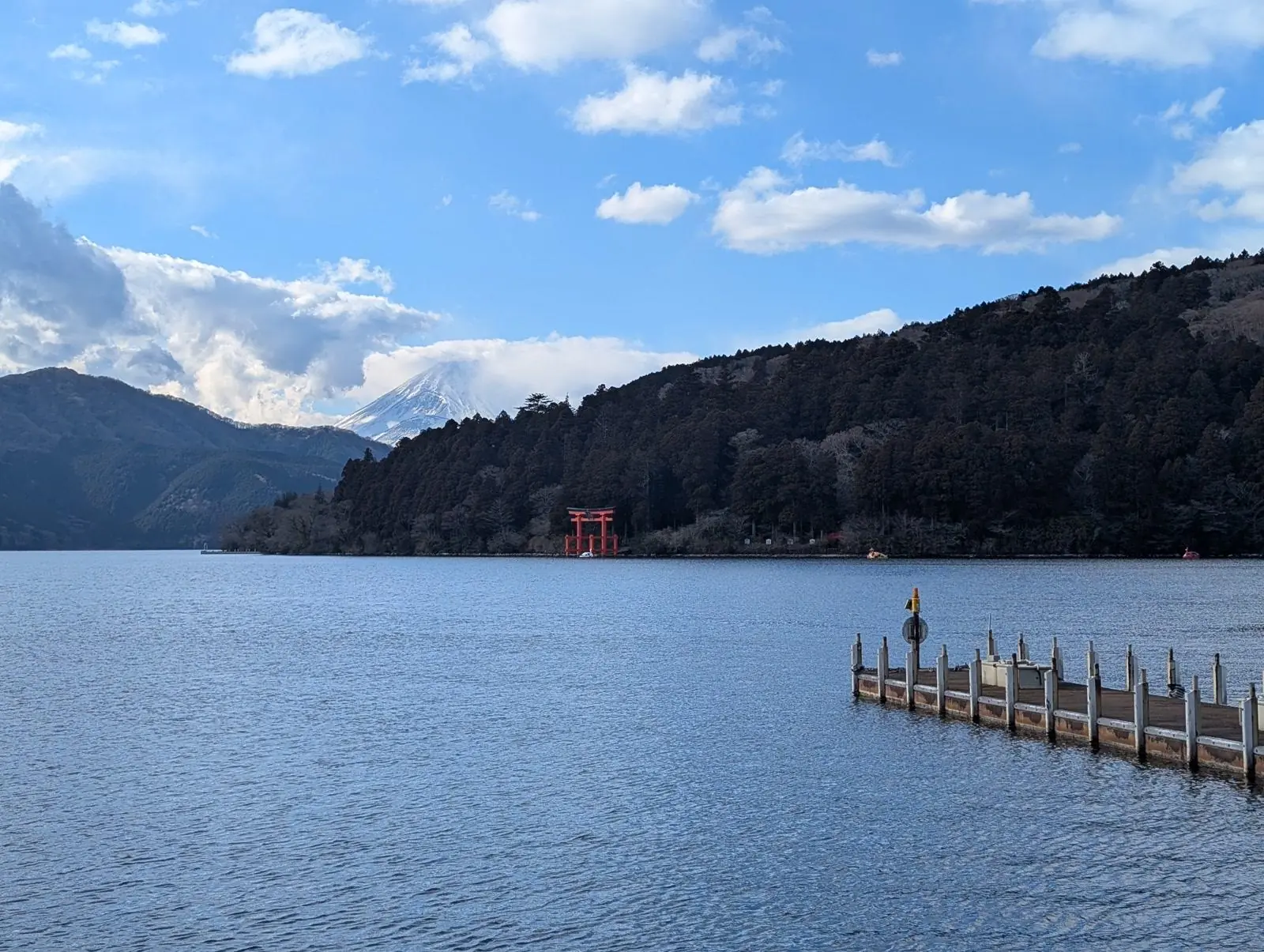
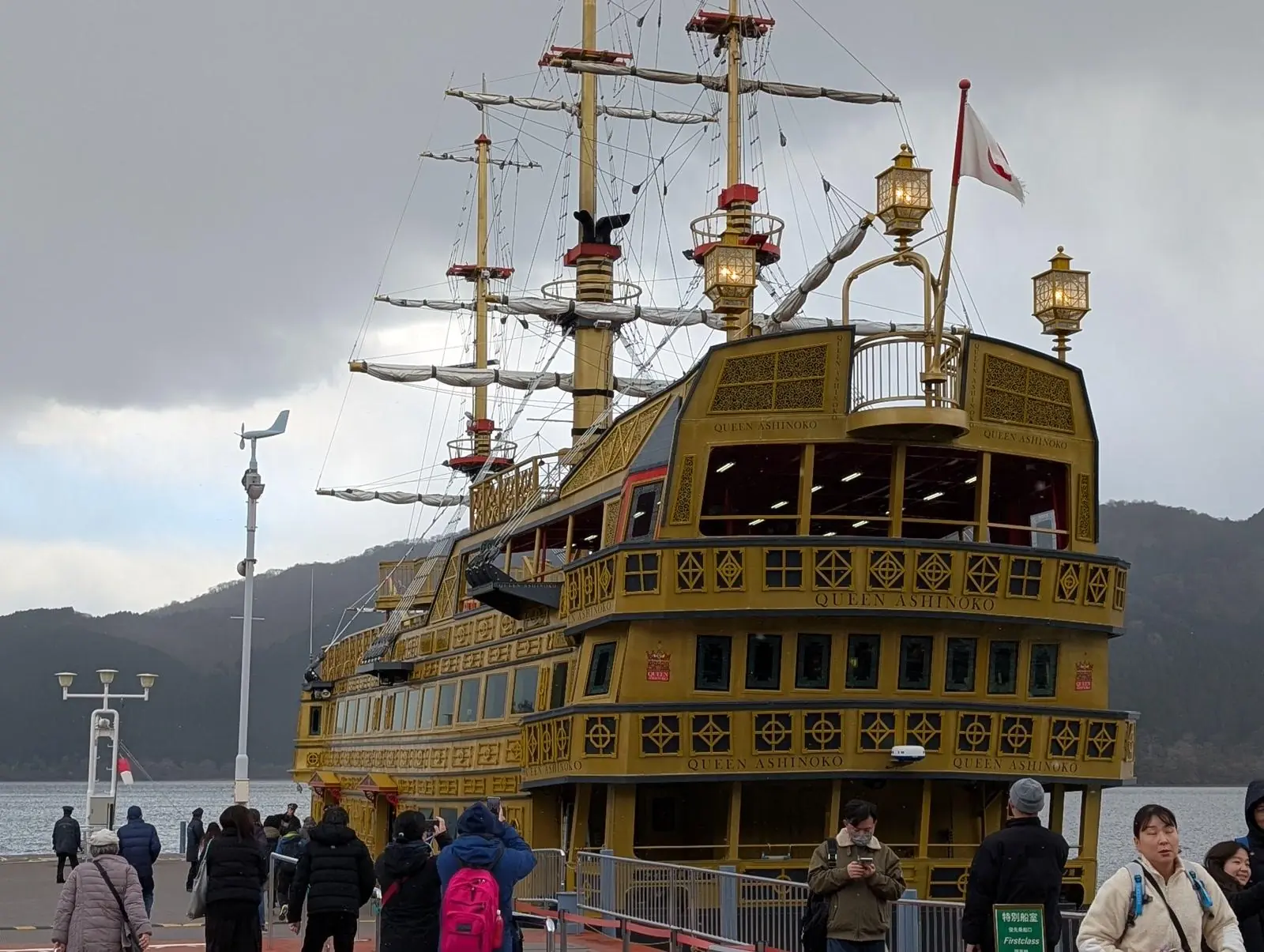
For most foreign visitors who want a "private Mt. Fuji tour from Tokyo" experience, my Hakone day trip is the practical answer. It includes the Fuji views you'd get from a dedicated Mt. Fuji tour, plus the Lake Ashi cruise, an onsen experience, and the Open-Air Museum. Fuji shows up multiple times across the day rather than as a single photo stop — and on clear days, the silhouette from Lake Ashi is one of the classic views of the mountain.
For a more Kawaguchiko-focused itinerary (closer to the mountain, more direct Fuji-as-subject photos), message me and we can build a custom plan.
For the deeper comparison — what private tours actually cost in 2026, what's included, and how OTA bus tours stack up against a licensed-guide private — see my Private Mt. Fuji Tour from Tokyo 2026 guide.
Frequently Asked Questions
Can you see Mt. Fuji from Tokyo all year round?
Technically yes, but the practical odds swing hard by season. In winter (November-February), you'll see Fuji on roughly 40-60% of days. In summer (June-August), probabilities drop to 10-20%. Humidity is the deciding factor — dry air means a clear view.
What's the best free Fuji viewpoint in Tokyo right now?
In 2026, my top free pick is the Odaiba waterfront at sunset — specifically the promenade next to Rainbow Bridge. Bunkyo Civic Center's free 25th-floor observatory used to be my answer, but it's closed for renovation until December 2026. If you're reading older guides, skip that one this year.
Can I see Mt. Fuji from my hotel?
Possibly — it depends on the hotel and the room. Some high-floor rooms in Shinjuku hotels with west-facing windows (Park Hyatt Tokyo and Hilton Tokyo are known examples) offer Fuji views on clear days. If this matters to you, request a "Fuji view room" specifically at booking, and note that these rooms often sell out in peak winter.
How far is Tokyo from Mt. Fuji?
Roughly 100 kilometers in a straight line from central Tokyo to the summit. By road, trip distances run around 130 km, and travel time is between 90 minutes and 2 hours depending on traffic and destination (Kawaguchiko or Hakone). See the day-trip section above for exact fares and times.
Do private Tokyo tours include Mt. Fuji viewpoints?
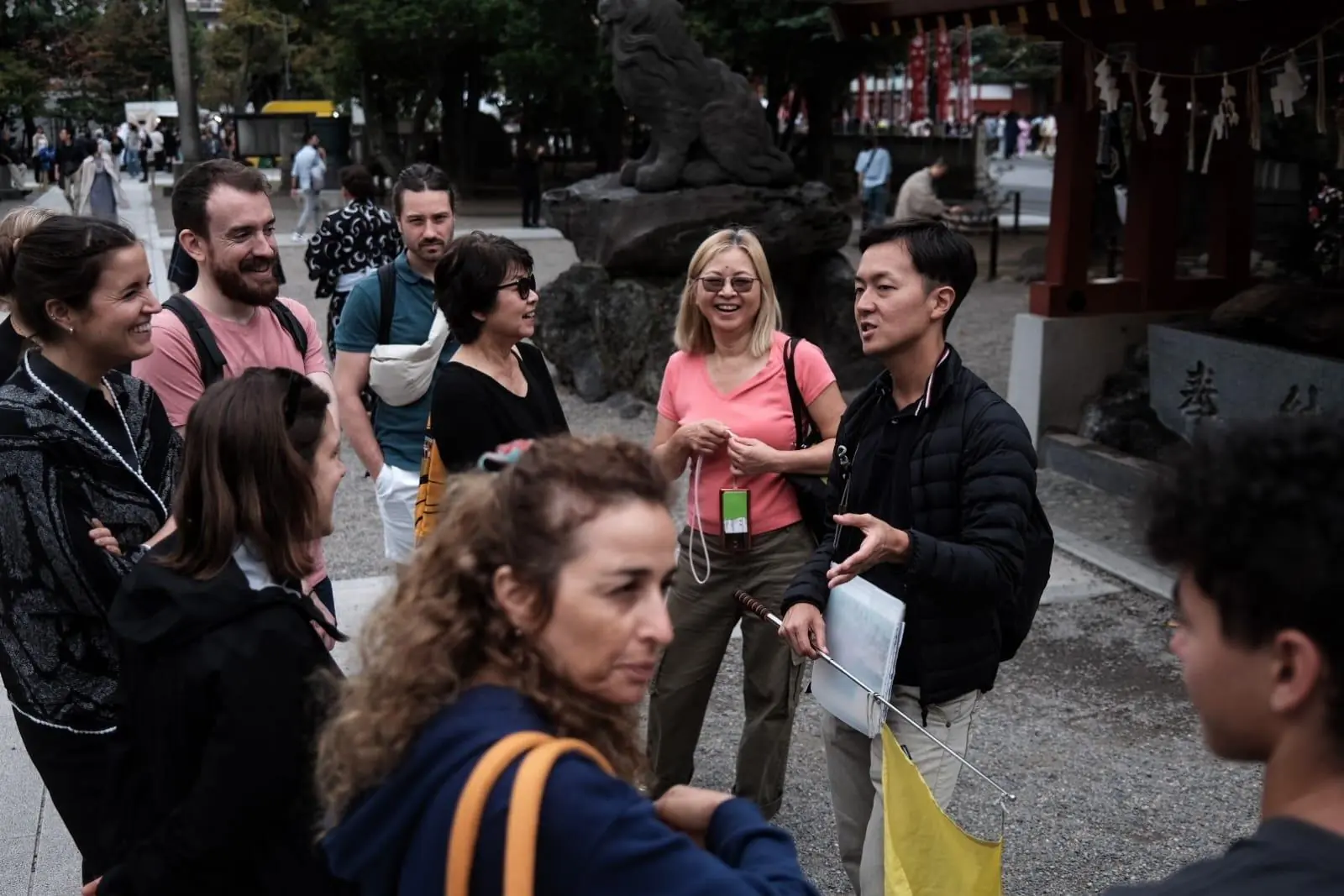
Yes. In my private Tokyo tours I build in Fuji viewpoints when conditions allow, and pivot to alternatives when they don't. For clients who want to get closer, I also run full-day Hakone day trips that combine Fuji views, onsen, and Lake Ashi. If you want a custom itinerary built around Fuji, message me and we'll plan it together.
How much does a Mt. Fuji tour from Tokyo cost?
Group bus tours from Tokyo start around $66/person on Viator and GetYourGuide and reach $150 for tours with more inclusions. Small-group experiences (Magical Trip/Klook) run $76-168/person. Private driver-only tours run roughly $80-100/person for a 4-person group. A private licensed-guide tour via my Hakone day trip is ¥80,000/group flat (1-6 people). Premium concierge services start at ¥150,000+/group. Per-person value is best at 3-6 people with a private guide.
Is a private Mt. Fuji tour from Tokyo worth the cost?
It depends on your group size. For 1-2 people, a group bus tour or DIY trip with the Fuji Excursion train (¥4,130 each way) is usually better value. For 3+ people, a private licensed-guide tour matches the per-person cost of bus tours while giving you weather flexibility, cultural depth, and custom routing — and one guide who can read the morning forecast and pivot if Fuji is hidden. For first-time visitors who want comfort and don't want to think about logistics, private wins regardless of group size.
What's the best Mt. Fuji day trip from Tokyo for first-time visitors?
For most first-time visitors, the Hakone day trip pattern (Lake Ashi cruise + onsen + Fuji views from multiple angles) is more well-rounded than a Kawaguchiko-only itinerary because it combines Fuji with onsen culture, the volcanic ropeway, and Edo-era art at the Open-Air Museum. Kawaguchiko is the better choice if your primary goal is up-close Fuji photographs at lakefront vantage points. A private licensed-guide tour handles either option seamlessly.
Mt. Fuji bus tour vs private tour — which should I choose?
Group bus tour ($66-150/person, 20-45 people): Lowest cost, fixed itinerary, limited English depth, fast-paced photo stops. Best for solo or couple travelers on a budget. Private tour (¥80,000+/group, 1-6 people): Custom routing, weather-adaptive, cultural context, no language barrier. Per-person cost matches a group bus tour at 4-6 people. Choose bus if budget is the constraint and English depth isn't critical. Choose private if you have a small group, want flexibility, or value the licensed-guide experience.
Want to see Mt. Fuji with a guide who reads the weather before you arrive?
On my private Tokyo tours, I monitor the morning forecast and route toward the viewpoints most likely to deliver Fuji that day. If conditions are bad in the city, we pivot to something memorable inside. If they're good, you'll see Fuji from a spot most visitors never find on their own. No rushed groups. Just you, your travel companions, and a local guide who has spent years watching this mountain.