Quick decision
If your flight lets you choose, pick Haneda.
It's 20 km from central Tokyo vs 60-70 km for Narita. The cheapest train is just ¥519 (Monorail to Hamamatsucho, 13-20 minutes), and the Limousine Bus to Shinjuku is ¥1,400 vs ¥3,200 from Narita.
The catch: Narita handles more LCCs (Jetstar, Peach, ZIPAIR) and the lowest fares from North America and Europe. For Narita-only flights, the Skyliner reaches central Tokyo in 36-41 minutes — the time penalty is smaller than most travelers expect.
"Should I fly into Narita or Haneda?" I get this question from almost every client before their Tokyo trip — usually along with screenshots of two flight options that differ by ¥15,000. The answer isn't just about the airport. It's about what happens in the first three hours after your plane lands.
I've met clients at arrivals gates at both airports for years, and I can tell you the arrival-day mistake is almost always the same: people optimize for flight price and ignore transit cost, jet lag, and what Tokyo's rail system does after 11:48 PM. This article fixes that.
Below are real 2026 fares, travel times, and the tradeoffs that actually matter when you're tired and dragging two suitcases through a foreign train station.
Manabu's take
Pick the airport that fits your first three hours, not your flight price.
A ¥10,000 cheaper flight that lands at Narita past midnight is rarely actually cheaper. By the time you've added a taxi, a night-bus stress, and a half-functional first morning, you've spent your savings.
Who Should Pick Which Airport
Default for most travelers
Choose Haneda if…
- Flights are similar in price.
- You're arriving jet-lagged with heavy luggage.
- Your flight lands after 11:00 PM.
- You're planning to take a taxi (¥6,000-10,000 vs ¥25,000+).
Worth it in these cases
Choose Narita if…
- Narita saves you ¥15,000+ per ticket.
- You're flying an LCC (Jetstar, Peach, ZIPAIR, AirAsia).
- You're staying in Ueno, Asakusa, or northeast Tokyo (Skyliner can actually be faster).
Distance & the Baseline Reality
The geographical difference is larger than most first-time visitors realize:
- Haneda: ~20 km south of central Tokyo, inside Tokyo Bay. Train access runs 15-45 minutes depending on mode. Three terminals: T1 (JAL domestic), T2 (ANA domestic), and T3 (international, where you'll arrive).
- Narita: ~60-70 km east of central Tokyo, in neighboring Chiba Prefecture. Train access runs 36 minutes to over 2 hours depending on mode. Three terminals: T1 (Star Alliance + SkyTeam), T2 (mostly oneworld + some Star Alliance), and T3 (low-cost carriers).
The time and cost gap isn't abstract. For a party of two, the airport choice typically changes your arrival-day transit spend by ¥2,000-6,000 and your door-to-hotel time by 30-60 minutes. Across an entire Tokyo trip, those are meaningful numbers.
Narita Access in 2026: Four Ways to Central Tokyo
Narita has four realistic transit options, and each makes sense for a different scenario. Exact 2026 fares and times below.
1. Keisei Skyliner (the fastest, best value)
The Skyliner runs directly to Nippori in 36 minutes and Ueno in 41 minutes for ¥2,470. Trains depart every 20 minutes. At Nippori, you transfer to the JR Yamanote Line, which connects to Shinjuku, Shibuya, and everywhere else in central Tokyo in under 25 minutes. This is my default recommendation for clients staying anywhere on the Yamanote loop, particularly the east and north sides. It's nearly always the fastest option and the cheapest premium service.
2. Narita Express / N'EX (best for west-side hotels)
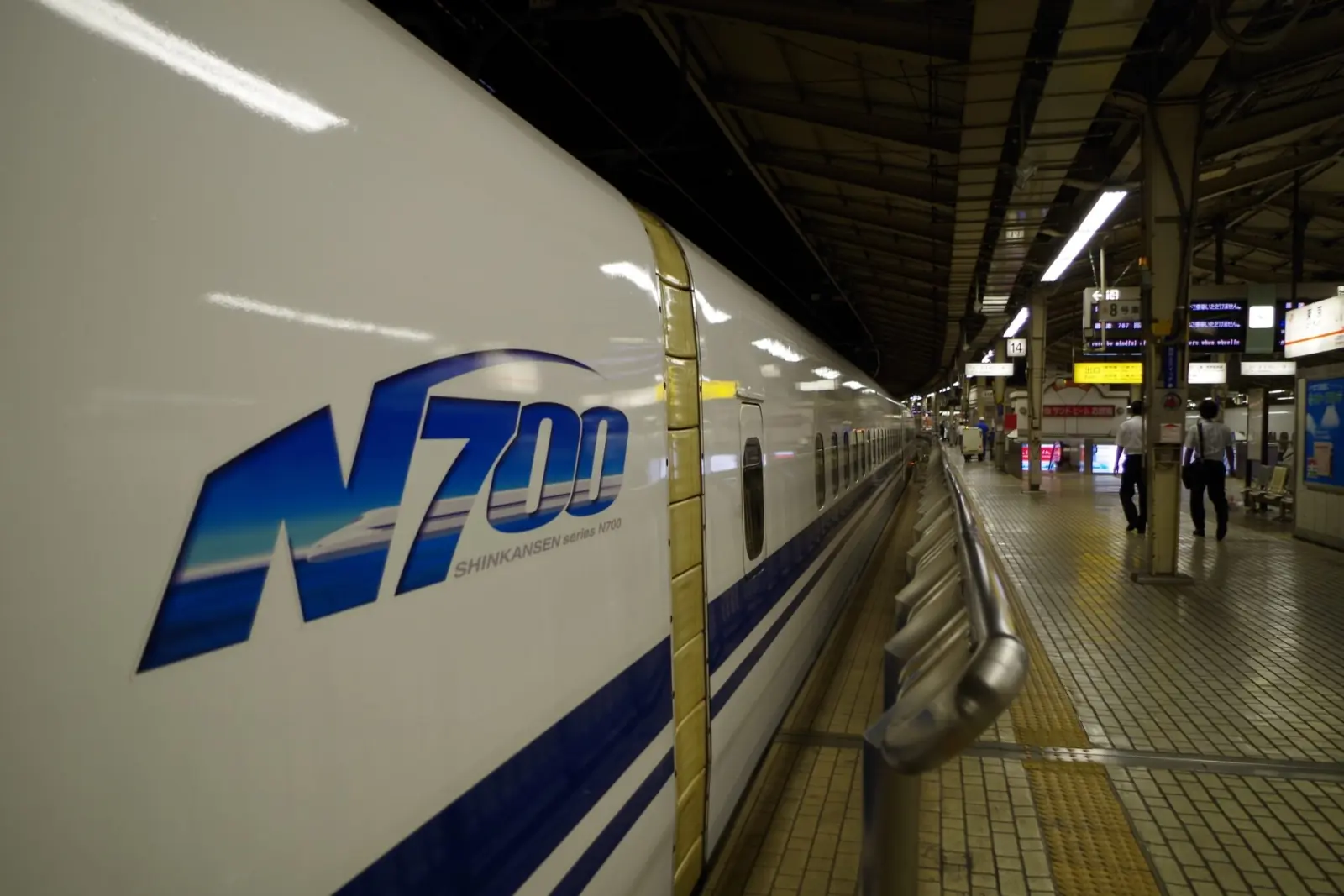
The JR Narita Express goes directly to Tokyo, Shinagawa, Shibuya, Shinjuku, Ikebukuro, and Yokohama without transfers. Ordinary class to Shinjuku is ¥3,250; Green Car (first class with wider seats) is ¥4,020. Travel time is 60-98 minutes depending on the stop. All seats are reserved; departures are every 30-60 minutes. Worth knowing: the N'EX Tokyo Round Trip Ticket is ¥5,000 for non-Japanese passport holders, saving about ¥1,500 over two separate one-way tickets if you're flying in and out of Narita.
3. Airport Limousine Bus (the hotel-door option)
The Limousine Bus drops you directly at your hotel's front door — no transfers, no dragging suitcases through Shinjuku Station. Fare to Shinjuku-area hotels is typically ¥3,200, with 2-4 buses per hour between 7 AM and 10 PM. Journey time is 90-120 minutes depending on traffic. This is the option I recommend for elderly travelers, families with small children, or anyone who hates navigating unfamiliar train systems on arrival day. Book online in advance during peak season.
4. Fixed-Rate Taxi (only if you must)
Narita offers fixed-rate taxi service to Tokyo's 23 wards — the exact fare depends on your destination zone. As a representative example, Narita to Adachi-ku is around ¥28,770, plus expressway tolls (~¥2,000-3,000) and a 20% late-night surcharge between 22:00 and 5:00. A typical arrival-day taxi to central Tokyo runs ¥25,000-32,000 including tolls. Rarely worth it unless you're traveling with four people, heavy luggage, and special circumstances.
Haneda Access in 2026: Four Ways (All Cheaper)
Every single transit option from Haneda costs less and takes less time than its Narita equivalent. Here's the full picture.
1. Keikyu Airport Line (fastest to Shinagawa and beyond)
The Keikyu Line reaches Shinagawa in 11-13 minutes for around ¥330. From Shinagawa, transfer to the JR Yamanote Line or Shinkansen as needed. Trains run every few minutes, and many continue through as Toei Asakusa Line trains reaching Shimbashi, Nihonbashi, and Asakusa without a transfer — a useful quirk if you know your hotel is on that line.
2. Tokyo Monorail (scenic, Yamanote transfer)
The Monorail runs from Haneda T3 to Hamamatsucho in 13-20 minutes for ¥519 (IC card). The Haneda Express variant does it in 13 minutes. Hamamatsucho connects to the JR Yamanote Line (Tokyo, Shinjuku, Shibuya all within 10-20 minutes). The elevated rails give surprisingly nice views of Tokyo Bay. This is my default for clients staying on the Yamanote Line west side — cheaper than Keikyu + Yamanote combined in many cases.
3. Airport Limousine Bus (the sleeper deal)
Haneda's Limousine Bus to Shinjuku Station West Exit is ¥1,400 one way, takes about 45 minutes, and runs every 20 minutes. At less than half the price of Narita's Limousine Bus and less than a third of Narita's N'EX, this is one of the best-value transit options in all of Tokyo. For anyone staying in Shinjuku with luggage, this is usually my top recommendation from Haneda.
4. Taxi (actually reasonable from Haneda)
Haneda taxi to central Tokyo is the only scenario where I don't flinch at recommending an airport cab. Expect ¥6,000-10,000 depending on destination and traffic, plus the 20% late-night surcharge (22:00-5:00). For a family of four arriving jet-lagged, that's competitive with four train tickets once you add IC-card fiddling and the luggage headache. Trip time 20-40 minutes.
The Hidden Factors That Change the Equation
Immigration: Visit Japan Web changes everything
Immigration wait times in 2026 average 48 minutes at Haneda and 41 minutes at Narita. That's before you even reach a train. The single best productivity hack is Visit Japan Web (vjw-lp.digital.go.jp): fill out your immigration and customs declarations online before you fly, and you'll get a QR code that routes you through an express lane where processing takes under 5 minutes. Paper-form travelers wait 30-70 minutes. Do this on the plane or during layover; it's the cheapest hour of your trip.
Visit Japan Web cuts immigration from 48 minutes to under 5. It's the cheapest hour of your trip.
Late-night arrivals: Haneda wins, but only barely
Tokyo's rail network shuts down roughly midnight to 5 AM. At Haneda, the last Monorail departs 23:44 and the last Keikyu train 23:48. Miss them, and you have three options: night bus (four departures at 00:20, 01:00, 01:40, and 02:20 — to Shinjuku and Ikebukuro only), a taxi, or sleeping at the airport (First Cabin Haneda in T1 is a capsule hotel option). Narita has similar timing but fewer fallback buses, which is why I flatly recommend against landing at Narita after 11:00 PM if you have any flight flexibility.
Luggage volume matters more than people think
If you're traveling with a large suitcase per person plus carry-ons, the "cheapest option" breaks down fast. Keikyu and Monorail trains have luggage racks but they fill up, and moving through Shinagawa or Hamamatsucho with three bags is genuinely unpleasant. The Limousine Bus stores your bags in the underside compartment and drops you at the hotel door. My rule of thumb: 2+ large suitcases per person → Limousine Bus or taxi, regardless of airport.
Peak-hour warnings
Narita's peak arrival windows are 5-8 AM and 4-7 PM on weekdays, plus Friday afternoons and Sunday evenings. Immigration waits balloon 30-50% during these. Haneda sees similar Tuesday/Wednesday lulls. If you have flight flexibility, a Tuesday or Wednesday mid-morning arrival at either airport gives you the smoothest ride in.
When Narita Is Actually Faster (Yes, Really)
Every Tokyo guide writes "Haneda is closer, so always Haneda." That's wrong for one specific scenario: if you're staying in the northeast corner of central Tokyo.
Staying in Ueno, Nippori, Asakusa, or anywhere along the JR Yamanote east arc? Keisei Skyliner to Nippori is 36 minutes. From Nippori, Ueno is 2 minutes (¥140), Asakusa is 15 minutes (Yamanote to Tawaramachi area). Total airport-to-hotel: about 40-50 minutes.
Haneda to Ueno requires Monorail (13-20 min) plus Yamanote transfer at Hamamatsucho (3 minute wait + 17 min train), totaling ~45-55 minutes including transfer friction. The time difference is wash, and Narita (Skyliner at ¥2,470) is cheaper than Haneda (Monorail ¥519 + Yamanote ~¥200 = ¥719, but only if you want to drag luggage through a transfer at 2 PM).
The practical point: don't automatically pick Haneda if you're staying east-northeast. Do the math for your specific hotel's nearest station.
📝 Guide's Insider Note
The single biggest arrival-day mistake I see: clients scheduling their first guided tour on the same day they land. Jet lag plus the immigration-to-hotel churn eats 5-6 hours. If you land at 3 PM from the East Coast US, you're not starting a tour at 5 PM — you're starting a nap.
My rule of thumb: schedule nothing demanding in the 3 hours after your scheduled arrival time, then give yourself an additional 90 minutes if you're crossing 8+ time zones. For a 3 PM Haneda arrival, that means a 7:30 PM light dinner at earliest. For a 3 PM Narita arrival, an 8:30 PM dinner and nothing else.
The second biggest mistake: trying to do Tokyo's train system on day one with heavy luggage. The Limousine Bus exists precisely for this. Yes, it's slower in raw minutes than the train, but "arrived at hotel lobby with 0 stress" vs "arrived at hotel lobby after a Shinjuku Station stair sequence" isn't really a comparison. Save the public-transit immersion for day 2 when you're rested.
Updated based on Manabu's actual tours. Last visit: April 2026.
The Real Cost of Choice (2 People, Round Trip)
To put the difference in concrete terms, here's what transit costs for a party of two, round trip:
| Scenario | Narita | Haneda | Savings picking Haneda |
|---|---|---|---|
| TrainCheapest | ¥9,880 | ¥2,076 | ¥7,800 |
| N'EX Round TripTourist deal | ¥10,000 | — | — |
| Limousine BusHotel-door | ¥12,800 | ¥5,600 | ¥7,200 |
| TaxiOne-way only | ¥25,000–32,000 | ¥6,000–10,000 | ¥19,000–22,000 |
For most travelers, the round-trip difference is ¥5,000-8,000 per couple. If your Narita flight saves you more than that, book it without second-guessing. If it saves less, Haneda is the better choice once you factor in the time cost.
Frequently Asked Questions
Which airport is better for low-cost carriers (LCCs)?
Narita, by a wide margin. Jetstar Japan, Peach, ZIPAIR, AirAsia, Scoot, and most Asian LCCs operate out of Narita Terminal 3. Haneda has occasional LCC service but the international LCC ecosystem is concentrated at Narita. If you're flying an LCC from Bangkok, Singapore, Seoul, or Taipei for under $200, odds are it lands at Narita T3 — plan transit costs accordingly.
Can I fly into one airport and out of the other?
Yes, and it's often smart. A popular combination: fly into Haneda (smooth arrival with jet lag), fly out of Narita (LCC return ticket, or a cheaper flight home). The two airports don't charge any penalty for mixed bookings — it's purely a matter of total flight cost. The only caveat is luggage: you handle it yourself between airports, so plan accordingly.
Is Narita fully English-friendly for first-timers?
Yes. Both airports have excellent English signage, immigration counters with English-speaking staff, and the trains (Skyliner, N'EX, Keikyu, Monorail) all have English announcements and electronic displays. Narita feels slightly larger and more walk-intensive between terminals, but navigation-wise it's on par with Haneda. The Visit Japan Web QR lane is clearly signposted in English at both airports.
What's the best option with heavy luggage?
Airport Limousine Bus at either airport — bags go in the underside compartment, and you step off at your hotel's front door. Haneda's Limousine Bus at ¥1,400 to Shinjuku is one of Tokyo's best travel values. Alternative for long stays: Yamato Takkyubin (bag forwarding) — ship your bags from the airport to your hotel for around ¥2,500 per large suitcase, and travel light on the train. Bags arrive the next day.
When is a taxi actually worth it?
From Haneda: almost always reasonable for 2+ travelers with luggage, especially at night. ¥6,000-10,000 for a door-to-door ride is competitive with four train tickets plus stress. From Narita: only if you have four travelers going to the same hotel, or if you're arriving past midnight with no late-night bus option to your stay area.
Is Haneda open 24 hours?
Terminal 3 (international) is open 24 hours for transit passengers and arrivals. Food, shops, and most services close around 22:00-23:00, but convenience stores and seating areas stay open. You can legally sleep in the terminal if needed, though First Cabin Haneda in T1 (capsule hotel) is more comfortable if you have a few hours before the first morning train.
Do you offer arrival-day tours or pickup?
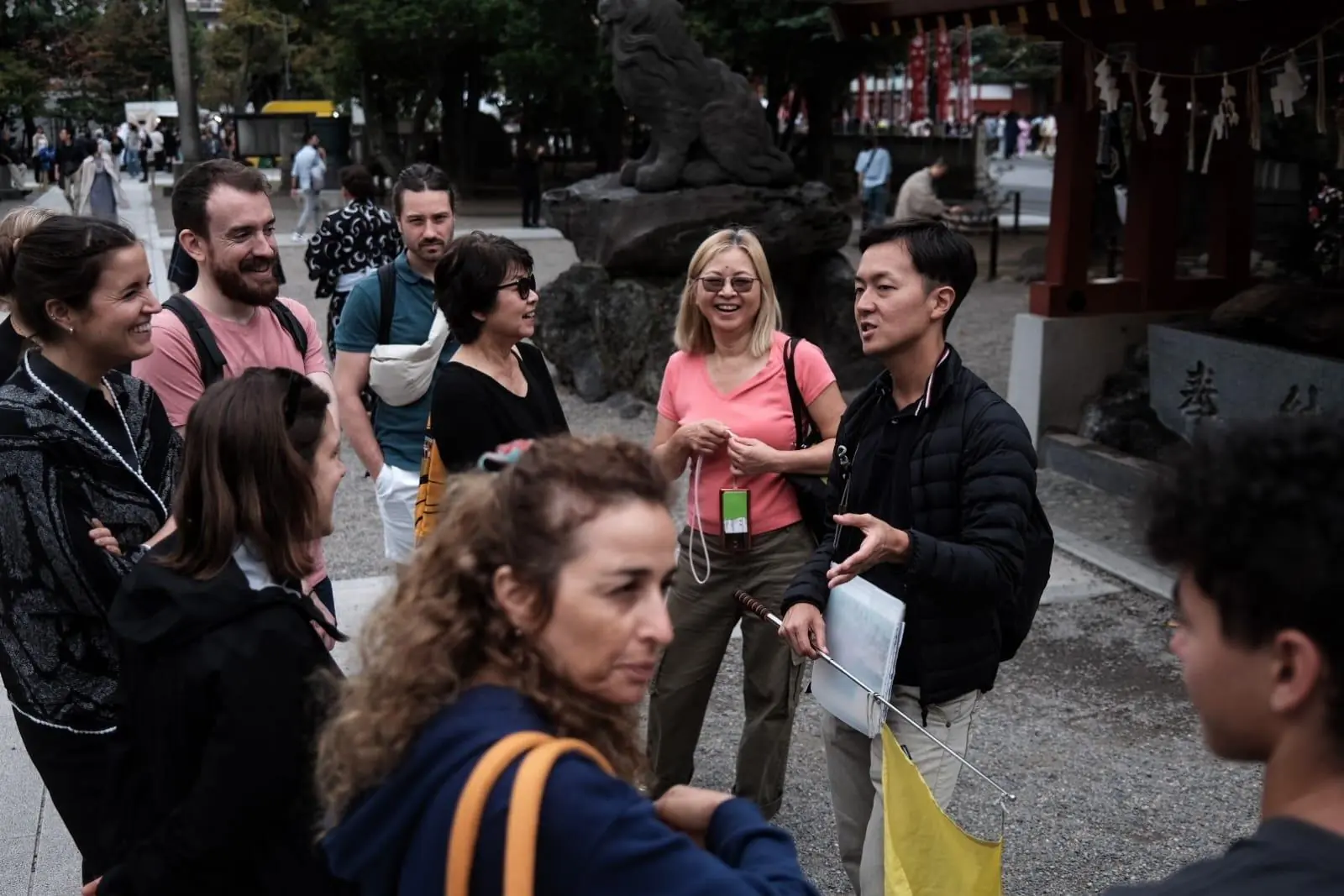
Yes. For clients who want a low-effort first day, I offer custom tours built around your arrival time — typically a short neighborhood walk, an early dinner, and an easy evening that keeps you moving without overwhelming jet-lagged senses. Message me with your flight details and we'll figure out the right shape for your first day.
Want your Tokyo trip to start right — without the arrival-day mess?
On my private tours, I plan your first full day around your actual arrival time and jet-lag profile. You get a local guide who has met clients at both airports hundreds of times, who reads the day's weather and transit status before you land, and who builds a schedule that respects the fact that the first 24 hours in Tokyo are different from the rest of your trip.