Quick Answer
Japan has a single national license for tour guides — 全国通訳案内士 (National Government Licensed Guide Interpreter) — run by the government with a ~10% pass rate. Since January 2018 the license is no longer legally required to guide paid tours, but only licensed guides may call themselves 'licensed / government-certified / national' guides under the law, and the verified breadth of knowledge behind the license is real.
Here's what the license actually covers, what changed in 2018, and the specific situations where choosing a licensed guide changes your day — plus the 3 direct questions that instantly tell you whether a guide is licensed or just describing themselves as one.
There's something most travelers don't know before coming to Japan: there is a national exam to become a tour guide. Not a two-day online course. Not a certificate you buy. A government exam with historically low pass rates, covering Japanese history, geography, laws, culture, and advanced foreign-language fluency. I passed it. And in this article I want to explain exactly what it means to be a licensed tour guide in Japan, why it should matter to you as a traveler, and be completely honest about how this industry actually works.
Think of it like a board-certified doctor: you can see someone without the credential, but would you want to? With tour guides in Japan the situation is similar, except most tourists don't even know the distinction exists. I'm going to change that.
What is the official tour guide license in Japan?
The license is formally called 全国通訳案内士 (Zenkoku Tsūyaku Annai-shi) — "National Government Licensed Guide Interpreter" in the official English translation used by the Japan National Tourism Organization (JNTO) and the Japan Tourism Agency. That "Zenkoku" (national) prefix was added with the 2018 legal reform; before that it was simply Tsūyaku Annai-shi. It is the only nationally recognized credential for tour guides in Japan.
The national exam
The exam is administered by the JNTO under the oversight of the Ministry of Land, Infrastructure, Transport and Tourism (MLIT). It has two stages: a written exam and an oral exam. The written portion covers Japanese history (from the Jōmon era to the present), national geography, the tourism industry, tourism-related laws, and general Japanese culture. All of that on top of demonstrating advanced fluency in the foreign language you're testing in (in my case, English and Spanish).
The oral stage is a live interview where examiners assess your ability to explain aspects of Japanese culture to foreign visitors clearly, accurately, and naturally. It's not enough to know the facts — you have to be able to communicate them in a way a traveler will actually understand and enjoy.
What it takes to pass (real numbers)
According to the JNTO's official figures for the 2024 exam, the overall pass rate was 10.0% — Spanish 12.1%, English approximately 10.0%. For some languages it has dipped below 10%. Serious preparation typically takes between one and three years of dedicated study. It is not something you pass casually. Most candidates are Japanese nationals with excellent foreign-language ability, foreigners with years of residency in Japan, or both. Many sit the exam multiple times before passing.
How many licensed guides are there in Japan?
According to the Japan Tourism Agency's published figures, as of April 1, 2025 there were approximately 27,950 licensed guides registered nationwide (counting registrations by language — a single person can be registered in more than one language). That number is misleading, though: the vast majority are registered for English. For Spanish, the number is significantly smaller — we're talking a few hundred nationwide. If you specifically need a licensed guide in Japan who speaks Spanish, the supply is genuinely limited. That's not marketing. That's the market.
What changed in 2018 (and what it means for you)
I'll be direct: since January 4, 2018, it is no longer legally required to hold a license to guide paid tours in Japan. The revised Licensed Guide Interpreter Act (通訳案内士法) changed the license from an "exclusive-work" credential (業務独占) to a "name-only" credential (名称独占). This is the single most important legal fact travelers should know — and it's one of the things the industry tends not to advertise.
What this means in practice: anyone can now offer themselves as a paid tour guide in Japan. A university student, an expatriate who has been here six months, someone who just knows their neighborhood. And some of them are genuinely good at it. But the legal framework still gives the license one thing: only licensed guides may use the titles "National Government Licensed Guide Interpreter," "Regional Licensed Guide Interpreter," or any similar "government / certified / national" formulations. Misusing those titles is a violation of the revised Act. So when a guide describes themselves as "licensed," "government-certified," or "national," that's a claim you can verify.
Licensed vs unlicensed guide: the real differences
Government-verified knowledge
A licensed guide has demonstrated, in front of government examiners, a broad and verified knowledge of the country's history, geography, culture, and laws. This is not an opinion; it is a documented and registered fact. When I explain the difference between a Shinto shrine and a Buddhist temple, or why a tea ceremony is structured the way it is, or how the han system worked during the Edo period, I'm not repeating what I read on Wikipedia the night before. It's knowledge that has been assessed and certified.
Legal accountability and insurance
Licensed guides are registered with the prefectural authorities where they operate. That means there's a framework for accountability: if something goes wrong, there's a record, there's an entity to turn to. Many licensed guides also carry professional liability insurance. An unlicensed guide operating informally has none of these protections, for themselves or for you.
What a licensed guide can do that an unlicensed one often can't
Even though the law no longer requires the license for guiding, in practice there are real operational differences. Some historic sites, temples, and museums give priority or exclusive access to licensed guides. High-end hotels and international agencies frequently only work with licensed guides. And when incidents happen (a traveler falls ill, a transport problem, an emergency), the training that's part of the licensing process makes a real difference in how you respond.
A note on volunteer guides (SGG clubs)
You'll sometimes see Japanese volunteers offering free guided walks under the banner of Systematized Goodwill Guide (SGG) clubs. These started around the 1964 Tokyo Olympics and are coordinated under the JNTO. They are genuinely free (you cover admissions and any transport), they are run by enthusiastic locals with real interest in sharing their culture, and they are explicitly not the same thing as licensed guides. Many SGG volunteers have never sat the national exam; some have. The value proposition is totally different: SGG is "meet a friendly local for the afternoon." Licensed private guiding is "work with a professional whose knowledge base has been certified by the national government."
Both have their place. But don't conflate them. A free SGG walk is a lovely way to see a neighborhood at surface level. It is not a replacement for a professional tour when you want depth, customization, or reliability for a complex day trip.
Why should this matter to you as a traveler?
The difference in the tour experience
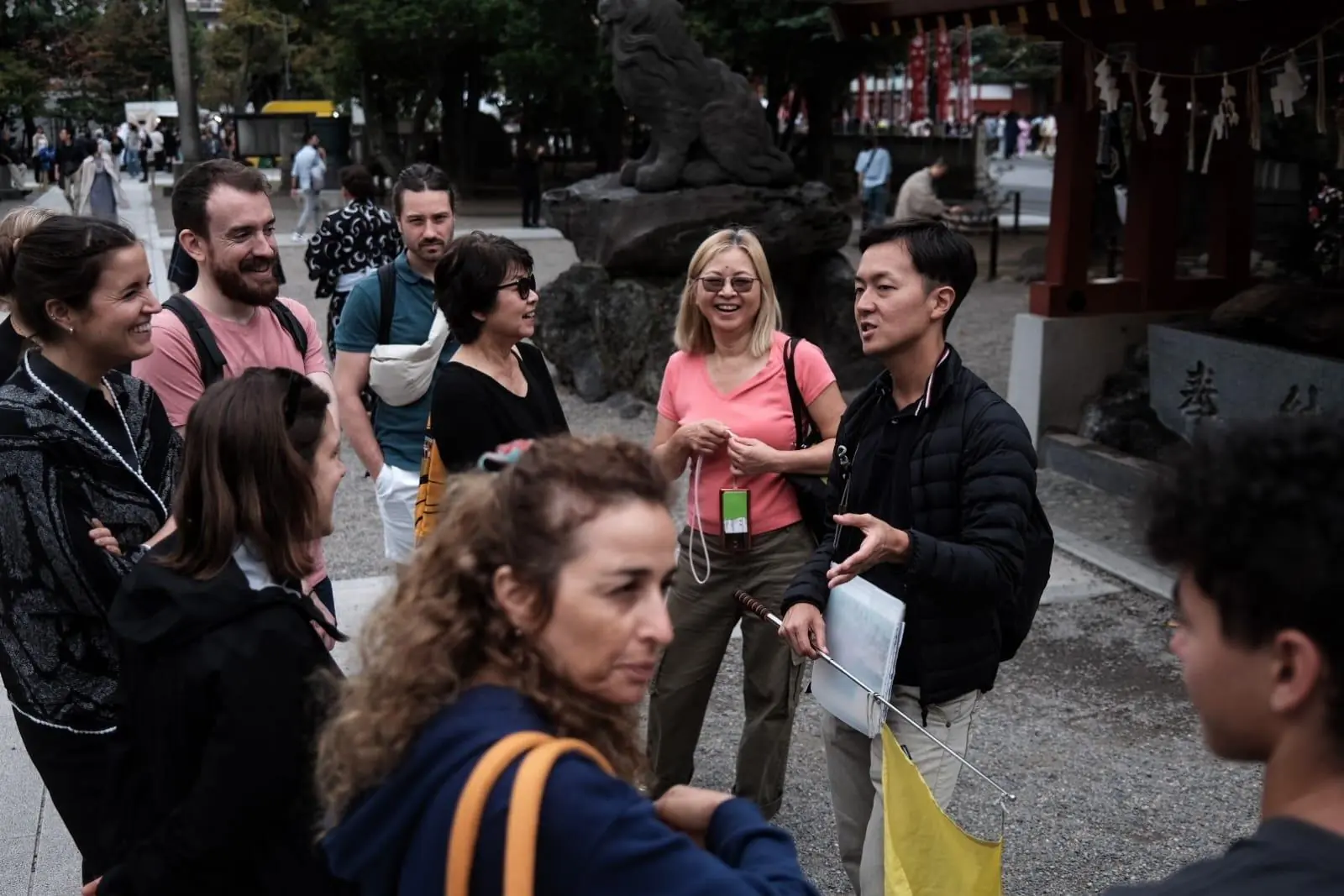
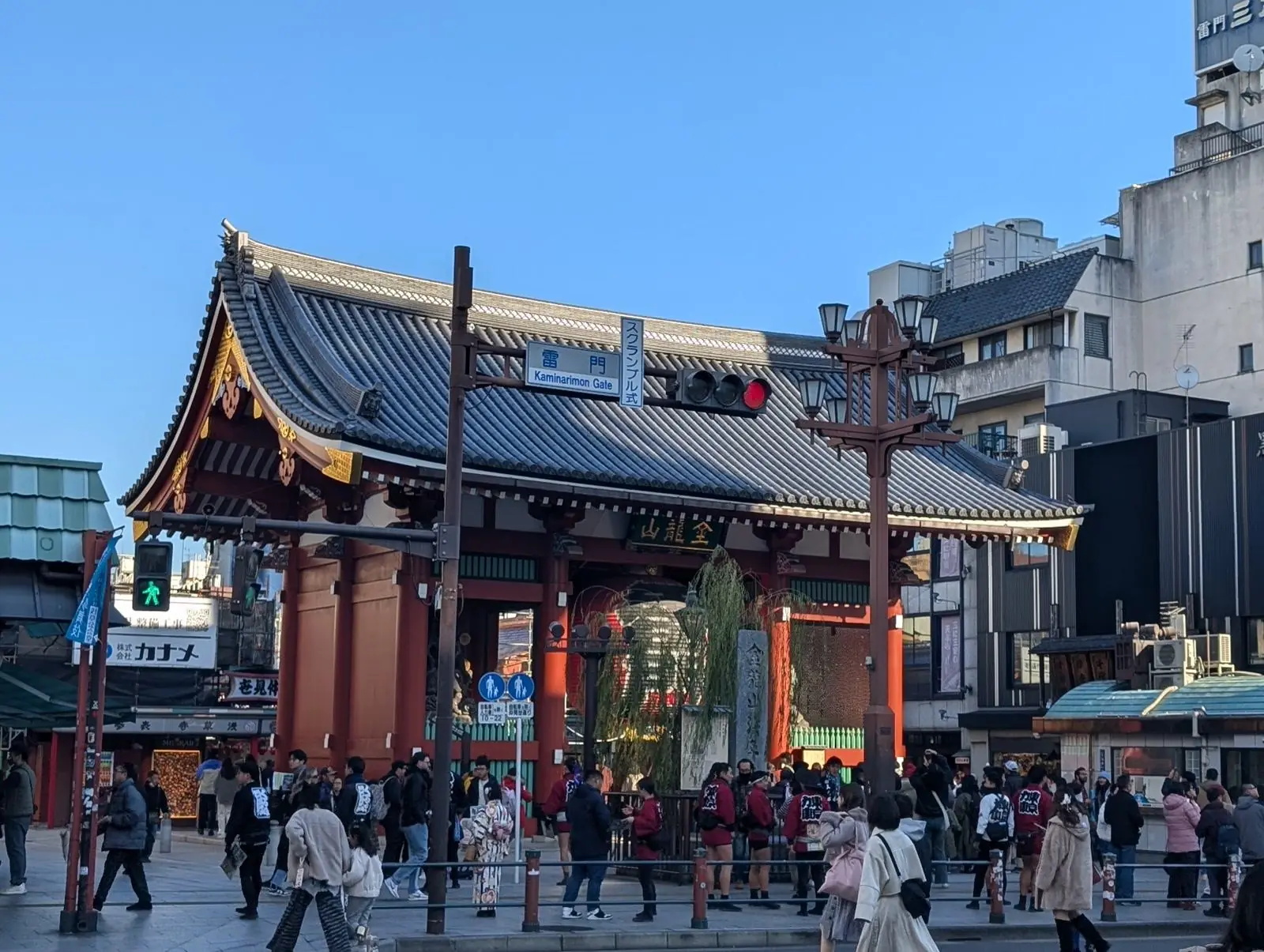
The most tangible difference is depth. An unlicensed guide can take you from point A to point B and tell you basic facts. A licensed guide can answer your unexpected questions, connect what you're seeing to a broader historical context, and adapt to your interests in real time. If mid-tour in Asakusa you ask me about the relationship between Buddhism and Shinto in Japan, I can give you a nuanced twenty-minute explanation — not because I memorized an answer, but because I understand the subject at the depth the exam required.
Real moments: what my clients didn't expect
A couple from Barcelona hired me for a day in Tokyo. Halfway through, the husband casually mentioned he was an architect. I shifted the focus entirely: took them to the Nakagin Capsule Tower site, explained the Metabolist movement and its influence on European architecture, and ended at Tadao Ando's building in Omotesando discussing how reinforced concrete can carry spirituality. They told me it was the best day of their trip. That kind of adaptation doesn't come from a script; it comes from years of study and preparation.
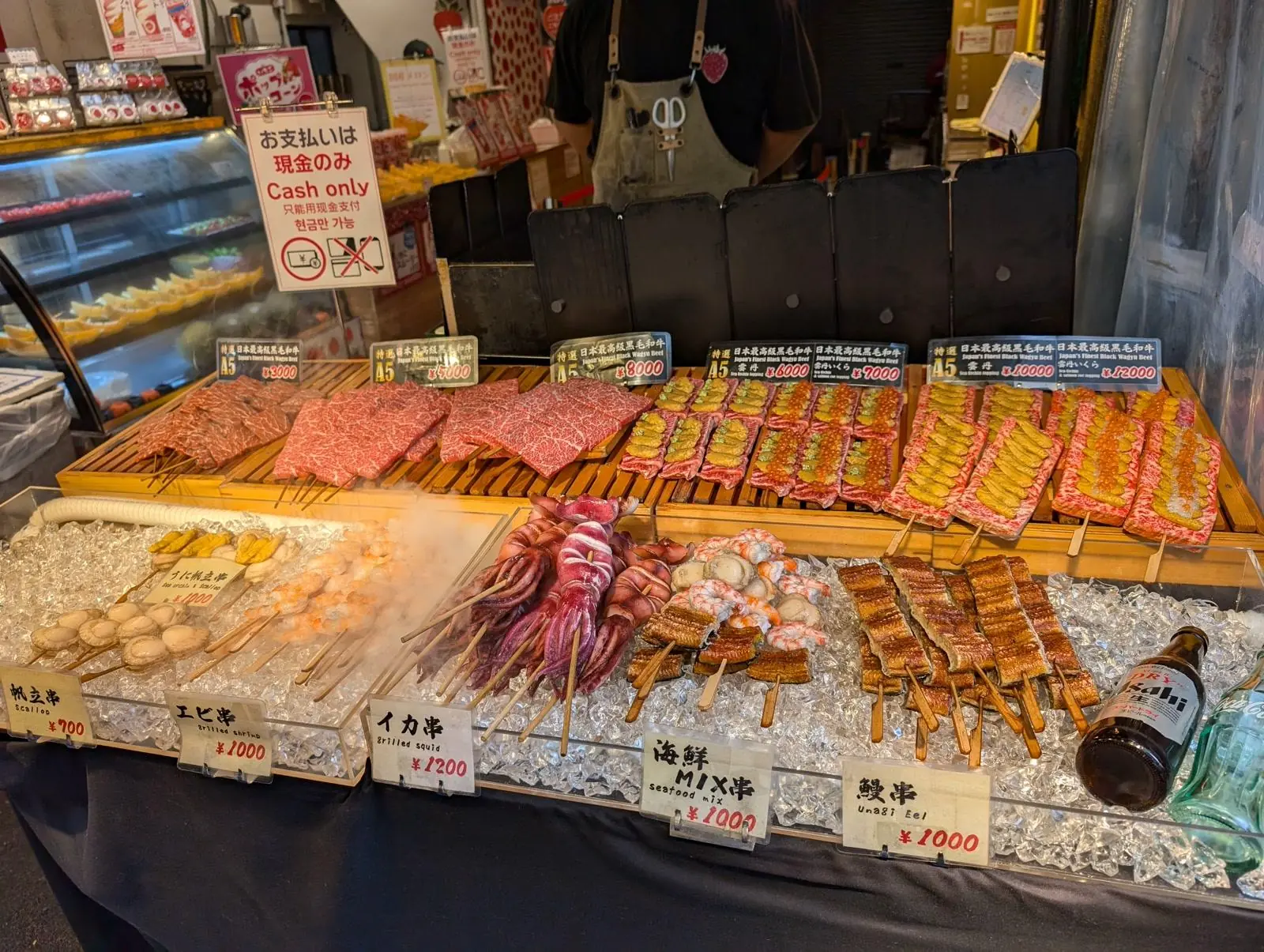
Another family from Mexico booked me for a Tsukiji food tour. Their 8-year-old daughter was allergic to shellfish. Instead of canceling or improvising, I rerouted the whole tour around grilled meat, tamagoyaki, seasonal fruit, and traditional sweets — keeping her safely fed while the rest of the family could still enjoy seafood at separate stalls. Handling situations like this is part of what training and experience give you.
Safety and trust
Japan is one of the safest countries in the world, so talking about safety can feel unnecessary. But "safety" isn't just avoiding crime. It's knowing what to do if there's an earthquake during the tour. It's knowing which hospitals are nearby and being able to communicate with medical staff. It's understanding the warning signs on hiking trails. It's knowing that certain foods can trigger allergic reactions visitors don't anticipate. A licensed guide has trained on all of these areas.
How to verify whether a guide is licensed
The official badge
Every licensed guide is issued a government badge with a unique registration number and is expected to have it available during tours. If you don't see one, ask. A legitimate licensed guide won't have a problem showing it — most are proud to.
The government registry
Licensed guides are registered in the databases of the prefectures where they operate. You can verify a guide's registration by contacting the prefecture's tourism office. JNTO also maintains directories of registered guides. It's not a complicated process, and any licensed guide should help you verify if you ask.
The 3 questions that instantly reveal the answer
If you're evaluating guides, these direct questions make the distinction clear:
- "Do you hold the Zenkoku Tsūyaku Annai-shi (全国通訳案内士) license?" This is the exact legal name. Licensed guides answer yes without hesitation.
- "Can you share your registration number and the prefecture you're registered in?" Licensed guides have both. It's a specific number tied to a specific prefecture.
- "Do you carry professional liability insurance for tours?" Most licensed guides do; it's standard. Many unlicensed operators don't.
A guide who gets defensive or redirects the conversation when asked these things is telling you something.
My own experience getting the license
Why I decided to take the exam
I had been guiding informally for years when I realized I wanted to do this seriously — as a profession, not a side activity. And if I was going to ask someone to trust their experience in Japan to my hands, I felt I should back that trust with something more than my word. I wanted to be able to say "I hold the national license" and have that mean something verifiable. Not every guide thinks this way, and I respect the different perspectives, but for me it mattered.
The hardest part of the process
Without question, the Japanese history section. Not from lack of interest — I love the subject — but because of the depth and breadth the exam requires. You have to know everything from the details of the 7th-century Taika Reforms to postwar economic policy, the different schools of Buddhism that developed in Japan and how they influenced architecture, art, and daily life in each period. I studied for two years with a fairly disciplined method: three hours on weekday evenings plus weekends. There were moments I thought about quitting, especially after failing on my first attempt.
What changed after I got it
Professionally, doors opened that had been closed. Luxury hotels, international agencies, corporate clients — many require or prefer licensed guides. But the bigger change was personal: preparing for the exam forced me to study aspects of Japan I would never have explored on my own. Today I can talk with knowledge about Japanese ceramics, the differences between Kyoto and Kanazawa gardens, the history of sake, the evolution of the rail system. All of that makes every tour richer — not just for my clients but for me.
Already decided you want a guide?
If you're past the "should I hire a guide" question and want to think about how to choose, see my related articles: Is It Worth Hiring a Tour Guide in Tokyo? covers the "should I" case, and Tokyo Private Tour Guide Cost breaks down what typical pricing actually looks like.
Looking for a licensed English-speaking guide in Japan?
I'm Manabu, a National Government Licensed Guide Interpreter registered in Tokyo. I offer private tours in English (and Spanish) across Tokyo and nearby areas. Every tour is built around your interests, your pace, and what you actually want to see — no big groups, no generic routes. Just you, your party, and a guide whose knowledge of this country has been tested and certified.
Frequently Asked Questions
Is a license legally required to be a tour guide in Japan?
Since January 2018, no. Before that date, the Tsūyaku Annai-shi license was legally required to guide foreign tourists for a fee. The law was reformed to expand the supply of guides in response to tourism growth. However, the license still exists as the highest credential and remains the only nationally recognized credential issued by the Japanese government.
How many languages does a licensed guide speak?
The license is obtained for a specific language, but many guides test in more than one. The exam is available in ten languages, including English, Spanish, French, Chinese, Korean, and Portuguese. I'm licensed in both English and Spanish.
Does a licensed guide cost more?
Generally yes, but the difference is smaller than you might think. A licensed guide typically charges 10–30% more than an unlicensed guide for a comparable tour. The difference is justified by depth of knowledge, professional training, insurance, and peace of mind. It's like the difference between a business hotel and a boutique hotel — both give you a bed, but the experience is different.
How do I find a licensed English-speaking guide in Japan?
The most direct options are consulting the JNTO directory, or contacting tour operators that specifically state they work with licensed guides. If you're reading this, you've already found one. You can see our available tours here.
Can I travel Japan without a guide?
Absolutely. Japan is one of the easiest and safest countries to travel independently. Public transport is excellent, signage increasingly accommodates multiple languages, and people are extraordinarily helpful. A guide is not a necessity — it's a choice that enriches the experience. The question is not whether you can travel without a guide, but whether you want to understand Japan at a level deeper than an audio guide or app can offer. If the answer is yes, a licensed guide makes a real difference.