Quick Answer
Solo works if you have 8+ hours, basic navigation confidence, and only want the shrines (Toshogu, Futarasan, Rinno-ji). Guided pays for itself if you want to combine the shrines with Lake Chuzenji and Kegon Falls in one day, or if you're visiting November through April when weather on the Irohazaka mountain road gets unpredictable.
Cost-wise, solo runs around ¥12,000 per person by public transit; guided is ¥80,000 for the whole tour (up to 4 people). Here's the real breakdown — plus the 3 mistakes solo visitors make that cost them the best 2 hours of the day.
Nikko is the day trip from Tokyo with the biggest split between "amazing" and "disappointing," and almost all of it comes down to two decisions: how you get there, and whether you try to include Lake Chuzenji.
The shrines alone are a full half-day experience. Adding Lake Chuzenji and Kegon Falls turns Nikko into one of the most varied day trips in Japan, with world-heritage shrines, a mountain road with twenty-four hairpin turns, a 97-meter waterfall, and a caldera lake at 1,269 meters elevation. But the transit timing between those two halves is exactly where solo trips tend to break down.
I've led this trip dozens of times. Below is an honest comparison, including real 2026 prices, so you can decide which version of Nikko fits your trip.
What's in Nikko: The Two Halves
Nikko is really two destinations stacked on top of each other, separated by a 40-minute bus ride up a mountain.
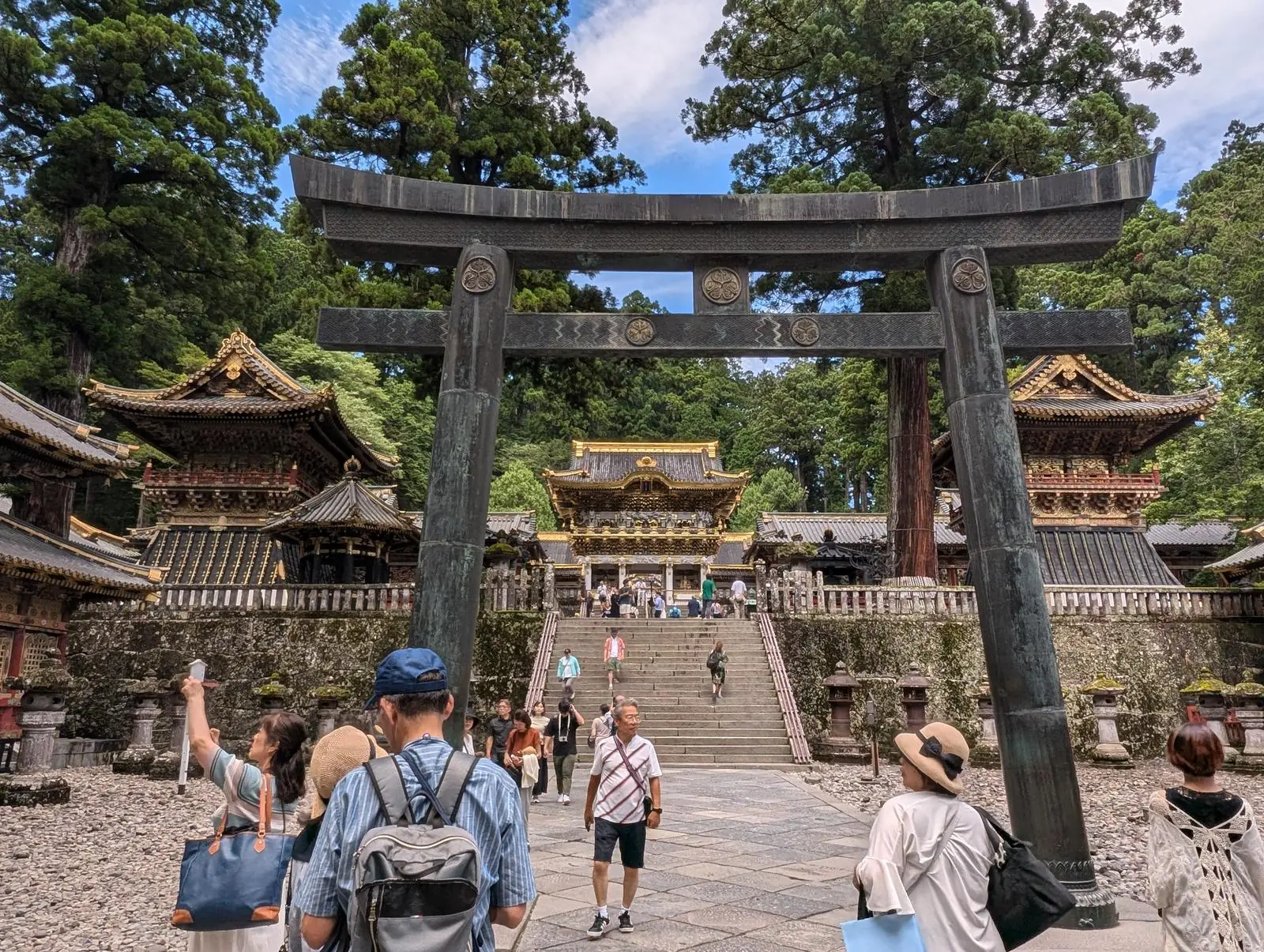
The town (lower Nikko) is where the UNESCO World Heritage Site sits: a complex of "Two Shrines and One Temple" (二社一寺) inscribed by UNESCO in 1999. This is Toshogu (mausoleum of shogun Tokugawa Ieyasu), Futarasan Shrine (the local mountain deity shrine, over 1,200 years old), and Rinno-ji (the Buddhist temple that predates both). Walking between all three takes about 3-4 hours at a comfortable pace.
The highlands (upper Nikko) — the area around Lake Chuzenji — is reached by climbing the Irohazaka switchback road from the town. Up there you have Kegon Falls (plunging 97 meters into a gorge with an elevator down to the viewing platform), Lake Chuzenji itself, and walking trails through Senjogahara marshland. The views are genuinely different from anywhere else in the Kanto region.
Solo vs Guided: At a Glance
| Factor | Solo (public transit) | Guided (private tour) |
|---|---|---|
| Cost per person | ~¥12,000 (train + bus + entry) | ¥80,000 per tour (up to 4 pax) |
| Break-even point | Cheapest for 1–2 people | ~¥20,000/pax at 4 people |
| Total day length | 10–12 hours (door to door) | 9–10 hours (direct door-to-door transport) |
| Shrines only | Easy and enjoyable | Over-engineered for this scope |
| Shrines + Lake Chuzenji | Possible but tight — one delay breaks the day | Comfortable; built for this route |
| Winter (Dec–Mar) | Riskier — road conditions can change suddenly | Better — decisions handled for you |
| Language at sites | Some English signage, no narration | Full English explanation of history and symbolism |
| Planning time | 2–3 hours to research properly | None |
The Solo Route (Public Transit from Tokyo)
Getting there
There are two practical routes:
- Tobu Limited Express (Spacia / Spacia X / Kegon) from Asakusa. About 1 hour 50 minutes direct to Tobu-Nikko Station. A standard seat is around ¥3,340 one way (¥6,680 round-trip) based on Tobu's published base fare plus limited express supplement. Fastest and most comfortable option, and the station is closer to the shrines than the JR station.
- JR route (Japan Rail Pass holders). Tokyo → Utsunomiya by Tohoku Shinkansen, then JR Nikko Line to JR Nikko Station. About 2 hours total and fully covered by the JR Pass. Note that the Shinjuku-departing "Limited Express Nikko" uses Tobu track for part of the route and requires an additional fare.
If you're not on a JR Pass, the Tobu option almost always wins on price, time, and comfort.
Getting around once you're there
Tobu runs the Nikko Pass World Heritage Area (2-day, around ¥3,000 for adults as of this writing) which covers the round-trip base fare from Asakusa plus unlimited rides on the local World Heritage Area bus. It's the easiest option if you're only doing the shrines. Limited express fare is separate and added on top.
For Lake Chuzenji and Kegon Falls you'll want the bus from Tobu-Nikko or JR Nikko Station to Chuzenji-onsen bus stop. The ride is 40–50 minutes one way (around ¥1,200–1,300 each way), and buses run roughly every 30 minutes during the day. Kegon Falls is about a 5-minute walk from that stop; the elevator to the base of the falls costs around ¥570 for adults.
Prices and headways can shift season to season — check Tobu Bus Nikko's current rates and timetable the week you travel.
Cost breakdown (1 person, no rail pass)
| Tobu Spacia round-trip (standard seat) | ~¥6,680 |
| World Heritage Area bus (shrines) | ~¥1,200 |
| Bus to/from Chuzenji-onsen (RT) | ~¥2,400 |
| Toshogu admission | ¥1,600 |
| Kegon Falls elevator | ~¥570 |
| Subtotal (does not include lunch) | ~¥12,450 |
The 3 mistakes solo visitors make
- Arriving after 10 AM. Toshogu gets noticeably busier after 10, especially on weekends. Peak queues at the Yomeimon gate and the stone lantern area can eat 30–40 minutes. A departure from Asakusa around 7:30 AM gets you to the shrines before the tour buses.
- Committing to Chuzenji without a buffer. If you plan to do the shrines and still catch the last reasonable bus up the Irohazaka, you need to be out of Toshogu by 12:30. Most solo visitors don't realize this until they're already running late at 1 PM and cut Chuzenji short.
- Missing the Futarasan and Rinno-ji side of the complex. Most visitors spend all their time at Toshogu and skip the other two UNESCO sites that share the same forest. Rinno-ji's Sanbutsudo hall and Futarasan's atmosphere are different from Toshogu in ways that make the full set feel like three different eras of Japanese religious architecture.
The Guided Route (What You're Actually Paying For)
A private Nikko day trip is ¥80,000 for up to 4 people, including the guide, the vehicle, and driving. Entry fees and meals are separate. On a full day that typically means:
- Door-to-door pickup from your hotel in Tokyo around 7 AM
- Direct drive to Nikko (about 2 hours, depending on traffic)
- All three UNESCO sites with full English explanation of the iconography, political history, and the Tokugawa shogunate context that the signage doesn't cover
- Lunch at a reserved local spot (no queuing, tested over prior tours)
- Drive up the Irohazaka to Lake Chuzenji and Kegon Falls
- Return to your hotel in Tokyo by around 6 PM
The "per person" math at group sizes:
- 1 person: ¥80,000 — rarely worth it vs solo
- 2 people: ¥40,000 each — still a big gap vs ~¥12,000 solo
- 3 people: ~¥26,700 each — gap narrows, time/language/transport savings start to pay
- 4 people: ¥20,000 each — the break-even point where guided is typically the better choice
Which One You Should Choose
| Your situation | Recommendation |
|---|---|
| Tight budget, 1–2 travelers, only want the shrines | Solo with the Nikko Pass World Heritage Area |
| Want shrines + Lake Chuzenji in one day, 2+ travelers | Guided (transit timing is the weak link) |
| Group of 4 adults | Guided — per-person cost roughly matches solo plus you save half a day of planning |
| Traveling late November–March | Guided — snow and chain regulations on Irohazaka can disrupt bus service |
| Elderly parents or young children | Guided — fewer transfers, seated travel, flexible pace |
| You read Japanese or have been to Nikko before | Solo |
A Note on Winter
Between roughly late November and early April, the Irohazaka mountain road can be affected by snow. Chain regulations may be imposed on short notice, and bus service up to Chuzenji can slow or be disrupted. Local road information is posted in Japanese, which is the main reason I recommend guided trips in this window if Lake Chuzenji is on your list.
The shrines themselves are open year-round and are arguably at their best with a light dusting of snow on the cedar grove. If you're happy to stay in lower Nikko, winter solo is very doable — just check road and bus updates the morning you travel.
Still Choosing Between Day Trips?
If you're also weighing Hakone or Kamakura against Nikko, I wrote a side-by-side breakdown of all three: Kamakura vs Hakone vs Nikko. And if you've already decided on Nikko but want the full overview rather than the guide-vs-solo angle, see my complete Nikko day trip guide.
Planning a Nikko Day Trip?
Tell me your group size, travel dates, and whether Lake Chuzenji is on your list, and I'll tell you honestly whether solo or guided makes more sense for you. My Nikko Day Trip tour page has the full itinerary if you want to compare.
Ask About Your Nikko TripFrequently Asked Questions
Can you do Nikko as a day trip from Tokyo?
Yes. Nikko is about 1 hour 50 minutes from Asakusa by Tobu Limited Express, or roughly 2 hours via the JR Tohoku Shinkansen and JR Nikko Line. A full day gives you time for the UNESCO shrines and, if you start early, Lake Chuzenji as well.
Is the Japan Rail Pass worth it for Nikko?
The JR route (Tokyo → Utsunomiya → JR Nikko) is fully covered by the JR Pass, but it's about 10 minutes slower and deposits you a bit further from the shrines than the Tobu route. If you already have a JR Pass, use it. If you don't, the Tobu route from Asakusa is usually cheaper and faster.
Do I need to book Nikko in advance?
Nothing requires advance booking to visit the shrines. You can buy train and bus tickets the morning of travel. For the Tobu Spacia X reserved seats, booking a few days ahead is recommended during cherry blossom, autumn leaves, and Golden Week periods.
Is Nikko worth visiting in winter?
The shrines are spectacular in winter, especially after fresh snow. Lake Chuzenji is less reliable — the Irohazaka road can be affected by snow, and chain regulations may slow or disrupt bus service. If you're going for the shrines only, winter is a great, less-crowded time to visit. If you want Lake Chuzenji too, a guided trip handles the road conditions more smoothly.
How long do you need in Nikko?
The UNESCO shrines (Toshogu, Futarasan, Rinno-ji) take 3–4 hours at a reasonable pace. Adding Lake Chuzenji and Kegon Falls extends that by about 4 hours including the bus up and down the Irohazaka road. A full day trip from Tokyo lands at 10–12 hours door-to-door solo, or 9–10 hours guided with direct transport.