Every spring, I get the same question from guests arriving in Tokyo: "Are we too early? Too late? Where should we go?" Cherry blossom season in Tokyo is beautiful, but it's also unpredictable, crowded, and surprisingly short. The window between first bloom and the last petals falling is roughly two weeks, and the "perfect" moment lasts maybe four or five days.
After guiding hundreds of visitors through sakura season, I've learned that the difference between a magical experience and a frustrating one comes down to three things: timing, location, and time of day. This guide covers all three.
2026 Cherry Blossom Forecast for Tokyo
According to the Japan Meteorological Corporation's latest forecast (updated March 2026):
- First bloom (開花): March 19, 2026 — a few days earlier than average
- Full bloom (満開): March 27, 2026
- Best viewing window: March 27 – April 2
- Petal fall (桜吹雪): Around April 3–7
This year's bloom is earlier than usual due to warmer-than-average temperatures in February. If you're arriving in late March or early April, you're in the sweet spot. If you're coming after April 5, you'll likely catch the tail end — still beautiful, especially with petals floating on rivers and ponds, but not full canopy.
Important: These dates are forecasts and can shift by 2–3 days. Different tree varieties bloom at different times. Shinjuku Gyoen, for example, has early and late-blooming varieties that extend the viewing window by a week or more.
The 7 Best Cherry Blossom Spots in Tokyo (Ranked by a Guide)
I'm ranking these based on the overall experience — not just the trees, but the atmosphere, accessibility, crowd levels, and how the spot photographs. Every list you'll find online puts Ueno Park at the top. I don't.
1. Meguro River (目黒川) — Best Overall Experience
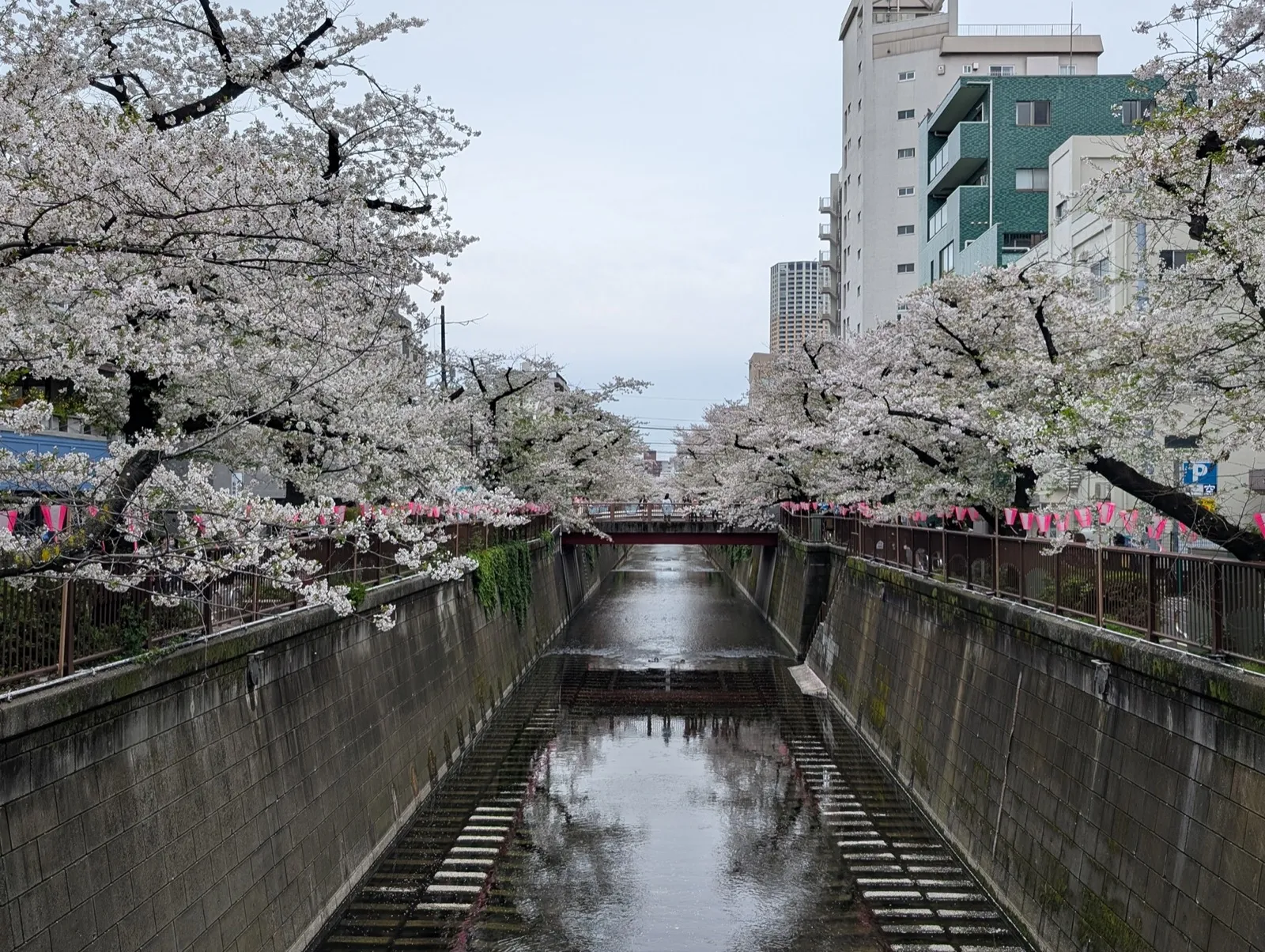
If you only have time for one cherry blossom spot, this is where I take my tour guests. Over 800 cherry trees line both banks of the Meguro River for about 3.8 kilometers. During peak bloom, the branches form a pink tunnel over the water. In the evening, the trees are illuminated, and the reflection on the river is genuinely stunning.
- Best time: Late afternoon into evening (4–8 PM) for illuminations
- Access: Nakameguro Station (Tokyu Toyoko Line / Hibiya Line)
- Crowd tip: Walk upstream from Nakameguro — most tourists stay near the station. The stretch toward Ikejiri-Ohashi is quieter and just as beautiful
- Food: Dozens of street food vendors line the river during the festival
2. Chidorigafuchi (千鳥ヶ淵) — Most Photogenic
The moat along the Imperial Palace becomes a 700-meter tunnel of cherry blossoms, and you can rent rowboats to paddle through it. During the illumination period (March 26 – April 6, 2026), the trees glow pink against the dark water. This is the single most photogenic cherry blossom scene in Tokyo.
- Best time: Early morning (before 8 AM) for no crowds, or evening for illuminations
- Access: Kudanshita Station (Tozai / Hanzomon / Shinjuku Lines)
- Boat rental: ¥800 for 30 minutes. Expect a 60–90 minute wait during peak weekends
- Combine with: Walk to Yasukuni Shrine's cherry trees (5 minutes away)
3. Shinjuku Gyoen (新宿御苑) — Best for Families & Hanami Picnics
Shinjuku Gyoen has over 1,000 cherry trees across 65 types, which means something is always blooming from mid-March through late April. The expansive lawns are perfect for hanami picnics — unlike most spots, you can actually sit comfortably here. Alcohol is prohibited, which keeps the atmosphere calm and family-friendly.
- Hours: 9:00 AM – 5:30 PM (last entry 5:00 PM). Closed Mondays
- Admission: ¥500 adults, ¥250 students, free for children under 15
- Access: Shinjuku-Gyoenmae Station (Marunouchi Line)
- Pro tip: The late-blooming Ichiyo and Kanzan varieties here peak around April 10–15, perfect if you arrive after the main season
4. Ueno Park (上野公園) — Best for Festival Atmosphere
Ueno is Tokyo's most famous hanami spot, and for good reason: 1,000+ cherry trees, 800 paper lanterns lit at night, food stalls, and a genuinely festive atmosphere. But I'll be honest — it gets extremely crowded, especially on weekends. The ground under the trees is claimed by picnicking groups from early morning.
- Best time: Weekday mornings or after 7 PM when the lanterns are lit
- Access: Ueno Station (JR / Ginza / Hibiya Lines)
- Combine with: The Senso-ji area and Yanaka Cemetery (another excellent, crowd-free cherry blossom spot)
5. Sumida River (隅田川) — Best Combination with Asakusa
The Sumida River sakura walk stretches about 1 kilometer from Azumabashi Bridge to Sakurabashi Bridge, with trees lining both banks. What makes this spot special is the combination: cherry blossoms, Tokyo Skytree in the background, and the historic Asakusa neighborhood right there. The evening illuminations are free and beautiful.
- Best time: Late afternoon to combine with an Asakusa walking tour
- Access: Asakusa Station (Ginza / Asakusa Lines)
- Pro tip: Walk the east bank (Sumida Park side) for the best Skytree + sakura photo angle
6. Yanaka Cemetery (谷中霊園) — Best Hidden Gem
This is my personal favorite, and where I go when I want to see cherry blossoms without the crowds. The main path through Yanaka Cemetery is lined with magnificent old cherry trees that form a complete canopy. It's quiet, atmospheric, and completely free. The Yanaka neighborhood around it is one of old Tokyo's best-preserved areas.
- Best time: Anytime — it's never as crowded as the famous spots
- Access: Nippori Station (JR Yamanote Line)
- Combine with: A walk through Shitamachi Tokyo
7. Rikugien Garden (六義園) — Best for Evening Illumination
Rikugien is a traditional Edo-period garden with one famous weeping cherry tree (shidarezakura) that becomes the centerpiece of an annual light-up event. The illuminated tree against the dark garden is genuinely breathtaking. This is a smaller, more intimate experience than the river walks.
- Hours: 9:00 AM – 5:00 PM (extended to 9:00 PM during illumination period)
- Admission: ¥300
- Access: Komagome Station (JR Yamanote Line / Namboku Line)
A Guide's Practical Tips for Cherry Blossom Season
Timing Your Visit
- Best days: Weekdays, always. Weekend crowds at popular spots can be overwhelming
- Best hours: Before 9 AM or after sunset for illuminated spots
- Don't panic about timing: Even if you miss full bloom by a few days, the petal-fall (桜吹雪, sakura fubuki) is arguably more beautiful — cherry petals floating on rivers and covering paths like pink snow
What to Bring for Hanami
- A blue tarp or picnic sheet (available at any convenience store for ¥300–500)
- Food and drinks from a depachika (department store basement) or konbini
- Warm layers — March evenings in Tokyo are still cool (8–12°C)
- A portable phone charger — you'll take more photos than you expect
Cherry Blossom Etiquette
- Don't shake the branches for photos — this damages the trees and is considered very rude
- Don't reserve spots with tarps and leave — this is frowned upon, especially at popular parks
- Clean up completely — bring your trash with you. Japanese parks have very few trash bins
- Keep music low — hanami is about enjoying nature, not outdoor concerts
How to Combine Cherry Blossoms with Sightseeing
Cherry blossom viewing doesn't have to be a standalone activity. Here's how I structure a spring day for my tour guests:
- Morning: Chidorigafuchi walk (before the crowds) → Imperial Palace East Gardens
- Lunch: Head to Tsukiji Market for fresh seafood
- Afternoon: Shinjuku Gyoen for a relaxed hanami picnic
- Evening: Meguro River illuminations or Chidorigafuchi night boats
For a 3-day Tokyo itinerary during cherry blossom season, simply swap one afternoon activity each day for the nearest sakura spot. The blossoms are everywhere — you'll see them just walking between neighborhoods.
Want a Local Guide for Cherry Blossom Season?
I offer custom spring tours that combine the best cherry blossom spots with Tokyo's top sightseeing — timed to avoid the crowds. Whether it's a morning walk through Yanaka's sakura tunnel or an evening boat ride at Chidorigafuchi, I'll plan the perfect spring day for you.
Frequently Asked Questions
When is the best time to see cherry blossoms in Tokyo in 2026?
Full bloom is forecast for March 27, 2026. The best viewing window is approximately March 27 – April 2. However, different varieties bloom at different times, so you can enjoy cherry blossoms from mid-March through mid-April at Shinjuku Gyoen.
Are cherry blossoms free to see in Tokyo?
Most spots are completely free — including Meguro River, Chidorigafuchi, Ueno Park, Sumida River, and Yanaka Cemetery. Shinjuku Gyoen charges ¥500 and Rikugien charges ¥300 for admission.
What if I miss peak bloom?
Don't worry. The petal fall (sakura fubuki) during the first week of April is arguably more photogenic than full bloom. And Shinjuku Gyoen has late-blooming varieties that peak around April 10–15. Cherry blossom season in Tokyo is more forgiving than people think.
Where is the least crowded cherry blossom spot in Tokyo?
Yanaka Cemetery is the best-kept secret among locals. The main path is lined with magnificent old trees, and you'll share it with far fewer people than Ueno or Meguro. The surrounding Yanaka neighborhood is one of Tokyo's most charming areas.
Private Tours