This is the route I walk with friends when we have a free afternoon and want to eat well without thinking too hard about it. It starts at the fish market, ends under the train tracks in Yurakucho with a cold beer, and covers about 3 kilometers of some of the best eating in Tokyo.
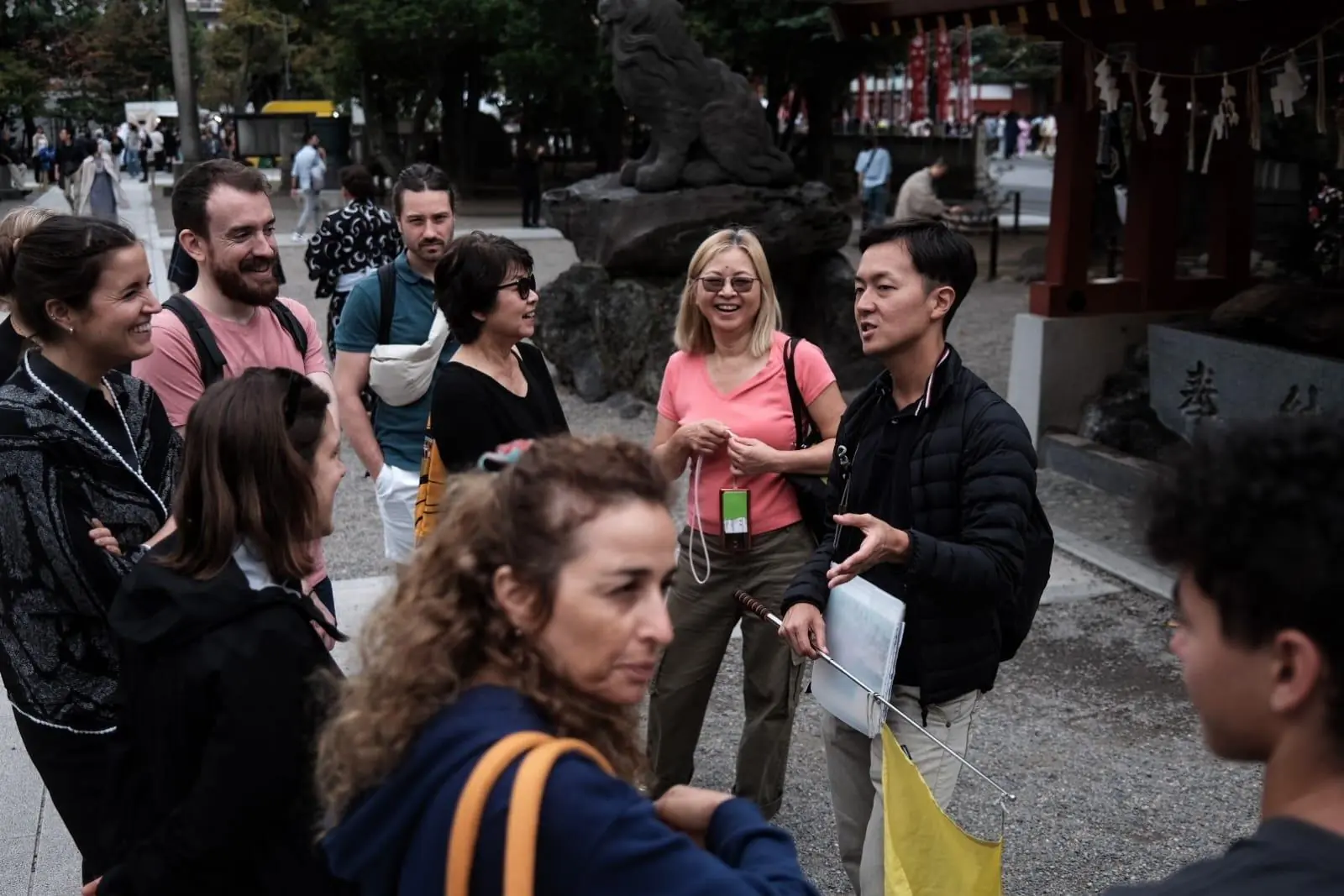
You can do this walk entirely on your own using this article as a guide. I'm not holding anything back. But I'll also tell you where having a guide (like me) adds something you can't replicate alone.
For a deeper look at the market itself, check my Tsukiji Market guide.
Going the other way? See my Ginza to Tsukiji walking guide for the morning route from Ginza hotels to the market.
Stop 1: Tsukiji Outer Market (9:00 - 10:30 AM)
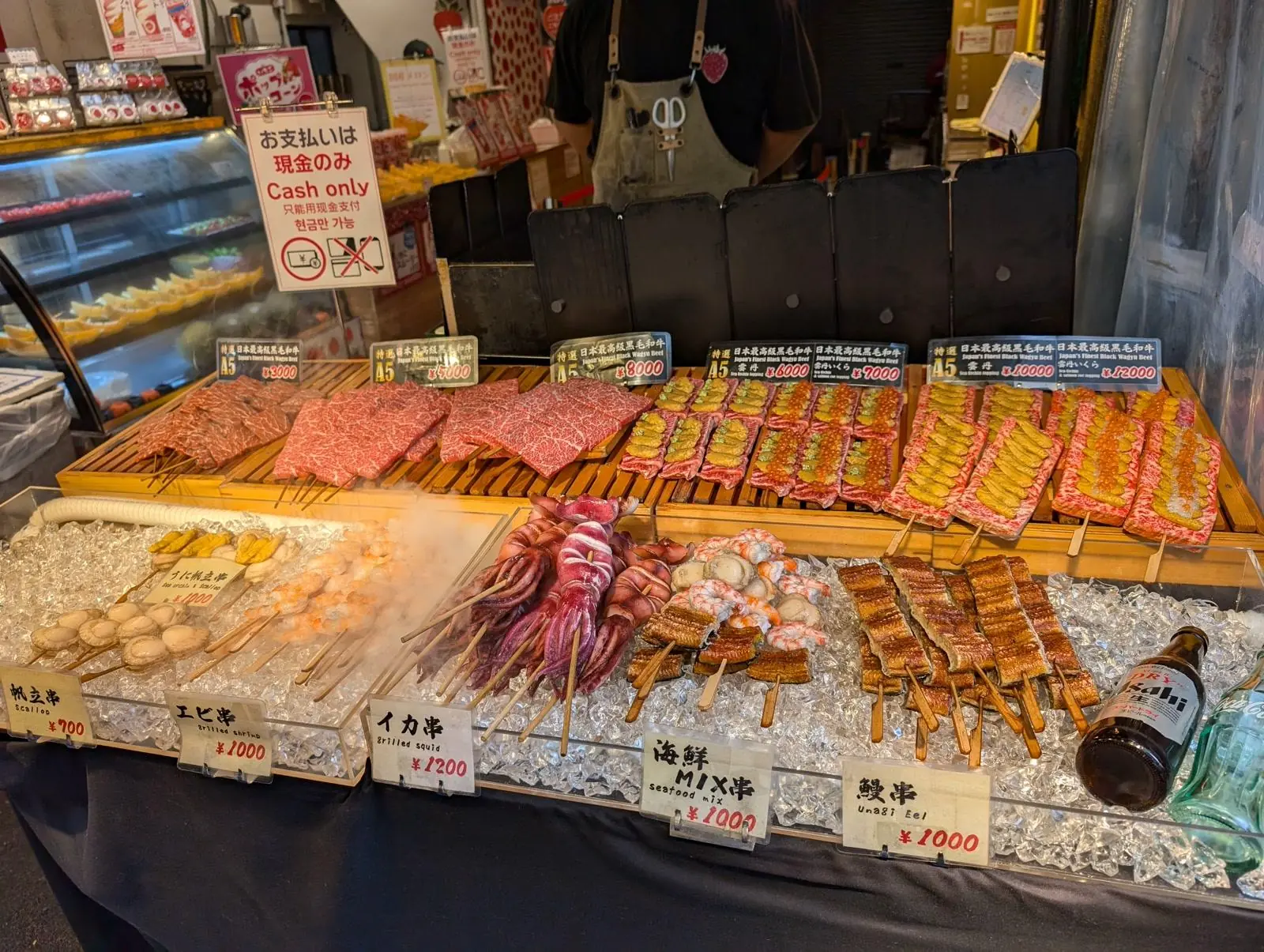
Start at Tsukiji Station (Hibiya Line, Exit 1) and walk toward the outer market. The outer market is where the magic is for visitors: hundreds of small stalls selling everything from fresh sashimi to grilled seafood skewers to Japanese sweets.
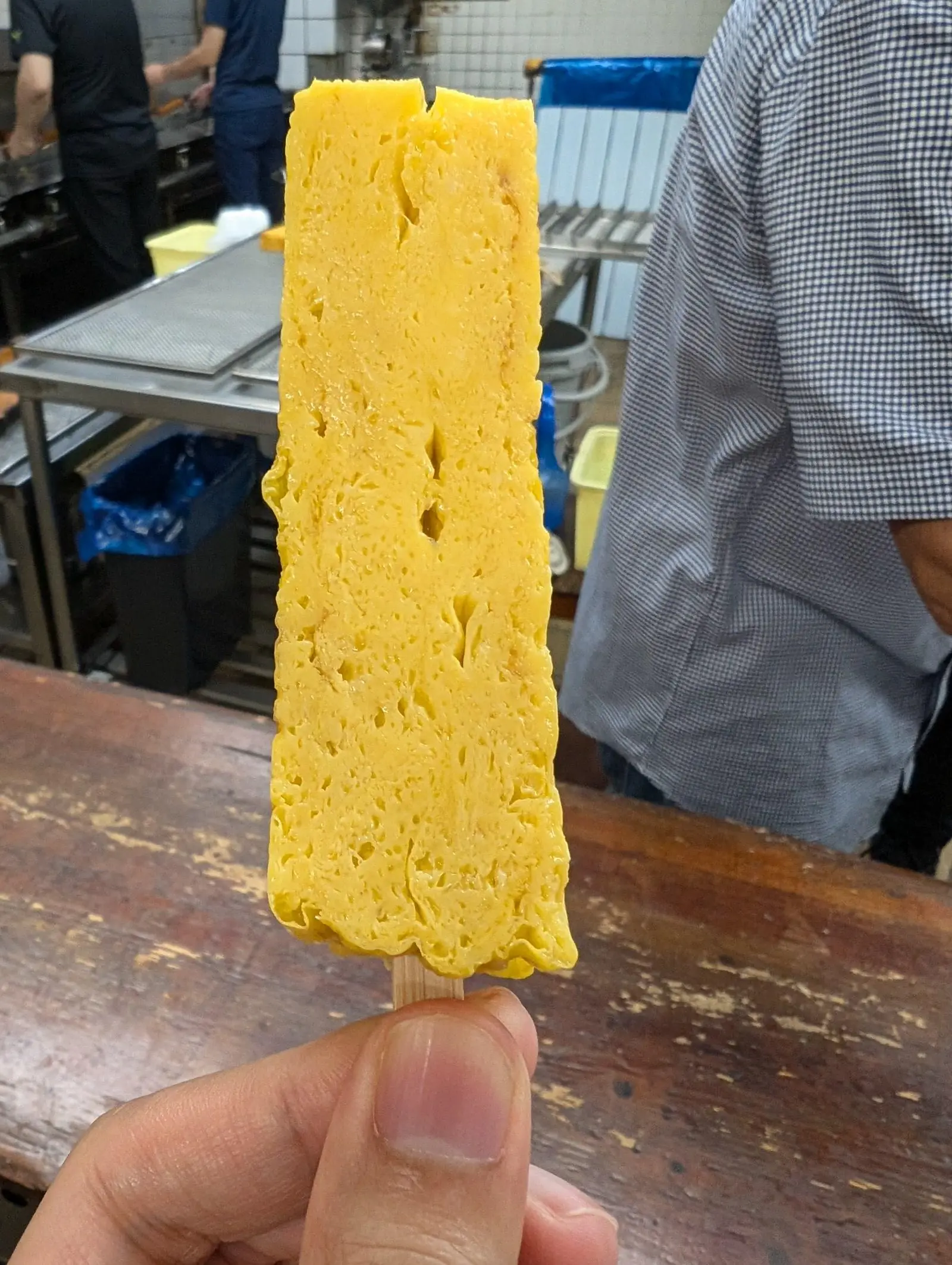
What to eat here: fresh tamago (egg) in its many forms, grilled scallops or uni if you're adventurous, seasonal fruit from the specialty shops, and daifuku mochi from one of the stalls along the main alley. Avoid the places with long lines of tourists and no Japanese customers. The best stalls are the ones where the locals are buying.
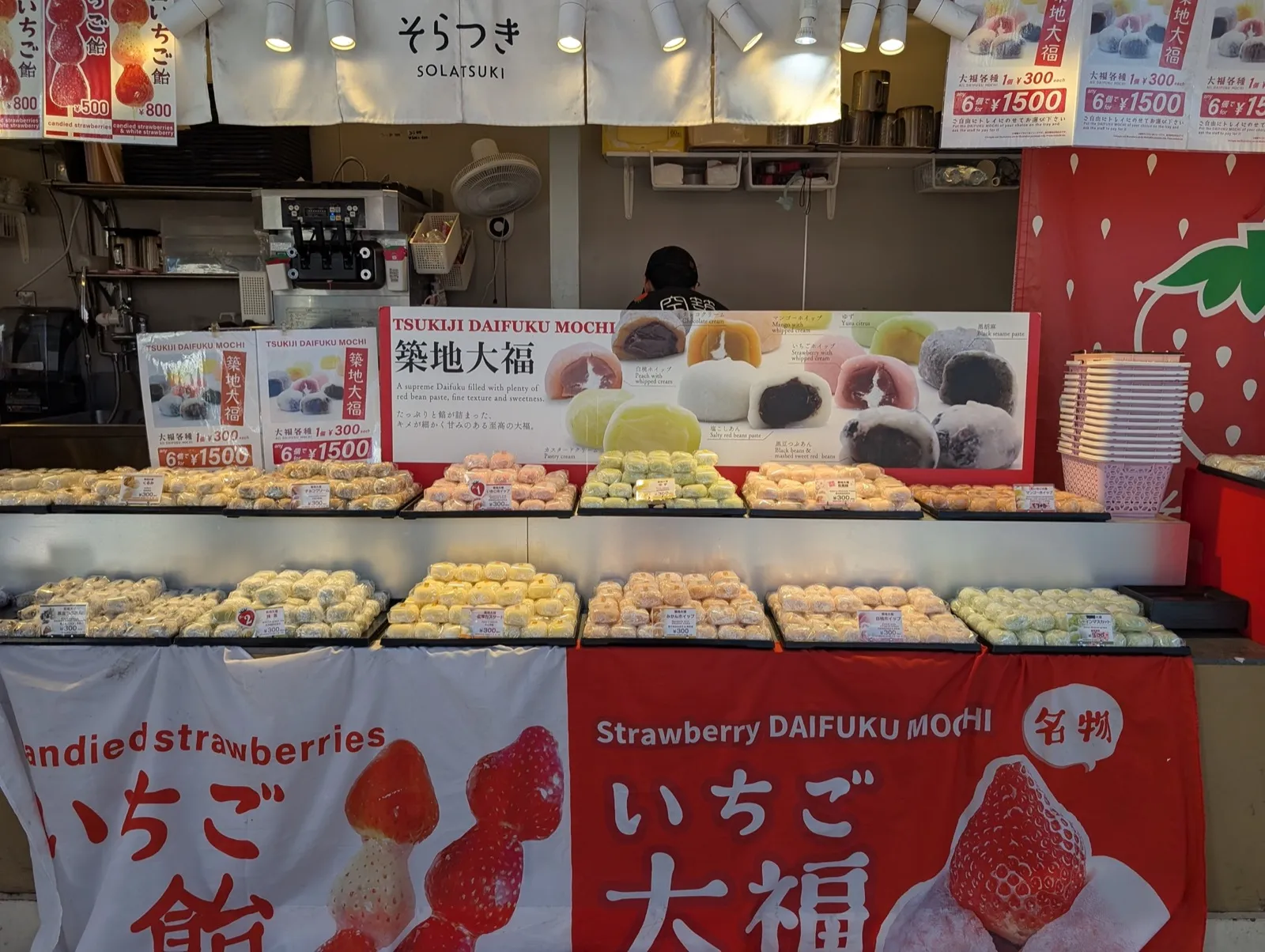
Timing tip: Arrive between 9:00 and 10:00 AM. Earlier is better for selection; later gets crowded. Most stalls close by 2:00 PM, and some popular items sell out by noon.
Pro tip: Don't eat too much here. This is the opening act, not the main course. Two or three small tastings are perfect.
Stop 2: Tsukiji Honganji Temple Area (10:30 - 11:00 AM)
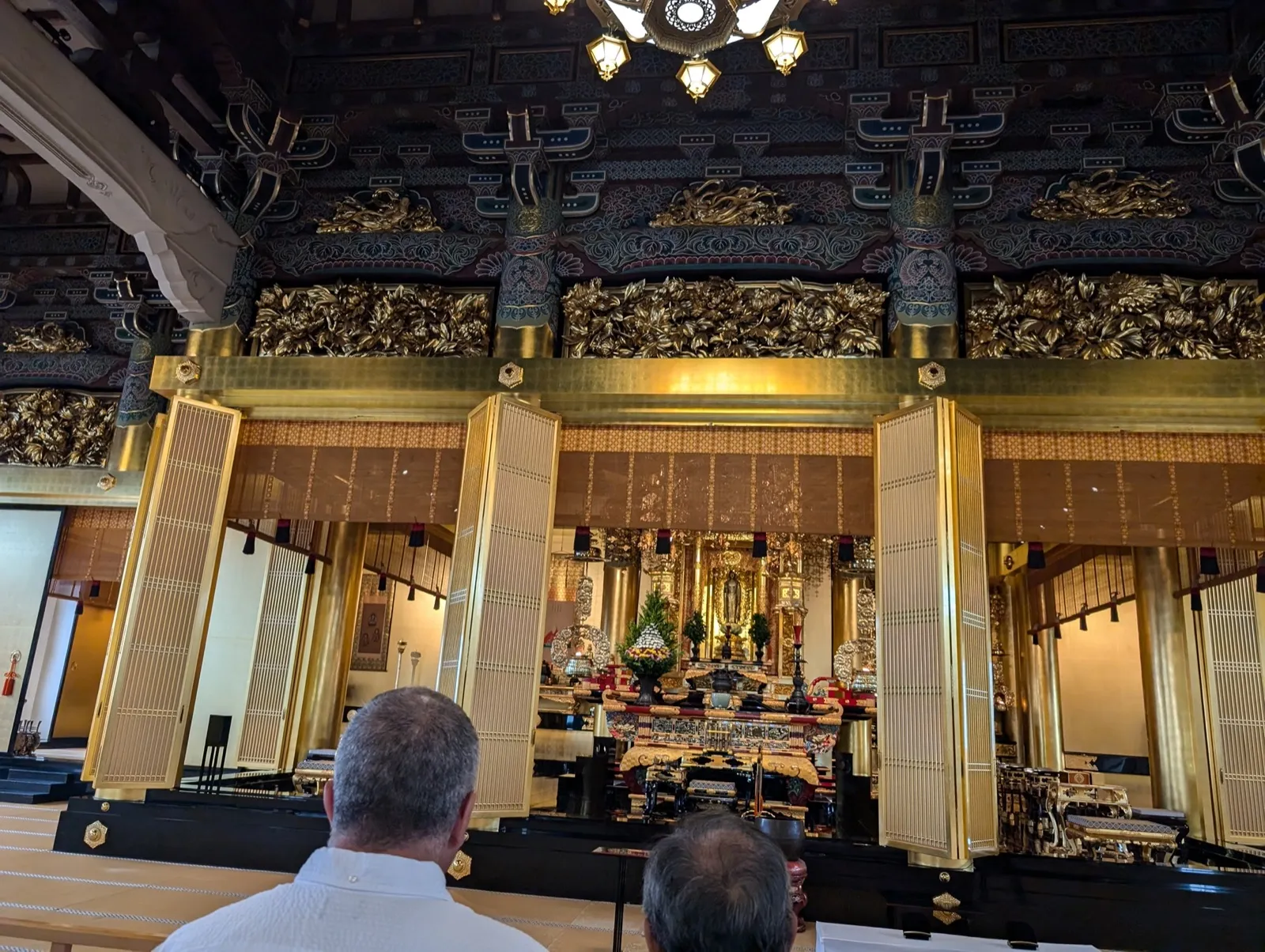
Walk south from the market toward Tsukiji Honganji, a Buddhist temple that looks nothing like any other temple in Tokyo. Its architecture is Indian-inspired, designed by the famous architect Ito Chuta in the 1930s. It's a 2-minute walk from the market but almost no tourists visit.
The temple has a cafe (Tsumugi) that serves a famous morning set (¥1,800, daily 8:00-10:30 AM, limited to 110 meals per day) with 18 small dishes representing the Buddhist concept of gratitude for food. Reservations recommended. Even if you skip the cafe, the temple's interior is worth 10 minutes, especially the pipe organ (one of the few in a Buddhist temple in Japan).
Optional Detour: Hamarikyu Gardens (Add 60–90 min)
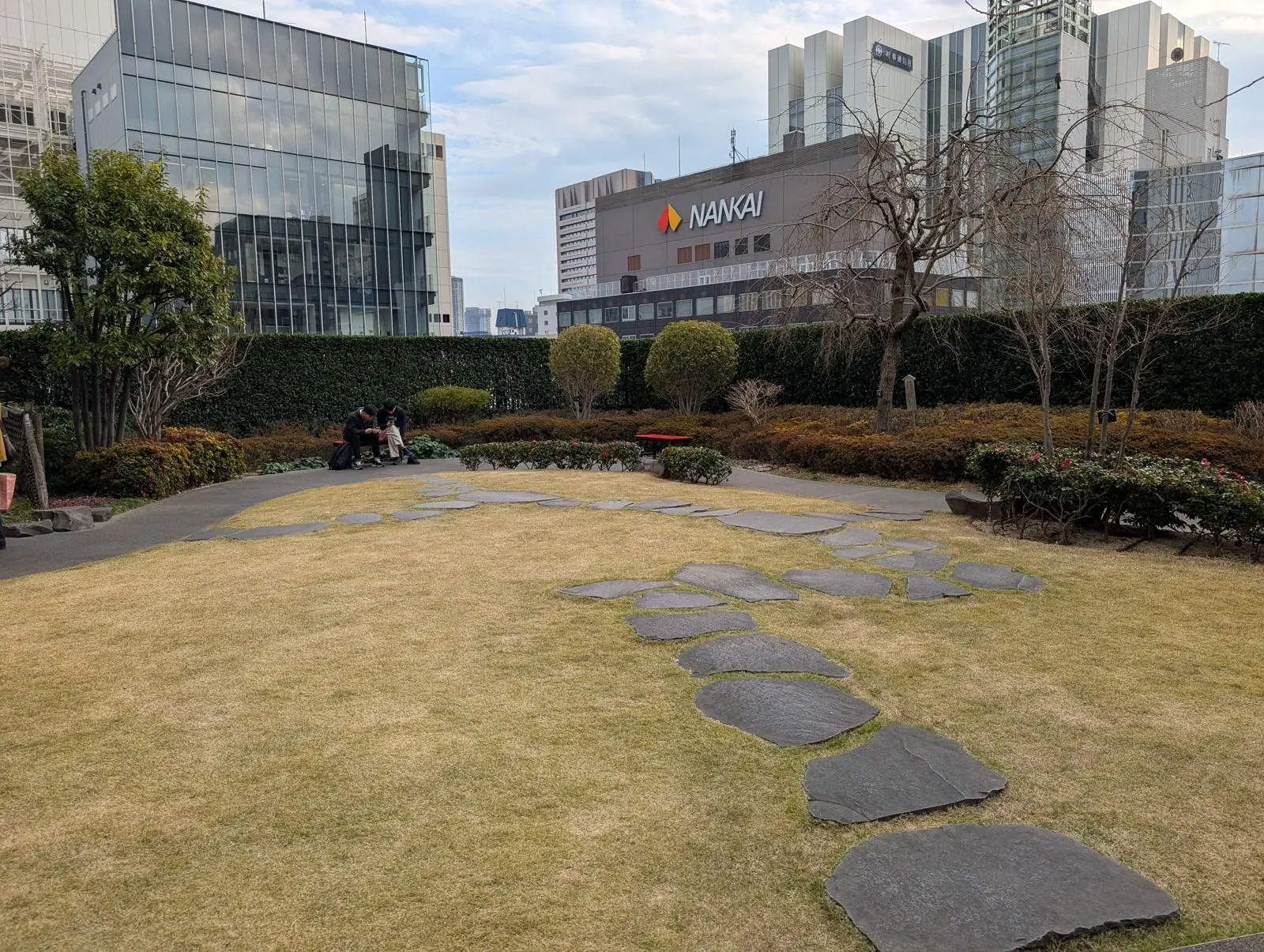
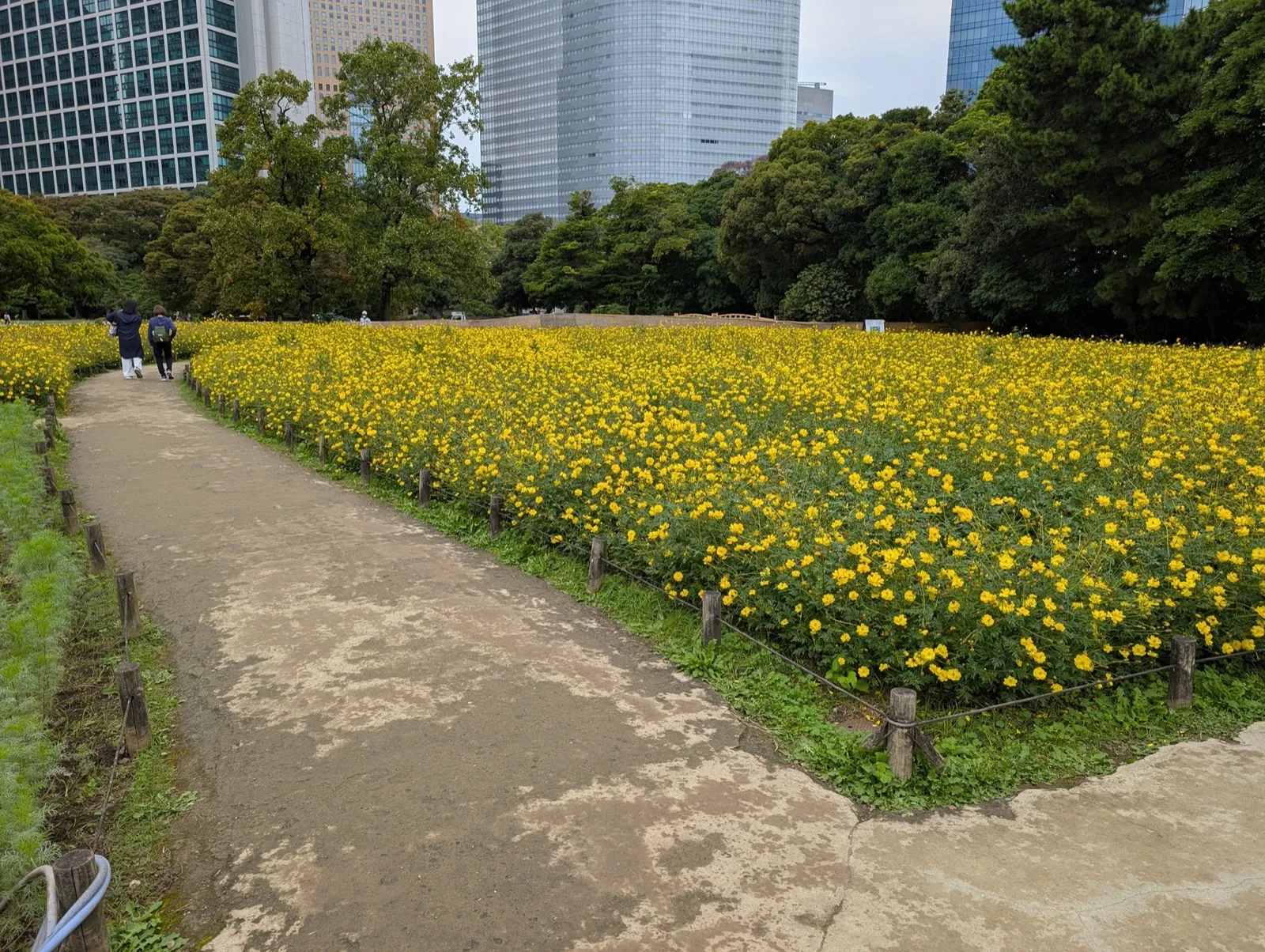
If your schedule allows, a short detour south from Tsukiji brings you to Hamarikyu Gardens (浜離宮恩賜庭園), one of Tokyo's most beautiful traditional gardens. It's a 10-minute walk from the outer market, and the contrast is remarkable: one moment you're in the bustling market lanes, the next you're standing on manicured lawns with pine trees, tidal ponds, and Tokyo's skyscrapers rising behind them.
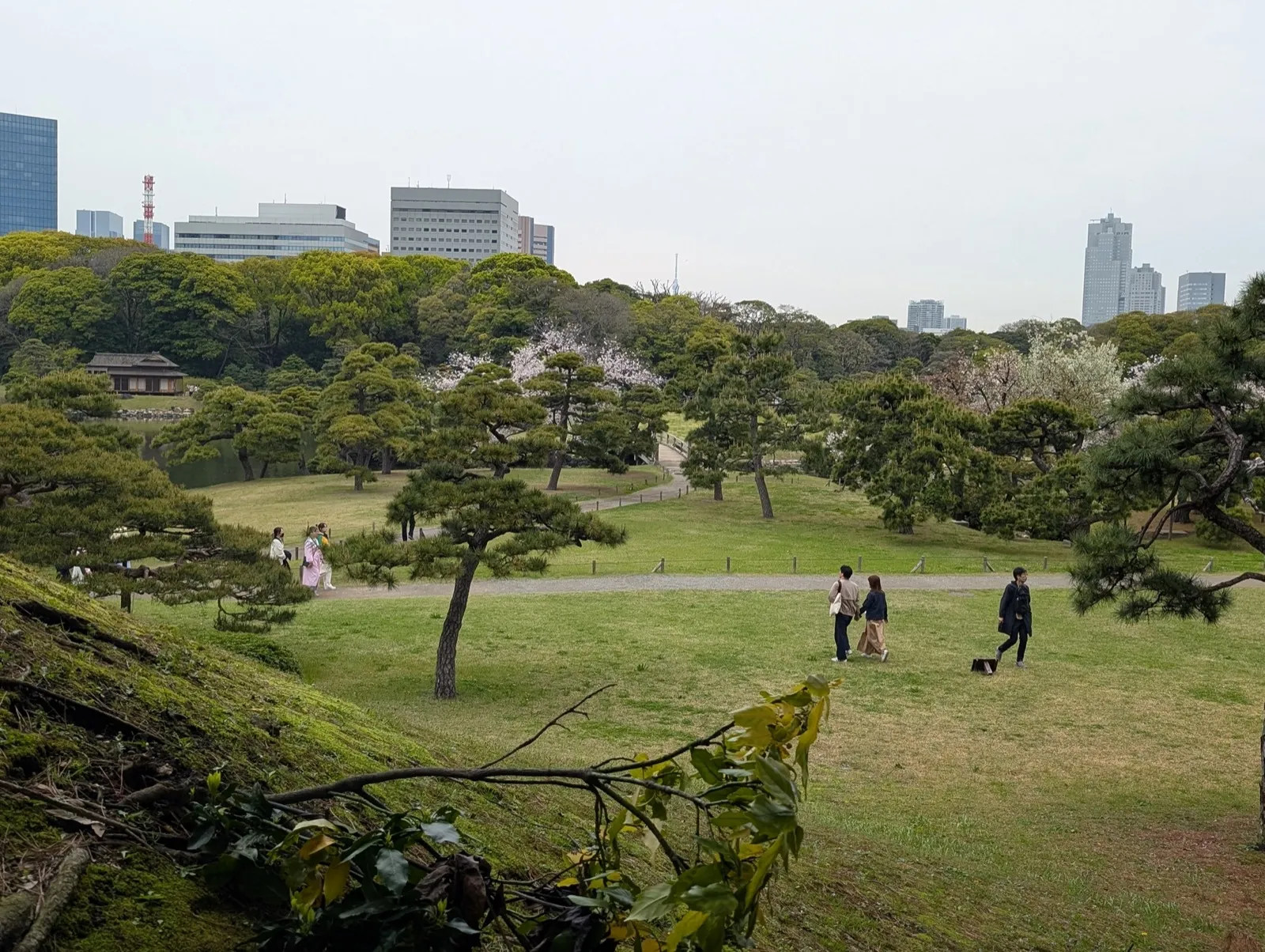
The gardens were originally a feudal lord's duck hunting grounds, later becoming an imperial detached palace. Today they're a public park with seasonal flower fields, a tidal seawater pond (one of the only ones in Tokyo), and a teahouse on the water where you can sit with matcha and wagashi while watching the boats pass on Tokyo Bay.
- Hours: 9:00 AM – 5:00 PM (last entry 4:30 PM)
- Admission: ¥300 adults
- Access: 10-minute walk south from Tsukiji Outer Market
- Tip: You can take a water bus from Hamarikyu to Asakusa — a scenic way to continue your day
Stop 3: The Walk to Ginza's Backstreets (11:00 - 12:00 PM)
From Honganji, walk northwest toward Ginza. This 15-minute walk takes you through transitional streets where the old market neighborhood meets the luxury shopping district. The contrast is part of the charm.
Once you hit Ginza, skip the main avenues (Chuo-dori) and go one or two blocks deeper. The backstreets of Ginza are full of tiny lunch spots, art galleries, and specialty shops that have been here for decades. This is where office workers eat, not tourists.
Lunch window: Between 11:30 AM and 1:00 PM, many Ginza restaurants offer lunch sets at a fraction of their dinner prices. A meal that costs ¥8,000 at night might be ¥1,500-2,500 at lunch. This is the best-kept pricing secret in Tokyo dining.
Stop 4: Yurakucho Izakaya Alley (4:00 PM onward)
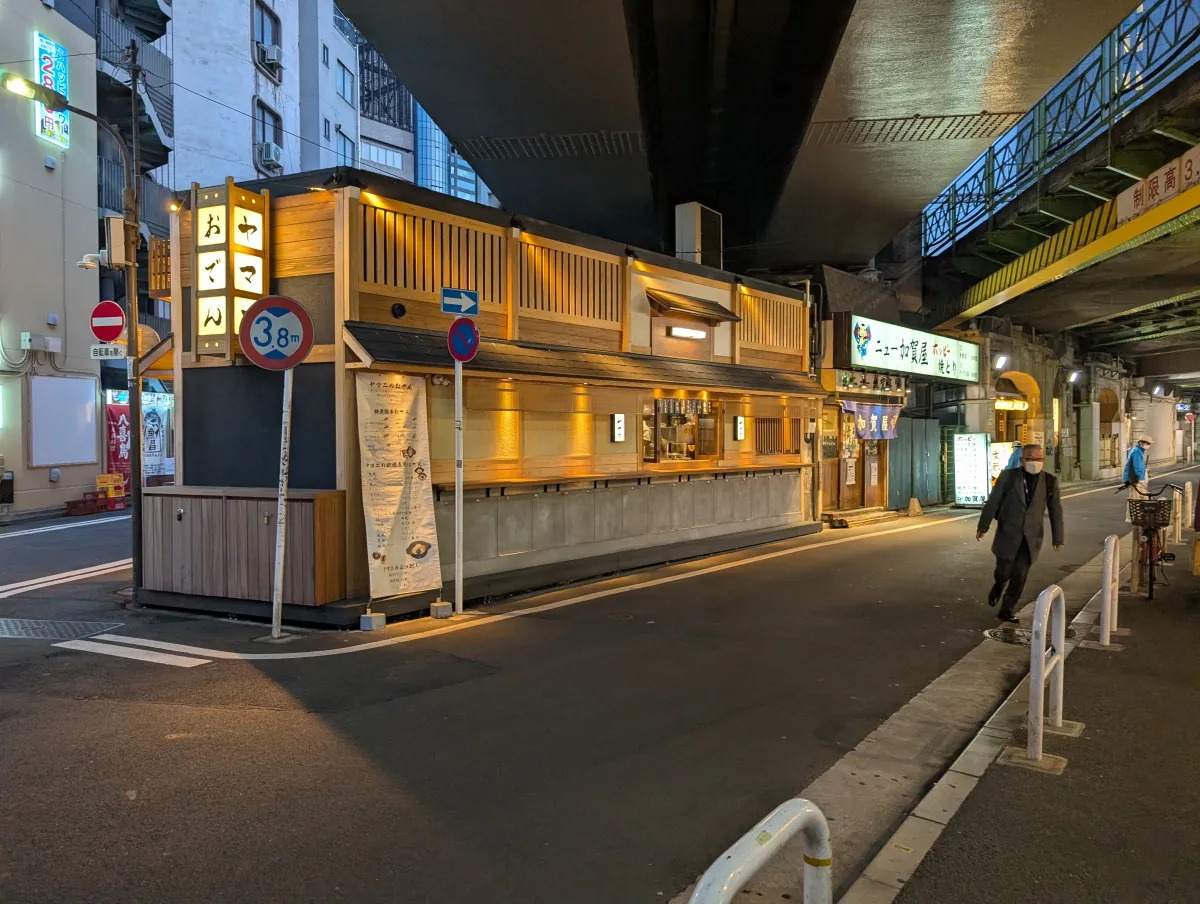
The walk ends (or the evening begins) under the train tracks between Yurakucho and Shinbashi stations. This is one of Tokyo's great drinking and eating neighborhoods: a row of tiny izakaya and yakitori joints crammed under the elevated JR tracks, with trains rumbling overhead every few minutes.
The atmosphere here is unlike anywhere else in Tokyo. Smoke from grills, salary workers loosening their ties, groups of friends on tiny stools with beer and grilled chicken. It's as authentic as Tokyo gets. Most places have counter seating only and serve standing.
What to order: yakitori (grilled chicken skewers, order a mix), draft beer, and whatever the house special is. Most items are ¥100-300 per skewer. You can eat and drink well for ¥2,000-3,000 per person.
If you're going alone: Counter seats and standing bars are actually easier for solo travelers. Sit at the counter, point at what others are eating, and the staff will take care of you. Basic Japanese helps (sumimasen, kore kudasai) but isn't strictly necessary.
Stop 5: Shinbashi — The Deeper End (5:30 PM onward)
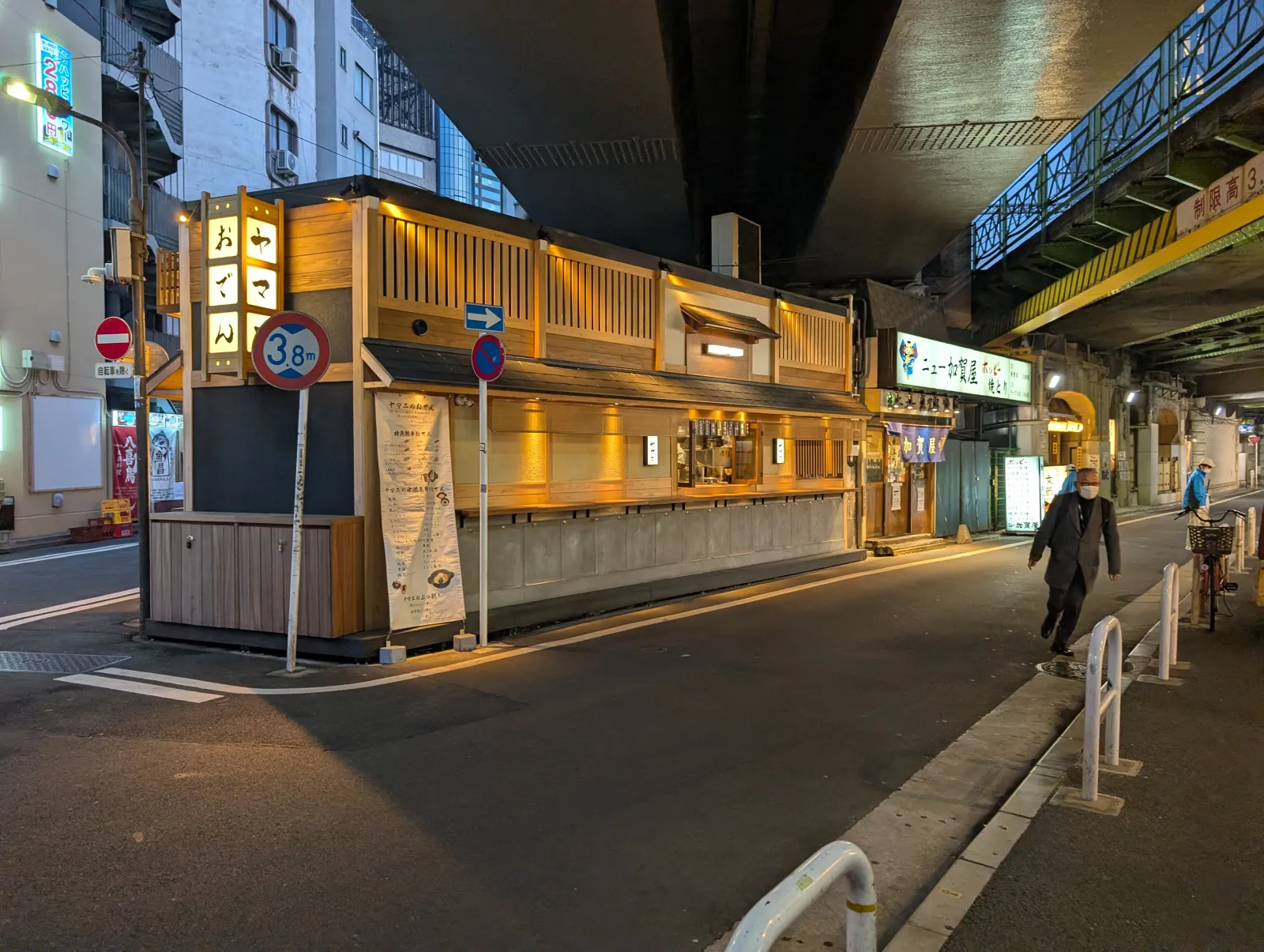
If you still have energy (and stomach space), keep walking south along the tracks toward Shinbashi Station. The atmosphere shifts as you move away from Yurakucho: the bars get smaller, the menus become Japanese-only, and the clientele becomes almost entirely local office workers winding down their day. This is the deeper end of the under-the-tracks strip, and it rewards the adventurous.
Look for the places with handwritten menus on the wall, steaming yakiton (grilled pork offal), and the kind of organized chaos that happens when a 10-seat bar tries to serve 30 people. The best spots have no English signage and no tourist reviews — just decades of loyal regulars and excellent charcoal-grilled chicken.
The SL Plaza steam locomotive in front of Shinbashi Station makes a good endpoint marker — and if you arrive before 6 PM, you'll hear its whistle blow, a small echo of the 1872 railway that started here. Shinbashi was the Tokyo terminus of Japan's first train line, and the after-work drinking culture that fills these streets today is as much a part of the city's identity as any temple. I write more about why Shinbashi matters in my Tokyo hidden gems guide.
Solo vs. With a Guide
You can absolutely do this walk alone with this article as your map. The route is straightforward, and the neighborhoods are safe and walkable.
Where a guide adds value:
- The best stalls change seasonally. What's good in March isn't the same as what's good in October. I know what's in season and which vendors are at their best right now.
- Some places need Japanese to order. Especially in the Ginza backstreets, Yurakucho, and Shinbashi. A guide handles the communication and can explain the menu, the specials, and the etiquette.
- Yurakucho standing bars are intimidating solo. They're loud, crowded, mostly Japanese, and the ordering system isn't obvious. With a guide, you walk in confidently and know exactly what to do.
- The cultural context. Why do the stalls at Tsukiji open at 5 AM? What's the history of this neighborhood? Why do salary workers drink under the train tracks? These stories turn a food walk into a cultural experience.
Practical Info
- Total distance: About 3.5 km (2.2 miles), mostly flat
- Total time: 3-4 hours for the food walk; add another 2-3 hours if you continue to Yurakucho and Shinbashi for the evening portion
- Budget: ¥3,000-5,000 per person for food tastings and a light lunch. Add ¥2,000-3,000 for Yurakucho evening drinks and food.
- Best days: Tuesday, Thursday, Friday, and Saturday are most reliable. Many Tsukiji stalls close on Sundays and Wednesdays (the traditional market rest days), and some close on Mondays too.
- Cash needed: Many market stalls and Yurakucho bars are cash-only. Bring ¥10,000-15,000 for the full day.
Want the Guided Version?
If this sounds like your kind of thing but the language barrier worries you, or you want someone to take you to the specific stalls that are best right now, this is basically what my food tour covers. Same route, but with the insider access and cultural context that turns a food walk into a food education.
Ask About the Food Tour