Quick verdict
Pick Kawaguchiko if you want the photo. Pick Hakone if you want the day.
Kawaguchiko gets you closer to Mt Fuji and gives a more reliable view, but there's less to do once you've taken the photo. Hakone gives you onsen, art, lake, and a full day's worth of activities, but the Fuji view is genuinely weather-dependent.
If you only have one shot at seeing Fuji and your trip dates can't be moved, Kawaguchiko is the safer bet.
Almost every guest who's never been to Japan asks me the same question: "Where do I go to see Mt Fuji?" The two real answers are Kawaguchiko and Hakone. Both are day-trippable from Tokyo. Both give you that postcard view. But they offer completely different experiences, and the right pick depends on what kind of day you want to have around the photo.
I've taken guests to both destinations dozens of times across every season. This guide walks through the real differences — view quality, weather reliability, what else you actually do there, and the travel logistics that nobody mentions until you're stuck on a bus.
Quick Verdict: Which One Wins for Your Trip
Better photo
Pick Kawaguchiko if…
- Mt Fuji is your primary reason for the day
- You want the close, postcard view
- You'd rather have a quieter day around photography
- You're visiting in winter or early morning
Better full day
Pick Hakone if…
- You want onsen + art + lake in one day
- You're staying overnight at a ryokan
- You're okay if the Fuji view doesn't appear
- You're traveling with a mixed group of interests
Mt Fuji View Quality Compared
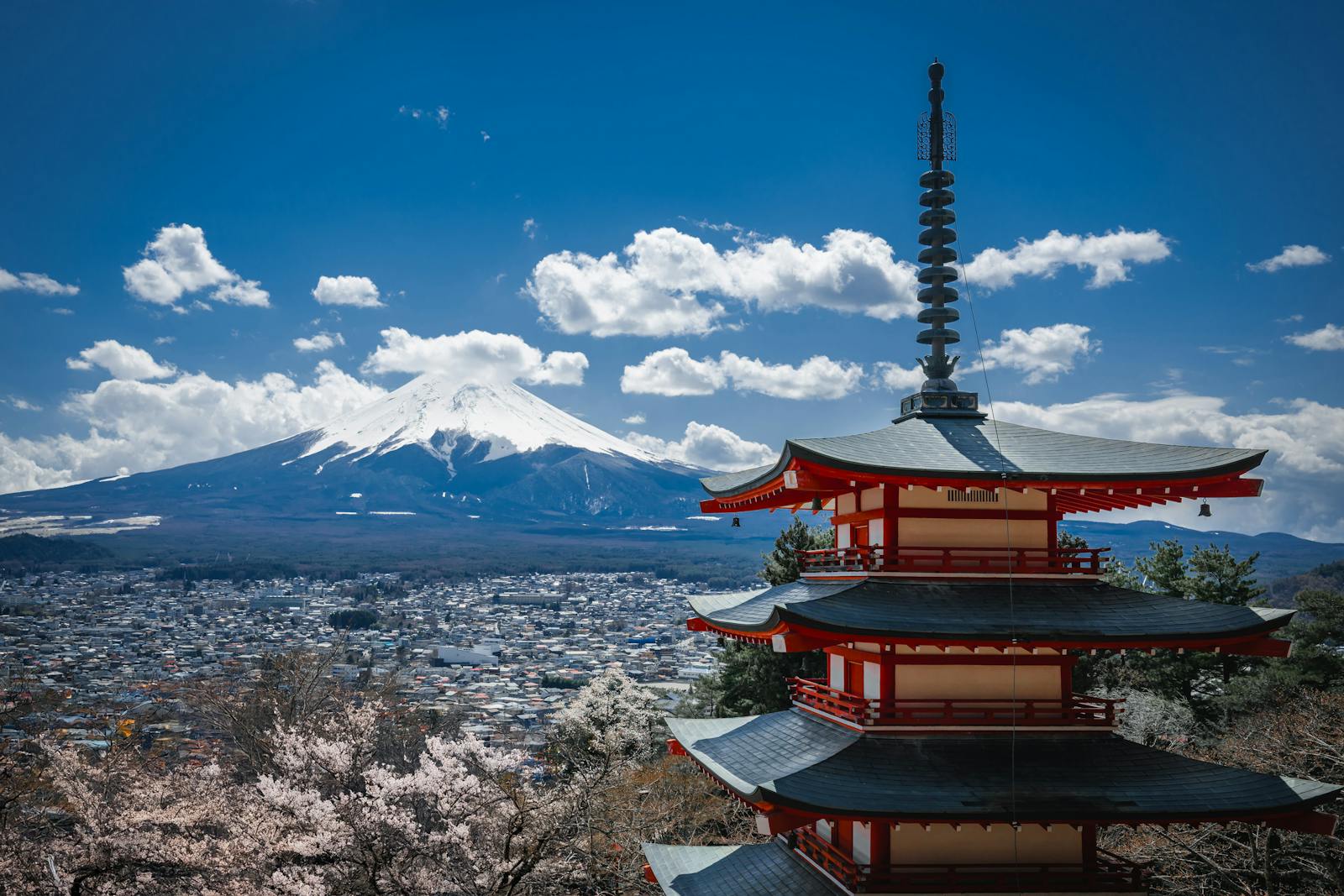
Kawaguchiko sits at roughly 1,000 meters elevation on the north side of Mt Fuji, directly facing the mountain across a lake. On a clear day, Fuji feels enormous — close enough that you can see snow detail on the upper slopes. The Chureito Pagoda viewpoint (a 15-minute climb from Shimoyoshida Station) frames Fuji with a five-storied pagoda in the foreground, and that single photograph is one of the most reproduced images in Japanese tourism.
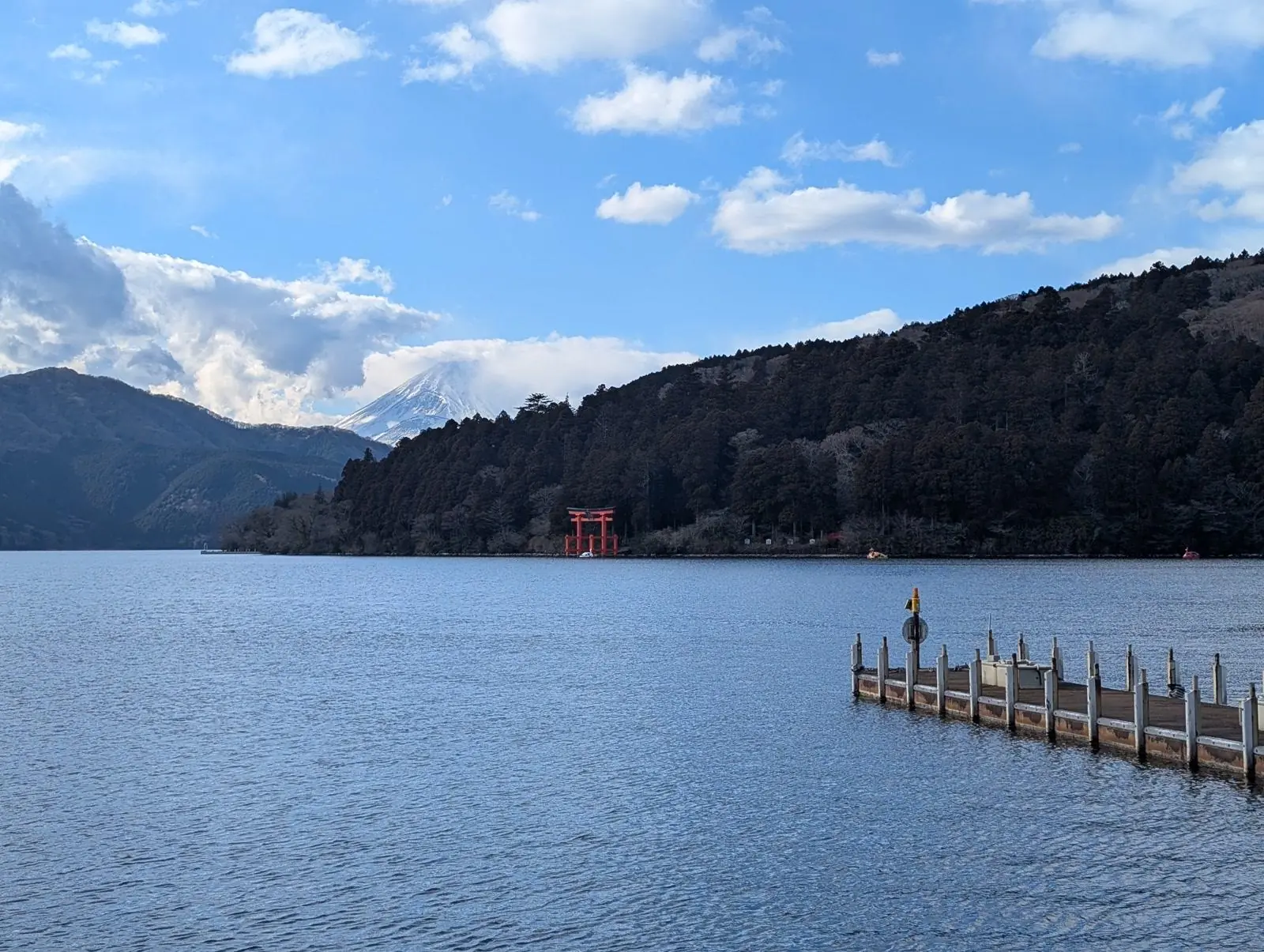
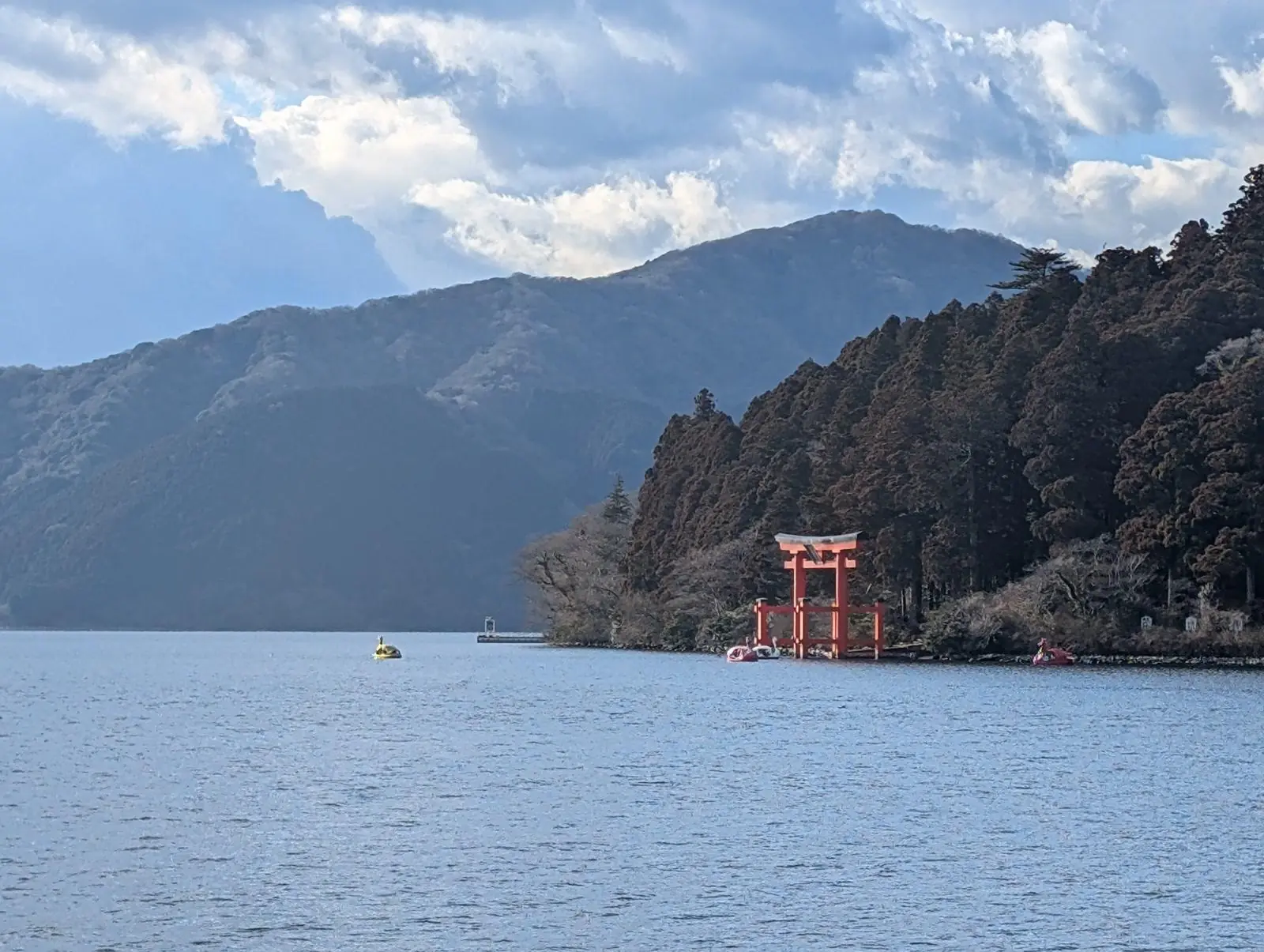
Hakone is farther from the mountain — roughly 30km southeast — so Fuji appears smaller and through more atmospheric haze. The classic Hakone view is from Lake Ashi (Ashinoko), where Fuji rises behind the lake and the bright red Hakone Shrine torii gate makes for the best composition. It's a beautiful photo, but the mountain looks notably more distant than from Kawaguchiko.
Visibility reliability: Mt Fuji is visible from both locations on roughly the same days — clear winter mornings (November to early March) give you the best odds, around 60-70%. Spring and summer drop that to 30-40% or lower because of haze and clouds. But here's the difference: when Fuji is partly obscured, Kawaguchiko still gives you a recognizable mountain silhouette. From Hakone, partial obscuration often means you see nothing at all.
If the weather is borderline, Kawaguchiko gives you a fighting chance. Hakone is more all-or-nothing.
What Else You Actually Do There
Kawaguchiko: Photography Day
Once you've done Chureito Pagoda, the lakeshore, and maybe Oishi Park (lavender or kawaguchi-style views depending on the season), the day is largely over. There are a few small museums, a music box museum, a Ferris wheel (Mt Fuji Panoramic Ropeway), and lake activities — but Kawaguchiko is genuinely a viewing destination. If the weather is bad, the day feels hollow.
Hakone: A Full Day Even Without Fuji
Hakone has the Hakone Open-Air Museum (sculpture park with a Picasso pavilion), the Pola Museum (impressionist collection), the volcanic Owakudani valley (black eggs from the sulphur springs), Lake Ashi with sightseeing cruises, and dozens of onsen ryokan. The full Hakone loop using the regional pass — train, cable car, ropeway, ship, bus — is a recognizable itinerary even if Fuji never appears. This is the structural difference: Hakone has plan B baked in.
For a deeper Hakone-specific plan, see my Hakone day trip guide. For how it stacks up against Kamakura and Nikko, see my full day trip comparison.
Travel Time and Cost
| From Shinjuku | Kawaguchiko | Hakone |
|---|---|---|
| Fastest train/bus | ~1h 45min (direct bus) | ~80 min (Romancecar to Hakone-Yumoto) |
| Round-trip cost (no pass) | ~¥4,500 | ~¥4,500 |
| Regional pass | Limited use | Hakone Free Pass: ¥7,100 (2-day from Shinjuku, 2026) |
| Total day cost (typical) | ~¥8,000–10,000 | ~¥12,000–15,000 |
Hakone is more expensive on the day because of the multiple modes of transport and the museums — but the Hakone Free Pass bundles everything and is the right move if you do the full loop.
Best Time to Visit Each
Kawaguchiko: Best from late November through early March. Clear, cold mornings before 10 AM give you the highest probability of seeing the full mountain. April through June is cherry blossom (Chureito Pagoda has roughly 650 sakura trees) but visibility drops. Summer (July to August) is hazy. Late October to early November is autumn foliage around the lake.
Hakone: Hakone is good year-round because the activities don't depend on the Fuji view. That said, autumn (mid-October to mid-November) is the most popular for the foliage at the Open-Air Museum and around the lake. Winter is best for onsen + clearest Fuji odds.
Sample Day Plans
Kawaguchiko Day Plan (clear winter morning)
7:30 AM — Bus from Shinjuku Bus Terminal. 9:30 AM — Arrive Kawaguchiko Station. 10:00 AM — Chureito Pagoda (the climb is steep but short). 12:00 PM — Lake lunch at Hoto Fudo (regional noodle dish). 1:30 PM — Oishi Park lakeshore for the second-angle photo. 3:00 PM — Kachi Kachi Ropeway for a higher view. 5:00 PM — Bus back to Shinjuku. You're back by 7 PM.
Hakone Day Plan (full loop)
8:00 AM — Romancecar from Shinjuku. 9:30 AM — Hakone-Yumoto Station, switch to the Hakone Tozan Railway. 10:30 AM — Hakone Open-Air Museum (1.5 hours). 12:30 PM — Lunch in Gora. 1:30 PM — Cable car + ropeway to Owakudani for the black eggs and volcanic view. 3:00 PM — Pirate ship across Lake Ashi to Motohakone. 4:00 PM — Hakone Shrine torii on the lake (Fuji photo here if you're lucky). 5:00 PM — Bus back to Hakone-Yumoto, Romancecar to Shinjuku, home by 8 PM.
Frequently Asked Questions
Can I do both Kawaguchiko and Hakone in one day?
No. They're in different prefectures and connecting them takes 2-3 hours on local trains. Pick one for the day, or do one as a day trip and the other as an overnight ryokan stay.
Is Kawaguchiko worth it if the weather looks cloudy?
Honestly, no. Kawaguchiko's value is the mountain view. If the forecast is heavily overcast, switch to Hakone, where you still have art, onsen, and lake activities even if you can't see Fuji.
What about climbing Mt Fuji?
Climbing season is only July to early September. Outside that window the trails are closed. Most day-trippers want to see the mountain, not climb it — which is what Kawaguchiko and Hakone are for.
Is there a less-touristy alternative for Mt Fuji?
Yes — the lesser-known Fuji Five Lakes (Yamanakako, Saiko, Shojiko, Motosuko) are quieter but harder to reach without a car. For most day-trippers, Kawaguchiko remains the practical choice.