Quick decision
For most travelers, a private Mt. Fuji tour from Tokyo runs roughly ¥30,000–¥120,000 for the whole group for a full day.
At 2 people it's premium. At 4 people it lands close to what a group bus tour costs per head — with full flexibility, a weather-adaptive route, and a licensed guide who reads the morning forecast.
If you want a bus you can sit on with strangers and a fixed photo stop, OTA group tours are fine. If you came to Japan with one good shot at Fuji and don't want to gamble it, you want a private guide.
This article is the practical, money-and-logistics companion to my Can You See Mt. Fuji from Tokyo? guide. That one answers where Fuji is visible. This one answers which tour to book in 2026.
Mt. Fuji is the single biggest reason my international clients add a day to their Tokyo itinerary. It's also the day they get the most conflicting advice on. Bus tour or train? Hakone or Kawaguchiko? Why does the same tour cost ¥10,000 on Viator and ¥80,000 on a private operator's website? I've run this day with hundreds of travelers, and the calculus is simpler than it looks once you know the trade-offs.
Everything below reflects 2026 prices, the new ¥4,000 climbing fee that took effect in 2025, the current Fuji Subaru Line shuttle setup, and the real OTA pricing I see clients comparing me against.
Manabu's take
The two-person trip is where private earns its premium; the four-person trip is where it just makes sense.
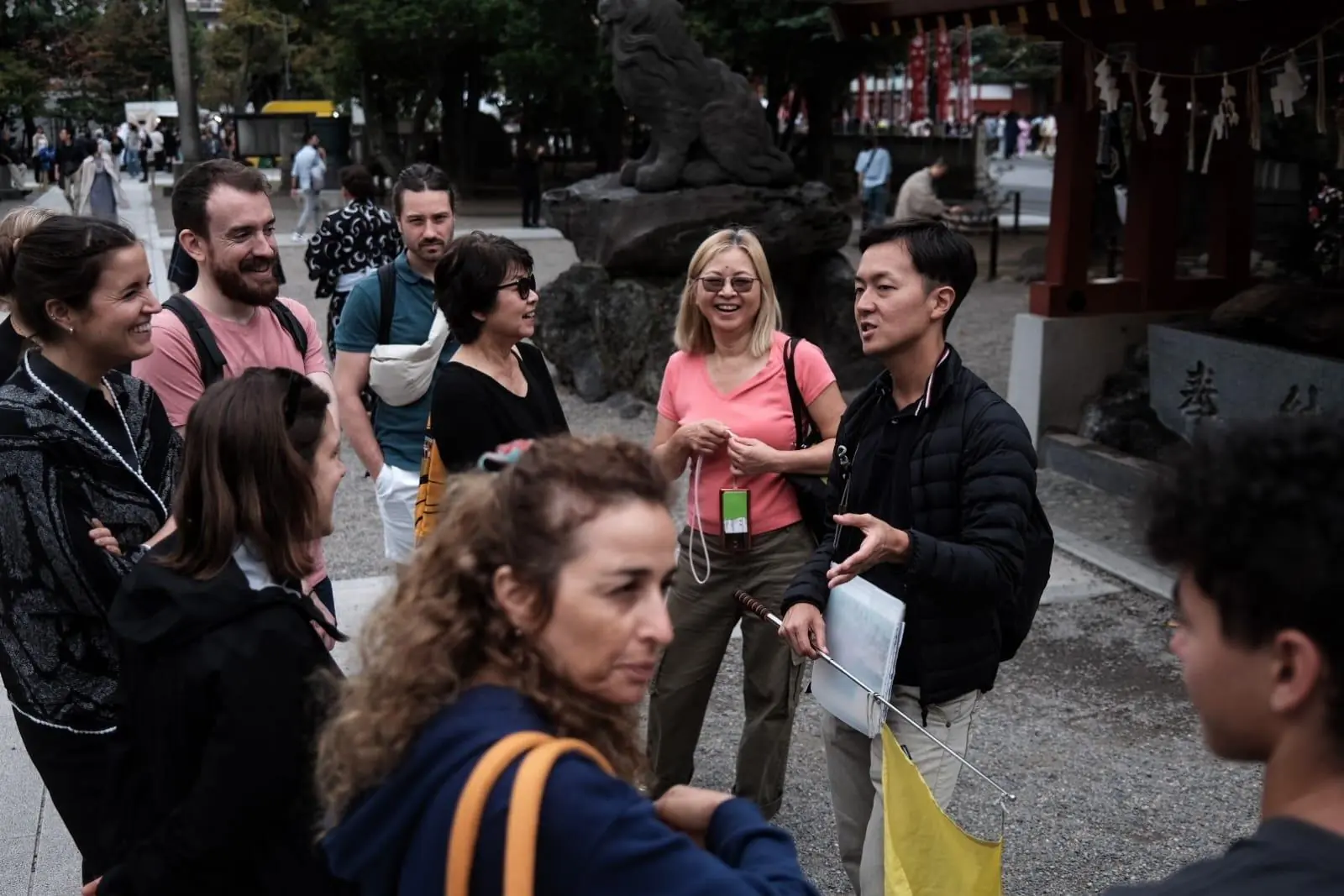
I don't try to sell every visitor a private tour. The day I tell a solo backpacker on a tight budget to take the Fuji Excursion train and skip the guide entirely is the same day I tell a family of five that going private will cost them less per head than three Viator seats — and give them an exit route if the clouds roll in at lunchtime.
Why book a private Mt. Fuji tour (and when not to)
Most travelers default to one of two options when they search "Mt. Fuji from Tokyo": a Viator-style group bus tour, or a DIY day trip on the Fuji Excursion train. Both are valid. A private tour solves a specific problem those two don't — the problem of one chance, bad weather, and a group whose pace you can't control.
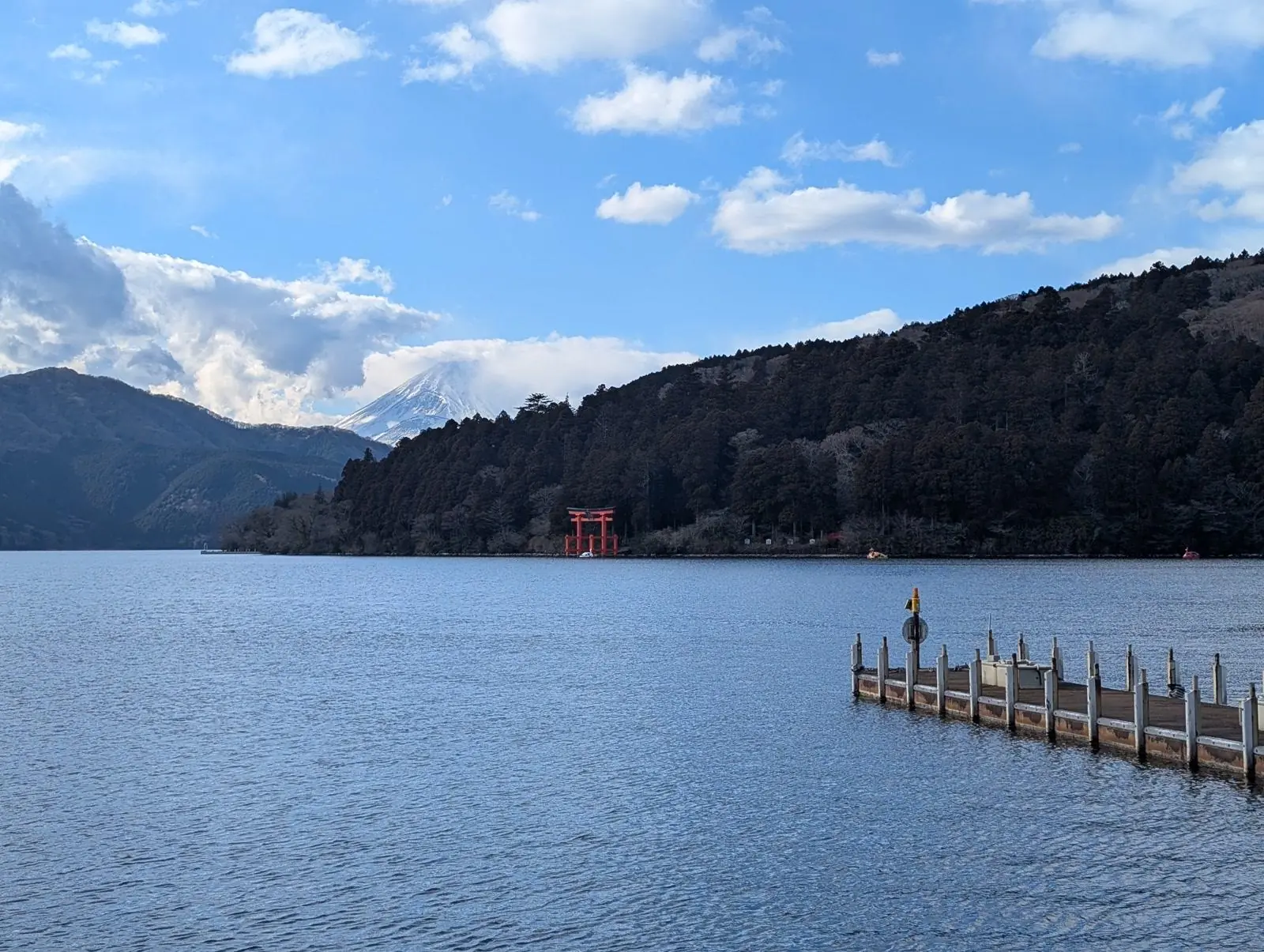
Mt. Fuji is famously visible only about 40–60% of winter days, dropping to 10–20% in summer. On a group bus tour, you're locked into one route and one set of photo stops. If the cloud cover sits on the summit at the planned viewpoint, you get the photo of a missing mountain. With a private guide, the morning weather check changes the route — Hakone instead of Kawaguchiko, an inland viewpoint instead of a lake stop, or a clean pivot to onsen and town walking if the day is a wash.
Default for most
Choose a group bus tour if…
- Solo or a couple on a strict budget
- OK with a fixed schedule and a large group
- Fine with a 7:30 AM Shinjuku pickup
- You just want the proof-of-Fuji photo
Worth it in these cases
Choose a private tour if…
- Group of 3–6 (per-head cost approaches group rates)
- Traveling with kids, elderly, or anyone needing a slower pace
- You want a guide who reads the weather and reroutes
- You want cultural depth, not just a viewpoint
- Dietary or accessibility needs a group tour can't handle
Where private tours quietly fail
Two failure modes I see often. First: a private "tour" sold as a driver-only English-speaking car service marketed alongside licensed guide tours at similar prices — the client thinks they're getting commentary and gets a chauffeur. Second: solo travelers paying private-group rates and feeling the per-head premium without getting the per-head value. If you're solo and budget-constrained, the Fuji Excursion train plus a half-day Kawaguchiko bus ticket is almost always the right answer.
Real 2026 cost breakdown: private vs group vs DIY
Below is what I actually see in the market in 2026. Group bus tour prices are the public OTA range on Viator, GetYourGuide, and Klook for full-day Mt. Fuji day trips. Private tour prices are mid-market for full-day, licensed-guide operators in Tokyo — not luxury concierge.
| Option | 2 people | 4 people | Per person at 4 pax |
|---|---|---|---|
| DIY train + busCheapest | ¥14,000 | ¥28,000 | ¥7,000 |
| Viator/GetYourGuide group bus | ¥24,000 | ¥48,000 | ¥12,000 |
| Driver-only English car | ¥50,000 | ¥60,000 | ¥15,000 |
| Licensed-guide privateRecommended 4+ | ¥80,000 | ¥90,000 | ¥22,500 |
| Premium concierge + vehicle | ¥120,000 | ¥150,000 | ¥37,500 |
The math that surprises people: at 4 people, a licensed-guide private tour at ¥22,500/head is less than 2× a Viator group seat (¥12,000/head). For that 1.9× premium you trade group of 30+ strangers, fixed schedule, and surface commentary for your own vehicle, custom route, full English depth, and the ability to pivot if the weather doesn't cooperate.
At four people, the private premium over a bus tour is the price of one Tokyo dinner each — and buys you the entire day.
The hidden cost in DIY day trips
The Fuji Excursion limited express from Shinjuku to Kawaguchiko is ¥4,200 each way (¥2,580 base + ¥1,620 limited express fee), runs four round-trips a day, and takes about 1 hour 55 minutes. Add a Hakone Free Pass at about ¥6,100/adult if you're going via Hakone, plus ropeway (¥3,000 round trip full line) and pirate ship (about ¥2,220 round trip), plus lunch and any 5th Station shuttle, and a solo DIY day lands around ¥14,000–¥17,000. Two people: roughly ¥28,000–¥34,000. For a couple, DIY still wins on price; the real value of private kicks in at three or more.
What's actually included (and what quietly isn't)
This is where private operators differ most. The headline rate is one thing; whether ropeway tickets, lunch, and pickup are included is another. Before you book, ask for the inclusion list in writing — most operators happily send it.
Usually included in a licensed-guide private tour
- Licensed English-speaking guide for the full day (typically 10–11 hours hotel-to-hotel)
- Custom itinerary planning before the trip, with route adjusted on the morning of based on weather
- Meet-up at your Tokyo hotel; we travel together from there
- Guide's own transport, meals, and admission
- Photo stops at less crowded viewpoints the bus tours don't go to
Often not included (clarify before booking)
- Transportation for the clients — train fares, Hakone Free Pass, or vehicle rental are typically billed at cost or as a separate line item
- Ropeway and pirate ship tickets — usually purchased on the day; ~¥3,000 + ~¥2,220 per person at Hakone
- Lunch — guide will recommend a place, you pay your own bill
- Mt. Fuji ¥4,000 climbing fee — only if you're actually climbing in July–September; standard day trips don't trigger this
- 5th Station shuttle (~¥1,500–¥1,800 per person each way during the climbing season private-vehicle ban)
The honest framing: a ¥80,000 quote that excludes transport and admissions for a family of 4 going to Hakone will probably land at ¥95,000–¥105,000 all-in once tickets are added. A ¥10,000/person Viator quote that includes lunch and admissions is closer to true all-in. Always compare apples to apples.
📝 Guide's Insider Note
Last week a couple booked me for Hakone and asked whether they should grab the Hakone Free Pass at Shinjuku or pay on the day. I checked their itinerary — Lake Ashi cruise and ropeway, no extras — and told them to skip the pass. Paying à la carte at each entry (¥5,220/person total for both) beat the ¥6,100 Free Pass each, and they didn't end up buying transit they'd never use. It's the kind of small line-item arithmetic that matters when you're already paying a private rate.
Updated based on Manabu's actual tours. Last visit: April 2026.
The 3 best private Mt. Fuji routes from Tokyo
There are really only three full-day routes worth doing as a private tour. Each has a clear use case. I run all three; the right one depends on what your group cares about and the day's weather.
Route A — Hakone + Lake Ashi (the classic)
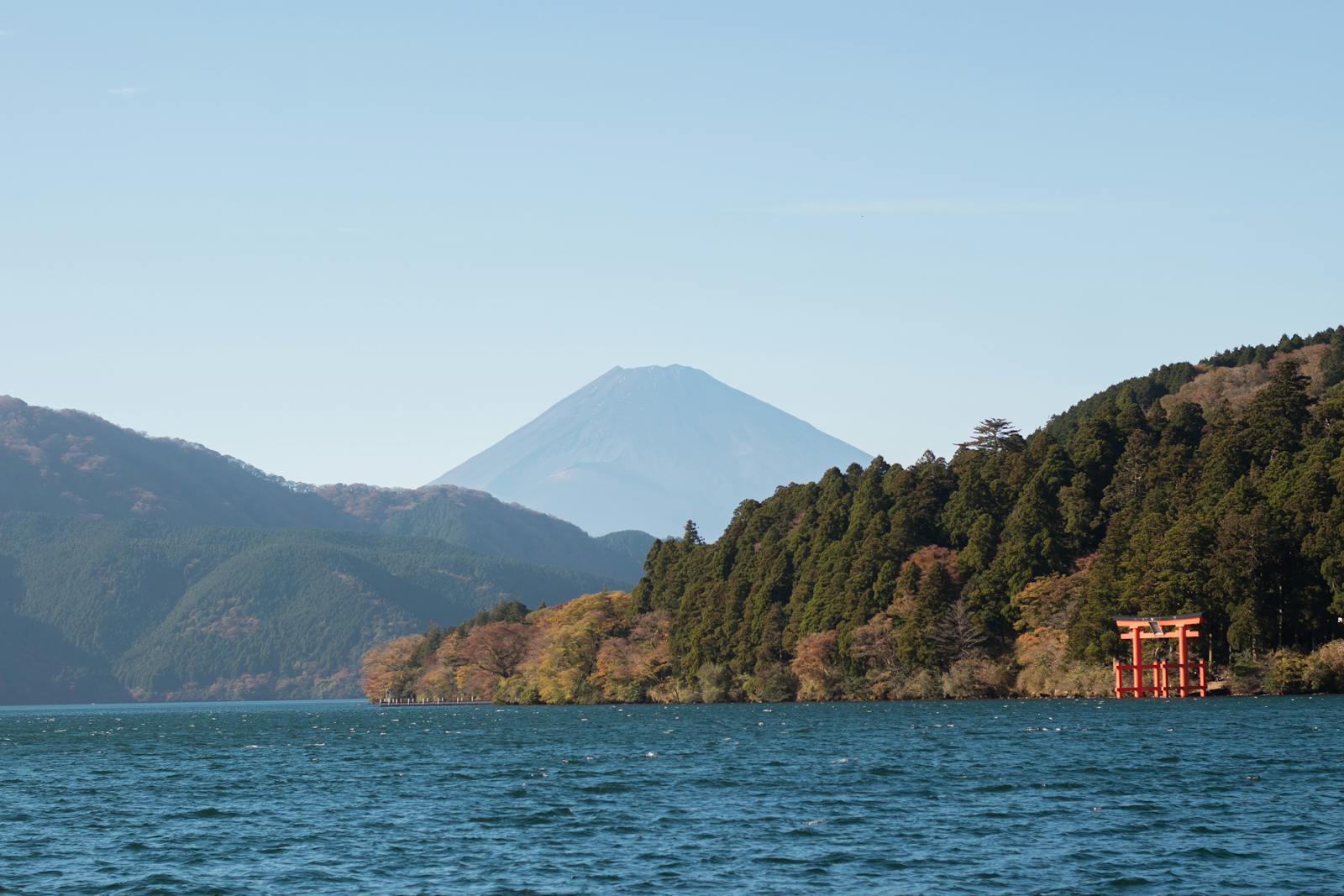
Stops: Owakudani (active volcanic crater on the ropeway), Lake Ashi pirate ship to Moto-Hakone, Hakone Shrine red torii in the lake, Hakone Open-Air Museum or onsen if time. Fuji views from Lake Ashi and the ropeway midpoint on a clear day.
Why pick it: The most reliable route for first-time visitors. Cultural depth (shrine, onsen town, hot springs history) plus the volcanic landscape plus Fuji views in one day. Works year-round; no climbing season restrictions.
Trade-off: Fuji is a backdrop here, not the foreground. If your priority is the textbook "Fuji towering over a lake" shot, Kawaguchiko delivers better. See my Hakone day trip for the full version of this route.
Route B — Kawaguchiko + Chureito Pagoda (the postcard)
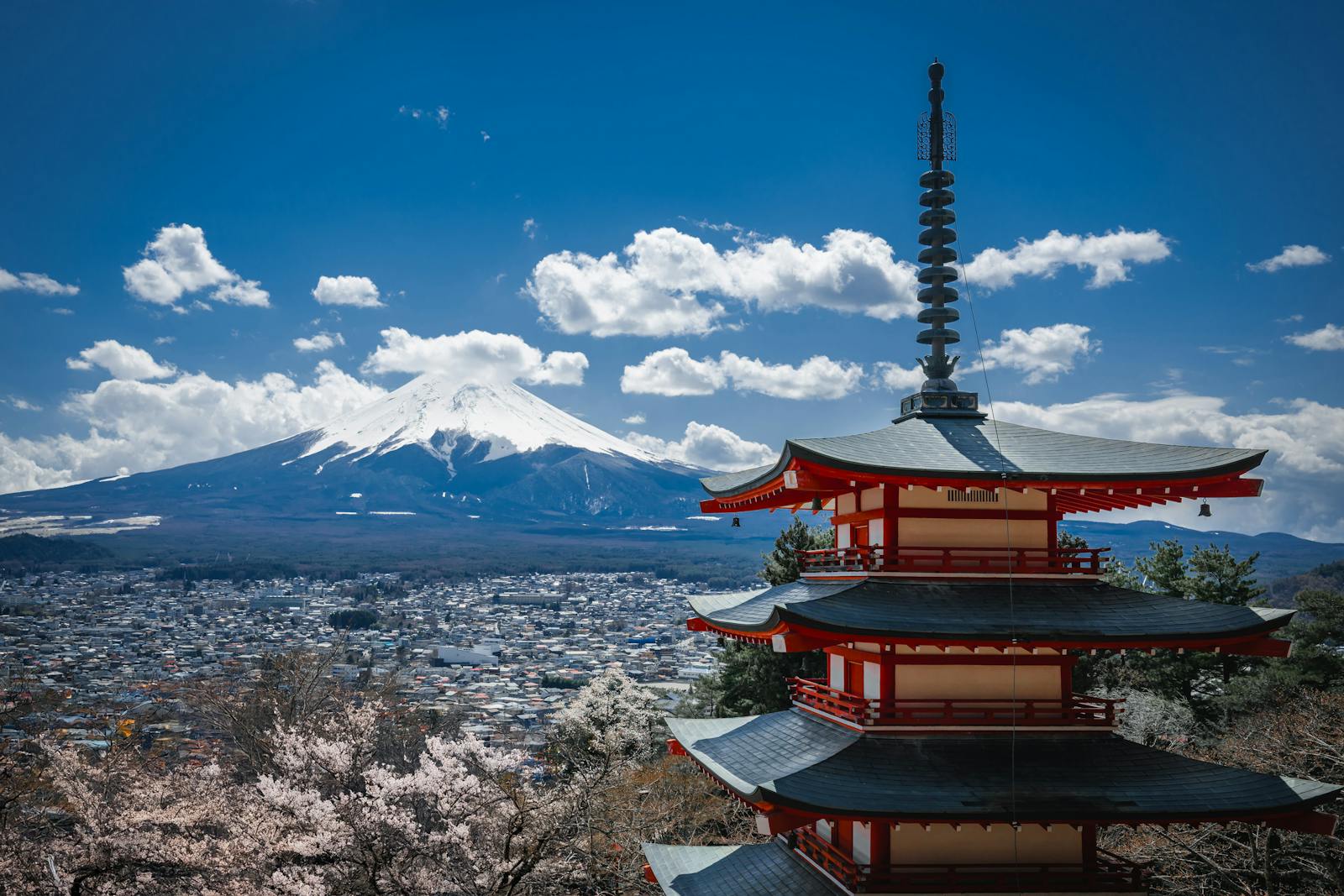
Stops: Chureito Pagoda from Shimoyoshida (the iconic pagoda-and-Fuji shot), Oishi Park on Lake Kawaguchi's north shore, Kawaguchiko Music Forest or Itchiku Kubota Art Museum, optional 5th Station of the Fuji Subaru Line (climbing season only, with shuttle bus).
Why pick it: If you came to Japan specifically for the Fuji photo, this is the route. Chureito Pagoda's view of Fuji framed by a five-storied pagoda is on every Japan travel poster for a reason. Oishi Park's lavender bloom is typically late June through mid-July (the Kawaguchiko Herb Festival runs roughly that window each year), and cherry blossoms wrap the lake in early-to-mid April.
Trade-off: Less cultural depth than Hakone; weather risk is higher because the foreground only works if Fuji is visible. The Chureito climb is 398 steps from the shrine entrance — fine for most adults but not stroller-friendly.
Route C — Oshino Hakkai + Gotemba (the quieter day)
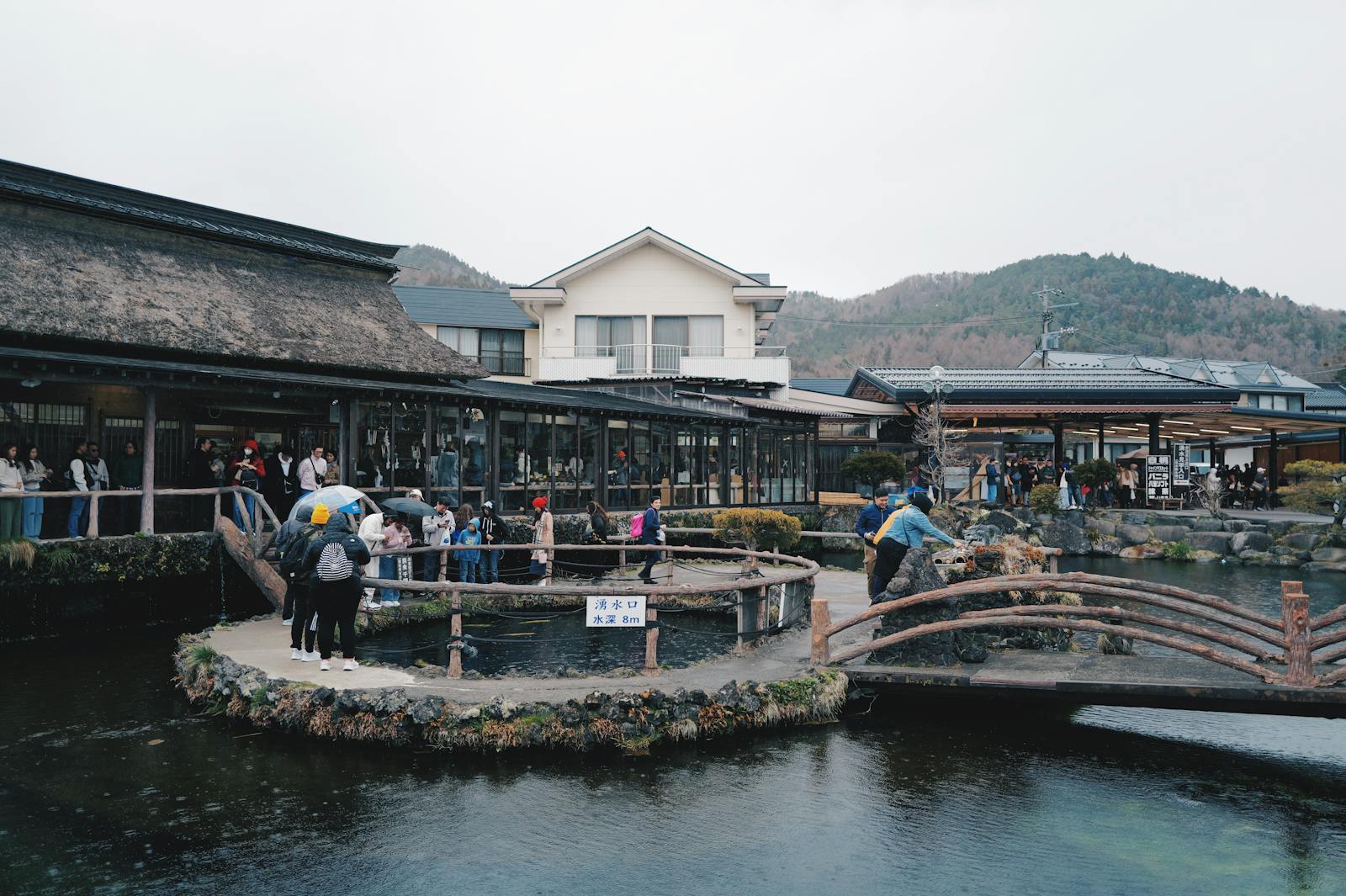
Stops: Oshino Hakkai (eight ponds fed by Fuji's snowmelt, traditional thatched-roof village backed by Fuji on clear days), a less-crowded inland viewpoint, optional Gotemba Premium Outlets if shopping is on the list, Susono-side ranches with Fuji as the foreground.
Why pick it: Second-time visitors who've done Hakone. Photographers who want the same Fuji at a different angle without the Kawaguchiko crowds. Families with kids who can't handle the pace of a viewpoint-marathon day.
Trade-off: Less obvious if you've never been. The "wow" stops are subtler than a pirate ship or pagoda. Best as a return visit, not a first-time-in-Japan day.
| If your priority is… | Route A (Hakone) | Route B (Kawaguchiko) | Route C (Oshino) |
|---|---|---|---|
| The iconic pagoda + Fuji photo | ○ | ◎ Best | × |
| Cultural depth + onsen | ◎ Best | ○ | ○ |
| First-time-in-Japan day | ◎ Best | ◎ | △ |
| Second visit to the region | △ | ○ | ◎ Best |
| Reliable in poor weather | ◎ Best | △ | ○ |
Licensed guide vs Viator and GetYourGuide
This is the comparison clients ask about most often. A Viator or GetYourGuide group bus tour shows up at around ¥10,000–¥18,000 per person, and the headline price will always beat a licensed-guide private tour. The question is what you're actually buying.
| Feature | OTA group bus tour | Licensed-guide private |
|---|---|---|
| Group size | 20–45 strangers | Just your party |
| Guide qualification | Varies, often unlicensed | National-licensed (全国通訳案内士) |
| Itinerary flexibility | Fixed | Custom + weather-adaptive |
| Pickup location | Shinjuku/Hamamatsucho only | Your hotel |
| Lunch flexibility | Group set menu | Your choice |
| English commentary depth | Surface | Full |
| Per-head cost (4 pax) | ¥12,000 | ¥22,500 |
Where Viator-style tours are actually fine
I tell solo travelers and budget couples this directly: for one or two people on a fixed budget, a group bus tour is the right answer. You'll see Fuji (weather permitting), you'll get the standard stops, and you'll spend a third of what a private tour costs. The trade-off is real — bus group, fixed schedule, surface commentary — but the math doesn't lie.
The "licensed" question that matters
"Licensed guide" in Japan specifically refers to the National Government Licensed Guide Interpreter (全国通訳案内士) qualification — a national exam covering Japanese history, geography, culture, and a target language. It's the only legally recognized guide qualification in Japan. Many tours marketed as "private guide" are run by enthusiastic locals without this credential. That's not always a problem (some unlicensed guides are excellent), but it's worth knowing what you're paying for. I wrote about the difference at length in Licensed vs unlicensed tour guides in Japan.
When to book and the weather contingency
Mt. Fuji visibility is the single biggest variable on this day. Picking the right month moves your odds from 10% to 60%; picking the right time of day, from average to clean. The pattern, simplified:
- November to February: Best months. Dry winter air, ~40–60% of days deliver clear views. Cold mornings, no climbing access.
- March–April: Cherry blossoms around Kawaguchiko in early-mid April. Visibility drops to ~30% of days.
- May–June: Pre-rainy season; lavender at Oishi Park late June. Visibility ~20%.
- July–September: Climbing season opens (Yoshida Trail July 1 – September 10 in 2026). Visibility drops to ~10–20%. Humidity and afternoon clouds dominate.
- October: Autumn leaves around the lakes, visibility climbing back up. The shoulder sweet spot if dates are flexible.
Time of day matters more than people think
Even on a good Fuji day, the mountain is most visible in the morning. By mid-afternoon, cumulus clouds build on the summit and Fuji often disappears entirely. A 7:30 AM Tokyo departure puts you at Hakone or Kawaguchiko by 9:30, which is when the views are sharpest. Bus tours pad this with extras and often arrive at viewpoints late morning; a private tour can match the morning window precisely.
How far in advance to book
Private licensed-guide tours: book 4–8 weeks ahead for peak seasons (cherry blossom, mid-November autumn leaves, climbing season weekends, New Year week). For winter weekdays, 2 weeks ahead is usually enough. I get most of my Fuji bookings 4–6 weeks out.
Group bus tours have more flexibility — Viator-listed operators often have same-week availability — but the best operators with English-speaking guides book up first.
The weather contingency I actually use
My rule on the morning of: if the cloud forecast over Fuji is bad and the radar shows rain, I message the client by 7 AM and propose a pivot. The most common pivots:
- Cloudy but dry: Hakone instead of Kawaguchiko — onsen, shrine, and museum work without Fuji.
- Heavy rain: Reschedule the Fuji day to another date in the trip, swap in a Tokyo neighborhood tour today.
- Storm: Cancel and refund per cancellation policy.
Group bus tours don't pivot. They run rain or shine, on the route printed in the brochure.
How I run my private Mt. Fuji day
For context on what mid-market licensed-guide private looks like in practice, here's my own setup. I list it not as a sales pitch — there are several excellent licensed guides in Tokyo — but so the numbers and trade-offs above stay grounded in something specific.
The shape of the day
- 06:30: I check the cloud forecast over Fuji and Hakone radar.
- 07:00: Message the client confirming the route or proposing the pivot if weather is poor.
- 07:30–08:00: Meet you at your Tokyo hotel; we head out together.
- 09:30–10:00: First viewpoint stop — Lake Ashi or Chureito depending on the route.
- 12:30: Lunch at a place I know is open and serves something other than the standard tourist lunch.
- 14:00–16:00: Second and third stops — shrine, ropeway, museum, or quieter viewpoint.
- 18:00–19:00: Back in central Tokyo near your hotel.
What's actually different
Three things that don't show up in the price comparison:
- Pre-trip planning over email. I ask about your group's pace, dietary preferences, photography priorities, and what you've already done in Tokyo. The itinerary is set before pickup, not on the bus.
- The morning forecast pivot. Roughly 1 in 5 days I propose a different route than what we agreed on, based on weather. Clients almost always say yes; the alternative is a wasted Fuji day.
- Cultural context, not just facts. Why Hakone Shrine matters to Japanese people, not just when it was founded. Why Fuji shows up in every era of Japanese art. The kind of context that turns a viewpoint into a story.
If this sounds like what you're after, my Hakone day trip page has the route-A version with pricing and what's included. For Kawaguchiko or Oshino routes, the easiest path is a quick contact form with your dates and group size.
Frequently Asked Questions
How much does a private Mt. Fuji tour from Tokyo cost in 2026?
For a full-day licensed-guide private tour, expect roughly ¥80,000–¥120,000 per group depending on size, vehicle, and route. Driver-only services run ¥50,000–¥60,000. Premium concierge starts around ¥120,000 and climbs. Group bus tours through Viator and GetYourGuide are ¥10,000–¥18,000 per person.
Is a private Mt. Fuji tour worth it for 2 people?
For 2 people on a budget, a group bus tour or DIY day trip is usually the better call — the per-head premium of private is steepest at this group size. Private starts making sense at 3+ people, where per-head cost approaches the OTA group rate but you get a custom route, weather flexibility, and full English commentary.
Which is better, Hakone or Kawaguchiko, for seeing Fuji?
Kawaguchiko delivers the postcard Fuji-foreground shots (Chureito Pagoda, Oishi Park, Lake Kawaguchi reflections). Hakone gives Fuji as a backdrop plus more cultural depth (onsen, shrines, museums) and is more weather-resilient because the day still works if Fuji is hidden. First-timers usually want Hakone; photo-driven travelers usually want Kawaguchiko.
Can you climb Mt. Fuji on a private tour?
Yes, but only during the climbing season (Yoshida Trail: July 1 – September 10 in 2026). All trails now require a ¥4,000 entry fee, and the Yoshida Trail caps daily climbers at 4,000 with online registration at fujisan-climb.jp. The Yoshida gate also closes at 2 PM; without a confirmed mountain hut reservation, no overnight entry. Most private tours focus on the 5th Station and viewpoints rather than a full climb — climbing is a separate, multi-day commitment.
How long is a private Mt. Fuji tour from Tokyo?
Typically 10–11 hours hotel-to-hotel. Most operators pick up between 7:30 and 8:00 AM and return between 18:00 and 19:00. The window matters: morning hours give the best Fuji visibility, so leaving Tokyo early is non-negotiable on a serious Fuji day.
Does a private Mt. Fuji tour include lunch?
Usually not. Most licensed-guide private tours include the guide's own meal but bill clients separately for their lunch. The trade-off is choice — the guide will recommend a place that fits your preferences rather than a fixed set menu. Lunch typically runs ¥1,500–¥3,500 per person at Hakone or Kawaguchiko restaurants.
What if it rains on my Mt. Fuji tour day?
Most licensed-guide private operators have a weather contingency. My own approach: cloudy-but-dry days pivot to Hakone (shrine, onsen, museums still work); heavy rain reschedules the Fuji day if your trip allows; storms cancel with a refund. Check the cancellation policy before booking — group bus tours generally run rain or shine without a pivot.
Can I see Mt. Fuji from Tokyo without a tour?
Yes, on clear winter days from Tokyo Metropolitan Government Building, Roppongi Hills, or the right Shinjuku station exit. See Can You See Mt. Fuji from Tokyo? for the five viewpoints that actually work in 2026. A tour is only necessary if you want to get closer to the mountain.